
Learn The New Way To Get Patients From Google With Jeremy Dupont

Most private practice owners know they need marketing… but very few understand what’s actually working right now — especially when it comes to getting found online.
In this episode of the Private Practice Owners Podcast, host Adam Robin sits down with Jeremy DuPont, former cash-based clinic owner turned founder of Patch Digital Marketing, to break down what’s driving patient growth in today’s digital-first landscape.
Jeremy shares how he built and scaled a multi-location cash-based clinic in Boston without relying on physician referrals — and why mastering digital marketing became the key to predictable growth. After successfully growing and selling his clinic, he now helps other practice owners do the same through Google Ads, local SEO, and conversion-focused systems.
This conversation dives deep into one of the biggest shifts happening right now: why Google Maps — not your website — is becoming the most important place for your clinic to show up.
Jeremy also walks through a live audit of a real clinic, showing exactly how rankings work, where opportunities are hiding, and what most clinics are doing wrong when it comes to local visibility.
Together, they explore:
- Why 70%+ of patients searching for services are using Google Maps — not traditional search
- How Google’s AI and search changes are reshaping how patients find clinics
- The 3 key drivers of local SEO: Google Business Profile, directories, and website authority
- Why most clinics ignore their Google Business profile — and how that hurts rankings
- How review volume and consistency directly impact your visibility
- The role of local directories and why they build trust with Google and AI tools
- How to identify missed opportunities in nearby areas and services (like dry needling or pelvic health)
- Why ranking for the wrong keywords brings traffic… but not patients
- The difference between “marketing that looks good” vs. marketing that actually converts
- When paid ads make sense — and why most clinics start too early or too small
If you’re a practice owner trying to get more patients without relying on referrals — or you’re frustrated that your marketing isn’t translating into real growth — this episode gives you a clear, practical roadmap to start winning locally.
🎙️ Tune in to learn how to turn Google into your clinic’s most consistent and scalable patient acquisition channel.
👉 Want to learn more about Jeremy and his work?
Follow him on Instagram: @_jeremydupont
Visit: https://thepatchsystem.com
👉 Want help strengthening your operations and growing your practice?
Book a call with Nathan: https://calendly.com/ptoclub/discoverycall
💡 Love the show? Subscribe, rate, review, and share!
---
Listen to the Podcast here
Learn The New Way To Get Patients From Google With Jeremy Dupont
We have a new guest, Jeremy Dupont. Jeremy is a Physical Therapist and used to own a cash clinic in Boston. He owned a cash clinic for three years. He knows a little bit about sales, marketing, and business. What's cool is he started a company called Patch Digital Marketing. Jeremy's going to share with us a little more about what he does, how he sees marketing, how he used that marketing strategy to help grow his clinic, and how he's supporting other practice owners with their digital marketing. Jeremy, what's up?
It's good to be here. I'm excited to chat. I know we're going to dive into something that's been the center of my attention. This is what is working the best on the marketing side of things for physical therapists, in local marketing and optimizing for Google Maps. I'm excited to dive into it.
I'm already convinced that you know what you're talking about at this point. For the people who don't know you or why they should even read. Tell us a little more about who you are, a little bit about your background, and what you do. That kind of thing.
As you said, I was working at a clinic and then COVID hit. I got furloughed from that job and went self-employed and started my own practice in Boston. I went cash-based immediately just because it was the easier thing to do to be totally honest with you. I got my schedule busy. That one-on-one, almost concierge-type care took off during COVID, which is interesting.
In 2021, I officially opened a clinic up in downtown Boston. I ran it for three years. We had seven PTs and two locations. As I said, we were a cash-based physical therapy clinic. I couldn't rely on physician referrals or hospitals sending patients our way. We had to figure out the marketing side of things. The local marketing where you go and you do events, injury screens, workshops, and all that can only get you so far. If you want to get to a seven-figure plus clinic, you have to figure out the digital marketing game.
If you want to build a seven-figure plus clinic, you have to figure out digital marketing.
Lucky for me, I hired my first couple of PTs and fell in love with the digital marketing side of all of it. I was like, “I would rather do this than treat patients.” I took myself off of the schedule pretty much immediately and dove into email marketing, developing CRMs, and then Google Ads and SEO, which is the gasoline to growing our clinic.
I did that fairly successfully, and then sold my clinic and run Patch where we help other physical therapy clinics do just that. Our main product of what we do is Google Ads and local SEO. We do some email marketing, CRM building and things like that. We're here to just make getting new patients easy for physical therapy clinics.
I love how you're the guy that's done the thing. You're a PT and done the thing. I'm going to toss it back to you because I'm here to learn. I'd love to hear what you got for us. What do you want to share?
The New Era Of Local Search: Google Maps & Gemini
For anybody reading, if anybody ever wants one of these, I'm basically going to take Adam's clinic through a local SEO audit, which I would do for any clinic that's getting started with us. I always start these with just a couple of stats of 46% of all total searches that happen on Google have local intent to them. Google is where people are finding local service-based businesses.
Within that percentage of searches that are happening on Google, 70% of people that are looking for local service businesses use Google maps to find what they're looking for. Obviously physical therapy, OT, and speech, all of those things fall into that local service bucket. Gone are the days of trying to optimize yourself for page one of Google and just trying to get your blue link website to show up on page one.
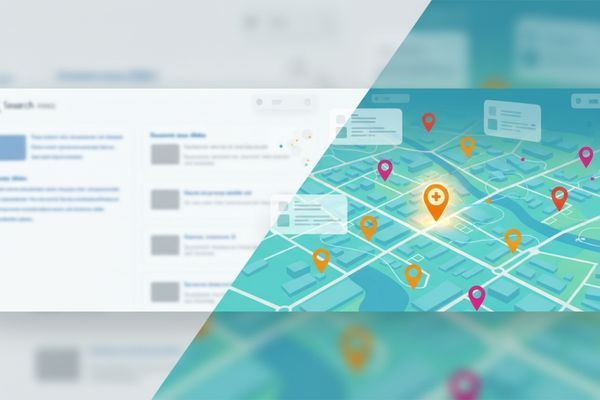
What matters is showing up on Google Maps. It's super interesting. This is an article that Google dropped that I was diving into. I figured it was super relevant for our conversation here. They just rolled out the integration of Gemini. Their Google AI summary overview is being plugged directly into Google Maps. People can have a chat-based conversation directly inside of Google Maps, which is going to significantly go into effect how people are looking for a physical therapy clinic.
Right directly in here, you could say, “Does this physical therapy clinic take Blue Cross Blue Shield? Do they do dry needling? Do they have public health included with it?” These are just signs where traditional search is going by the wayside, especially for people looking for service-based businesses. Again, that includes PT, OT, all of the above. When I take a look at this, and obviously, I just showed you that.
The main thing that happened in 2025 and why us at Patch, we started to change the way we were doing SEO is because Google totally changed what page one of Google search looks like. I have on my screen here. I just typed in “Waco, Missouri, Physical Therapy.” You can see at the top of the page and what we call, above the fold. Before you scroll at all, you can see three quarters of the page here are three Google business profiles and a big Google map.
That's why the 70% to 75% of people that are looking for local service-based businesses are going directly to this Google map here because it's what catches the eye. This is where people are going to click. Before we were optimizing for these websites that are down here. It's still important to show up there, don't get me wrong. You can tell that the most important thing I'm not in Wiggins, so ads aren't showing up, but Google Maps is the most important thing.
A couple of things that I don't like. I don't like how my Slidell clinic is the first link right up, right below the map. I wish that was the Wiggins clinic. I don't like how my clinic is, I don't know if you see it on the map. It's not in the center of the map. It's over on the left. I want it to be right in the center. I want it to be big and bold right in the center.
There's different things that you can do. We'll look at your website as we're taking a look at it. It's interesting for you what I pulled up here. This is what we show in most clinics. This is always super helpful for people to visualize. Basically, what I have here is a heat map of where Adam's clinic ranks. Again, this is his Wiggins physical therapy location. Adam, you'll be able to tell me a little bit better. I have a 20-mile radius for you here. It looks like people are probably driving a decent way to find physical therapy. Is that too big, too small? What do you think?
Traditional search is going by the wayside, especially for service-based businesses.
No, that's good. Wiggins is the small rural town.
That’s what I figured.
Super small clinic and people are driving in.
Heat Maps And Proximity-Based Strategy
The way we look at it is clinics that are in a dense city, we usually want a one to three-mile radius of where you're ranking. Suburbs, maybe you're a 5 to 10-mile radius. Places that are fairly rural, we're looking at between a 15 and a 20-mile radius. Basically, what this map here is showing us is that whenever somebody types in physical therapy into Google maps, these pins here. Wherever somebody's located, this is where Adam's physical therapy clinic would show up.
You can tell within a ten-mile radius, you've got this pretty much on lock, which is awesome to see. This is not the case for most physical therapy clinics, unfortunately. Usually, it's dominated by an ATI or Select or something like that. What I always like to look at and what we talk through with some of the clinic owners and part of what our SEO strategy is, is there certain areas where you would want to show up?
We could scroll in and if we wanted to look at Lumberton would be a place where you'd want to show up. It looks like there are some homes there. You can see that where you're ranking there. You don't fall off the map totally. You're in this five to ten-mile range. You may not be showing up in the top three there. Your SEO strategy could be how do we improve our ranking in Lumberton, etc.
The one city that comes to mind is Poplarville. I don't know if you see it, but 1212. Over here, down in the middle, right there. I have some competitors in that area that are pretty strong, little private practice. Bright Steps are right there. It'd be nice to get some of those patients to drive over.
This is what you can start to look at. All of these rankings here do have a lot to do with proximity. As you start getting 30, 40 miles away, it is tougher to rank. What we usually do on a competitor analysis is we always see how many Google reviews do they have. You can see this place. They've only got three Google reviews. This one's only got one. There's not a ton of competition here.
This can be very easy to beat out because Google reviews is one of the easy ways to start taking that over. Where that would come into play is you would want to make sure that on your website, you would have Poplarville optimized for. Again, on your website you can see you have these location-based pages. These are where your three clinics are at. You could have a Poplarville location page on there even though you don't have a clinic there. You can still say “We help residents from Poplarville at our Slidell location.”
This is always something that we look at. Again, for you, I assume you guys are busy because this looks good. We can also do it for other services as well like clinics that have multiple services. I saw one of your guys' services was dry needling. Pelvic floor PT is always one of those. If somebody's works with runners, maybe gait analysis would be another service that we want to look for, pelvic health PT, etc.
What this will do is it helps drive your local SEO strategy because maybe you crush it for physical therapy, but you're not on the map at all for dry needling. People that are looking for StemWave or shockwave or some of those higher ticket services. You can see where you're ranking on the maps for that. People are going to want to find that service on the map. That's where they're going to go for it. The cool part of it and you can create an actual strategy around all of this. You can see where you're deficient, whether it's going to be based on the location or the service. That's your SEO strategy from there.
Optimizing The Google Business Profile
Could you do me a quick favor? Type in pediatrics and tell us where we pop up for pediatrics.
It will take me a second to run it, but I can walk through what the rest of it will look like. I'll run this and then as it's loading for you. The obvious question with all of this is, “How do we improve these rankings?” Say it doesn't look like Adam's map. You can see again. Adam has had some solid SEO services done for him. Say, you're all red here or you’re not on the map.
There's three different things that you can do in order to improve this. The number one thing is updating your Google Business profile. Adam, I'd be interested to hear what you see. Most PT clinics, when they set up their Google Business profile, they just rush through it. They skip and don't fill anything out. They just get it live. They don't ever touch it again.
That's boring work. We don't like to do that stuff.
It's not the sexy stuff. Google puts a white paper out every two to three months. With anything involving Google maps, optimizing your Google Business profile is always the number one thing that's on there and optimizing it. It’s obviously the easy ones where you're adding the location in. You can see here. You have physical therapy. You're tagging your location and your service that you're doing, which is awesome. You want to make sure that that's throughout the description you're creating.
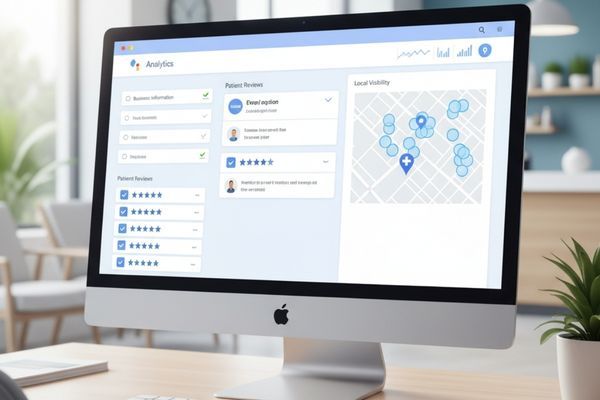
Are you filling out products there? Are you adding services there? Are you updating photos every handful of months? There's an ability to post on your Google Business profile as well. Again, I foresee one of the reasons why you're showing up so high here is this is a super active account. You have a post one day ago, three days ago, six days ago. That's not very common with PT clinics. They're not often updating this or even know it exists, to be honest with you.
You need to make sure that not only is your Google Business profile optimized with all the correct SEO terms on there, but it's active as well. You're consistently updating it. The biggest sign for that is Google reviews. It's super important. I usually tell clinics a 100 Google reviews is the threshold of what you need to get to.
Google tells us this directly. Review velocity is one of the most important things that you can do here. Not only do you have 100 minimum reviews, but are you getting 4 to 6 every single month consistently? That just tells Google, not only you're in business, which is important, but people are happy. People are continuing to come. Google wants to send its traffic to the right place because they want people to come back to Google.
Building Trust Through Local Directories
This is where you'd look at Google Business profile. One of the most important things for optimizing your map ranking. The other is what we call local directories. This is the trust that you build with Google and with any LLM that's out there. I know we're talking about Google maps. If we want to dive into AI SEO and showing up in ChatGPT and getting mentioned in some of those LLMs. This is one of the most important things that you can do.
For you, there's 37 business directories that you're able to be listed in. You can see this audit shows that 27 of them you're missing from. We can scroll down here. We can see it. It breaks down into two different categories. One of them is all of these wellness-based directories that you want to be listed in. These are DocSpot, WebMD, Wellness.com, Doctor.com, Healthgrades. This is not something that we can scan and see just because it's HIPAA-protected. You're not able to see if you're in there. This is more so like you want to make sure that you're listed in here. I saw you guys in here in Healthgrades right here. No, sorry, that's BATS in Physical Therapy that was in there.
I don't like that 2.0 star. That's not me. That's not right.
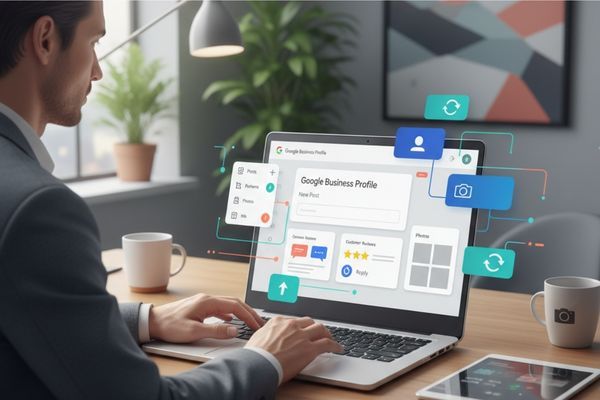
That's not good for that. They're on there, not for the right reason though. This is again just showing the importance of getting listed here. You can see there's all these other business directories in here. There's Google Business Profile, which is your North Star. There's these random ones of CitySquares and Foursquare and Hours.com and MapQuest.
I always tell people, “Nobody's using MapQuest to find you anymore.” People aren't printing directions out from MapQuest. What AI LLMs do, what Google's AI overview does, what Google Maps does is when somebody searches for “Best physical therapy clinic near me,” it scans all of these directories to see if you're listed or not. If you are listed, it's going to verify that. It's going to trust that you're in business. If you're not there, it doesn't know if you're a legit business.
Even worse, when people move and they don't update their address from a directory. That's a poor trust signal to Google. It makes it hard to show up at the top of LLMs and on Google maps. This is a super easy one that I tell most clinic owners. It will take time. This is part of what we do with our SEO offer for our clinics. We can pull this list and show you where you're not listed. You're going to want to make sure you get yourself listed there. It's an immediate bump.
I would imagine you tackle that one at a time. If you make a little goal where it's like, “We're going to fill out one new profile a week.” If you were going to be limited on manpower. You chip away at this over the long run. It's not like you have to flip it all on its head in one week.
Technical SEO Vs. "PT Flexing"
It's a long game. You can obviously look at them and know which ones are a little bit more important to you. I always scroll down here. The Chamber of Commerce is always a super important one because that's local. Yellow Pages is a super important one. ShowMeLocal because it has that local intent. That's a super important one.
Property Capsule, I wouldn't probably worry about that one too much just because it doesn't have as high of a trust signal. You can pick and choose which ones you want to be in there. Make sure everything is solid. This is the second part. The third thing is diving into your actual website and what are, we call it, technical SEO or the core vitals of your website.
The main thing that I always look at is what's called your Authority Score. This is like your credit score for your clinic’s website. The higher it is, the better off you're going to be. I would say this number is out of 100. You can see Adam’s clinic at 12. PT clinics do not get anywhere close to 100. Between a 20 and a 25 is good for a physical therapy clinic. It's in the range of where you want to be.
There's a number of different things that go into this. The quality of backlinks that you have to your website, what type of pages you have on your website, and what keywords are you optimizing for. What we care about here is this number being high, which will increase this organic traffic number. What I always like to see, especially when we're trying to optimize for Google Business profile, is we want to make sure that you're showing up for keywords like this right here.
The second keyword that has the most website traffic for Adam’s clinic is “Physical therapy Slidell,” which is awesome. That's somebody typing into Google physical therapy Slidell out. His clinic is showing up. He got 100 website visits from that last month. What I often see here is clinics optimize for keywords like, “How do I fix a rib flare or ACL exercises.” That might get them website traffic, which is nice, but it's not somebody in Slidell out looking for physical therapy.
I'm not a marketer like you are. It takes some intention, especially for people who aren't marketers. You're interested in what they're looking for. Not what you think is important. People don't know what rib flare means. It's not important to them. Having a physical therapist in Slidell is important. Making sure you're optimizing for the things that are important for your customer and not to you.
I see it in two different ways. Physical therapists like to flex on other PTs and show how much they know, which is awesome. I think it's good. Flex that clinical knowledge. At the end of the day, you need to market to your patients. As you said, they have no idea what a vasopneumatic device is or something like that.
SEO agencies too, if they don't know anything about physical therapy, they're just going to go after the keyword that gets searched the most. That might be “How do I fix a rib flare?” They show up for that. They can get you tens of thousands of website visits a month. None of that's going to convert into actual patients. Who cares?
You can get tens of thousands of website visits a month, but if none of it converts into patients, it doesn’t matter.
That's super important stuff. We always want to make sure that your clinic is showing up for the correct keywords. Again, Adam's site looks awesome there. The other thing is, this is newer. This is the AI search side. We want to just track and measure over time, how often are you showing up in AI? How many, say, the pages do you have? What is your AI visibility? These are all things that you can improve on.
Where we're seeing SEO going is much more conversational-based like, “What is good physical therapy look like?” Versus, “Best physical therapist Boston.” The way people search and interact with search models are just changing because it's just more interactive. You get that feedback from the LLM. Again, SEO is going to continue to evolve over time. As I said, if you're looking to involve some of these map rankings here, the three things you got to do. Optimize your Google Business profile. Make sure you're listed in these local directories. Get your domain authority up and make sure you're showing up for those local basic keywords there.
The Risk And Reward Of Paid Ads
Is there anything that you can add for just a little bit of context around at what point is it appropriate for you to start considering paid ads and that kind of thing? When does that become important to consider?
Paid ads is always a super interesting one. It's about risk tolerance because the worst thing you can do is go into paid ads. You spend $152,000 a month and not go all in on it and try paid advertising. That's important. I always tell people the baseline minimum that you should be spending per month is $1,000 a month.
Once you feel good about that, you're like, “I know my backend systems. I'm going to follow up with these leads properly. I have availability on the schedule. We have the space to bring them in.” You have to get into LTV numbers. How much can you afford to pay for a new patient coming in? There's loads of things that go into it.
The first thing is, are you okay with losing $3,000 in three months? Once you feel good about that like, “I want to try this. I want to scale and grow.” That's when paid ads are a great place to go. In my clinic, we spent $8,000 to $10,000 a month on paid advertising. We ramped it up. We were in downtown Boston. We had the search volume for it for sure. It's a great way to predictably bring patients in the door.
You know what you're doing for sure. Totally cool. For those of you that are reading, Jeremy did share his screen and show all kinds of cool stuff. You can check it out on the YouTube channel. Jeremy, for those who want to find out a little more about what you do, where do they find you?
I'm pretty active on Instagram @_JeremyDupont. I've got a show as well. It's called Jeremy on Marketing. Just dive into the nerdy marketing stuff in the PT world, which is always fun. We're at ThePatchSystem.com. It’s our marketing agency. If you want to learn more about us, check us out there.
Thanks. I appreciate your time.
That's great. Thanks.
Important Links
- Jeremy Dupont on LinkedIn
- Jeremy Dupont on Instagram
- The Patch System
- Jeremy on Marketing Podcast on Apple Podcast
- Private Practice Owners Club on Youtube