What if the biggest growth moves in your business… was saying no?
In this episode, Nathan Shields sits down with
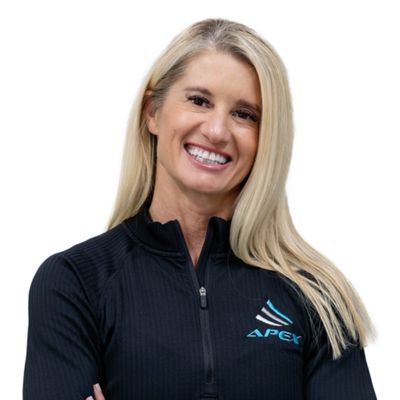
Angie McGilvrey to unpack how one clinic completely transformed its trajectory—not by doing more, but by getting radically clear on who they serve.
After years of grinding in a traditional model, Angie and her team made a bold shift: they stopped trying to serve everyone and built their entire practice around a specific niche.
What happened next?
A stronger brand.
Better patients.
A team that actually wants to work there.
And a business they genuinely love.
In this episode, you’ll learn:
● Why defining “winning” changes everything in business
● The moment Angie realized her current model wasn’t sustainable
● How niching down can feel risky—but unlock massive growth
● What happens when you stop chasing every patient
● How brand and experience replace insurance dependency
● Why the right vision attracts the right team
● The mindset shift from survival → intentional growth
● How to build a business that aligns with your purpose
You’ll also hear how creating a unique patient experience—through environment, technology, and positioning—can completely separate you from the competition and make your clinic the obvious choice.
This is more than a marketing strategy. It’s a complete identity shift as a business owner.
🎙️ If you’re tired of doing more but feeling stuck… this episode will challenge how you think about growth.
👉 Join the upcoming workshop:
https://ppoclubevents.com/04-17-26-workshop
👉 Want help building a niche-driven, high-profit clinic?
Book a call:
https://calendly.com/ptoclub/discoverycall
💡 Love the show? Subscribe, rate, review, and share:
https://ptoclub.com/
---
Listen to the Podcast here
Ditching The 1985 Private Practice Model For A Bigger Vision In A State-Of-The-Art Facility - Angie McGilvrey's Practice Transformation
Welcome to the show. I have a longtime friend and past guest,
Angie McGilvrey from Florida, with us at
Apex Physical Therapy in Fort Myers. Is that right?
Got it.
Thanks for joining me, Angie. I appreciate it.
Such a pleasure to be here, Nathan, to see you again.
For those who might not have seen our past episode with Angie, it was a few years ago. It has been a while, and frankly, it has been too long. We talked a lot about Angie's story. They have been affected by hurricanes in the past, and even after a significant hurricane event that came through a number of years ago, they changed their model, they changed their mindset, and made huge strides. Congratulations to them at this point. They recently moved into a large new dream facility right there in Fort Myers that they are super excited about. I know I said it before we pushed record, but congratulations on such progress and on getting to this point.
Thank you so much. It is really cool to be here talking to you about that because, as you said many years ago, I reached out to you and was like, "What do you think about owning your own real estate?" You were like, "Yeah, you should do that." It is like, "Sounds good."
It is honestly because of so many cool things that you have done, and I have witnessed on your social media feed, which you do amazingly well with a lot of support. I know it is cool to witness the wins that you have had over the years. I wanted to bring you back on and talk about some of that, exactly how you have gotten such incredible wins over the past few years and gotten to the point where initially you were, if I recall, you and Joe were taking all comers, like all insurances, just whoever showed up.
We will see you in a traditional outpatient orthopedic model. If you are in the network, had a damaging hurricane event that demolished your building, and you had the opportunity to then change your model. We talked about niching down, finding your avatar, last time we spoke. To get to this point, what do you think really drove you and Joe to get to the point now where you have this large custom building that you own and developed and designed yourself and are making such headway within the profession, especially there in Florida? What do you attribute a lot of that to?
Defining What Winning In This Whole Game Looks Like
Thank you so much for all the kind words and the accolades there. Honestly, I take it all back to purpose and take it all back to Joe and me being very intentional about defining for us what winning in this whole game looks like. Sitting down and making the time and creating the space for us to have those conversations to make sure that the intention and the energy that we are putting in every day matches where we want to be.
Be intentional about defining what winning looks like for you—making time and space for those conversations so your daily intention and energy align with where you want to be.
Sometimes that changes. What we would have said five years ago is different from what we said three years ago, is different from what we went for a walk a couple of nights ago and had the same conversation. Like, “Where are we at with this winning thing? Where do we want to be? Are we on that path? Are we going in that direction?" For all of us, that is different. For Joe and me, it is very much about legacy, and it is very much about leaving a mark. We have tried to be as strategic as we possibly can on setting those things in motion and on really then disrupting and creating our own game within this profession.
As you look back across your professional career, especially as it pertains to your ownership journey, and maybe it was just the hurricane, but was there a point where your mindset got jolted into this, "We need to define our dream. We need to define our vision or our purpose or something like that," or was it, did someone teach you that? What got you into that mindset that we need to play a bigger game or actually define what winning is?
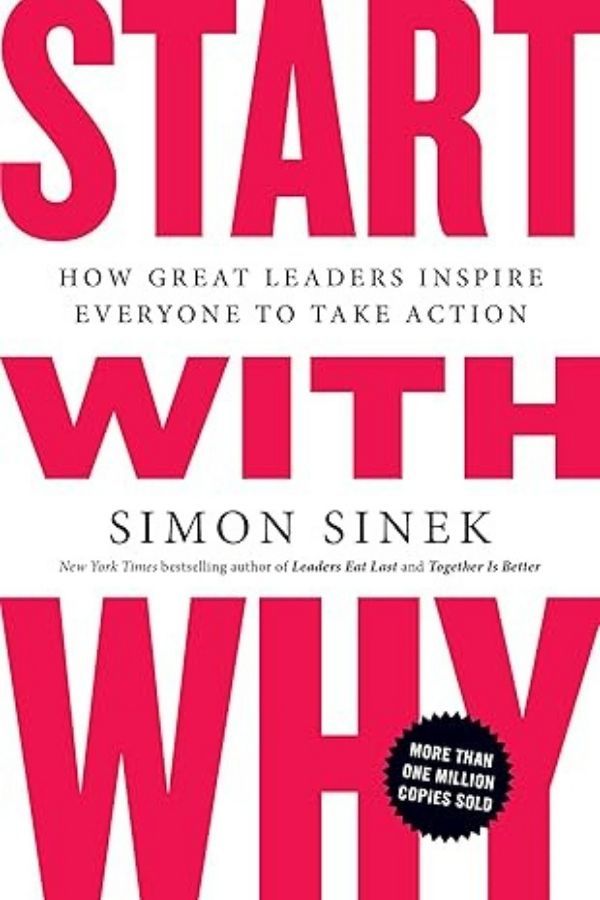
One book that I read several years ago was Simon Sinek's
Start with Why. Great read. That was the beginning of my journey of making sure that we defined what our purpose is. I really like not only the why, but then the how, and then the what, but it always goes back to that why. For us, that has been defined as changing lives and challenging the status quo. That is just what we continue to hold true and keep doing.
My experience has been spending time treating, serving, and helping build other leaders—so they can serve the people they’re most passionate about. That’s what makes me love what I do.
Why not build a business that you really love?
Why not do that?
Why not?
Why not build a business you really love?
It sounds really simple, maybe even sounds trite for some people, but it was not the case for me. I had to come to grips with "What do I really want?" As many owners, I was just floating, doing 40, 50, 60 hours of treatment and then treating on the weekends and hardly having vacations because all hell would break loose. Of course, when you go on vacation, that would just assume like, "That is just what we do. That is what owners do. That is what PT owners do. This is just the regular run-of-the-mill PT place." Once you force yourself to sit down and decide, "What do I really want from this?"
As you said, get down to some specifics, not just "Maybe I have a couple of clinics, and I have four or five providers." No, let us get down to some real numbers, including financial numbers. Like, "What do you want it to look like? What does your space look like? Do you have rigs on the wall? Do you have free weights? Do you have machines? Do you have treadmills? What kind of equipment do you want?" It is imperative to cast that vision. Correct me if I am wrong. Now, because you have gotten to a point, and especially along the way, you started attracting not only patients, but also team members who are aligned with that.
It is interesting to tell the story to you, Nathan, about the low back pain patient. I actually did not think about that story until I shared it with you. Maybe it was top of mind for me because, more recently, all of the PTs who I have been talking to who have reached out to us to be on our team, which is like a pause for a second. That is a huge shift.
You are going against the norm right now because usually people are begging and pleading for people to come join them. Are you telling us that you have got people reaching out to you guys to join your team?
It is extremely humbling. I feel this great sense of pride, but also this great sense of responsibility to continue to build it better, obviously. The last five PTs I have interviewed have all been reaching out directly to me. Like, "I see what you are doing. I see you are different. I want to know more about it. I want to be a part of it. I want to treat those kinds of patients whom you get to treat." I cannot even explain the gratitude because I have been in the same situation as everybody else, you know?
Bringing PTs on board has been one of our biggest growth constraints, just like it is with everybody in our industry. To be in a place where we are starting to have other folks notice what we are doing and what we get to do and the people we get to serve, it is definitely one of the things that I am super excited about right now because that just means I get to keep building it better. Building more capacity for these folks.
As you have gone along this ownership journey, it sounds like as you have done things that are in line with your purpose and your vision, you started attracting those people, but almost, am I wrong in saying, how do I say this? Not that business gets easier, but business, as we said, is more fun, more enjoyable, but it does get easier if providers are coming to you instead of you having to spend a lot of recruiting energy.
It gets a little bit easier to, and I know that you have done this in the last couple of years. It gets easier to drop insurances that do not pay you what you are worth. Maybe I am using the wrong verbiage, but how would you say that maybe business got easier, more fun, more purpose-filled, more fulfilling? How would you describe it?
Completely Untangling Ourselves From All Things In Network
No, 100 % because first it started with really narrowing down to who we serve. Once we defined who those players were, who that avatar was, and who we felt that we could bring the most impact to, we started to see that as long as we were providing that level of value, we did not need insurance. They are not coming because of United Healthcare. They are coming to see us because of community, word of mouth, and the brand that we are building.
Again, with that, it was not easy. Do not get me wrong. It took us about eighteen months to completely untangle ourselves from all things in the network. We did it piece by piece, one by one. That is a whole other rabbit hole to go down on, like how to successfully do that and survive just those tiny little revenue dips that happen along the way, and know that it is going to come right back up on the other side.
I guess it also is easier for you to now have that vision, but you are like, "If we are going to get there and have the impact that we want to have with our patients, with our community, with our team members, with us personally, financially, you name it, we are going to have to make some of these decisions that just do not fall in line with that vision." I guess in that regard, some of those decisions are easier to make, right?
100%. It not only was it not in line with the vision of who we wanted to serve, but also as I like on LinkedIn and just like in listening to therapists and really listening to what it is they want and really listening to what it is they complain about in our industry and what they do not want and like, "how do you build something not only that supports the impact to your community and to your patients, but how do you build something that supports impact to our profession where we are losing therapists day over day because of burnout and because of these more traditional models where it is just go see more and more people, and be unfulfilled."
In starting to hear that, it was also a reason to pivot. "I hear, not only do I see the value that the patients want, but I also hear what therapists want, and I cannot do this myself. Like I need them." How do I build something that they want to be a part of as well? That just made sense from the out-of-network standpoint, because now we have the autonomy as primary care PTs to drive plans of care, to impact our patients however we want. To impact them, whatever we see fit within our scope. If we want to help get them back to, I had three patients who climbed Mount Kilimanjaro and took a picture up there for us. Seriously? United Healthcare does not pay for that. They do not pay me to help them do that.
Along the way, you have really been able to set yourself apart. What are some of the things that you do in your facility that set you apart? You do have your avatar. Really, you are working with CrossFit athletes, but I know that it goes beyond CrossFit athletes. You are okay with that. It is not like they have to check a box that says, "I am a CrossFit athlete" to come to you. That is just the atmosphere. That is the environment that they are going to be in, and you are going to draw some of those people. What are some of the products that you sell, that you do, that you think really set you guys apart?
That is a great question because in my experience, you cannot take what you would normally do within an in-network facility and just all of a sudden say, "I am just going to be out-of-network concierge now." Think you are going to deliver the same deliverable. That is not going to happen.
That is a different mindset entirely.
Bringing In Muscular Ultrasound And EMG Testing As Diagnostics
Totally different mindset. One of the biggest things that we brought into the practice was diagnostics. By bringing in musculoskeletal ultrasound and EMG testing, the value that it brings and the differentiator that it has brought to the practice have been huge. Patients see things, and they get an experience here that they do not get anywhere else. They keep saying, "You guys are not normal PT. I have never seen this before. Like what?
You can take something and look inside my shoulder right now and show it to me?" “Yeah.” Guess what? We are going to make some measurements, and we are going to monitor your progress with that tendon too. We are going to be able to show you when that swelling is gone. That has been a huge differentiator for athletes and us. The CrossFitter has turned into basically all athletes, which has just been a blessing.
Now the brand is more like "We get athletes back in the game faster." That is just the brand now, which is great. Athletes love data. They love to see that sort of thing. They love to really niche down and know, like they know their bodies. For us, even bigger than or even alongside the diagnostics, athletes do not want to just come in and do exercise. They feel as if "I already know how to do that."
"I have been doing that almost all my life. You do not need to teach me exercise.”
I have got coaches, and I have got trainers, and I have got all of these other people like, “Who are you to tell me how to do exercises?" Understanding that you have to provide them with something they cannot get anywhere else, and understanding that we have to do it differently in order for them to see we still know we have to load things in physical therapy. We still have to do some of that. How do we make sure that we are doing that in a manner that we have that buy-in? With that, we utilize
NeuFit technology, which is an amazing piece of technology. That is so cool.
The Neubie.
Yes. The Neubie. We were the claim to fame. We were the second practice in the US to adopt the Neubie.
We have had
Garrett Salpeter on the show a couple of times.
Garrett is the best. I love him. We have had it for so long that Garrett actually trained us, specifically Garrett himself, on board, and trained all the practitioners. I’m very close with Garrett, love him and his team, but that has also been a huge differentiator because it is one thing to work with a patient through some of their exercise. It is another thing to be able to hook them up to the Neubie and our Neubie that we have, like little sports stickers all over the Neubie of all the different teams that have this in their locker room. We make sure we let them know, like Saquon Barkley, that is what he did with his ACL. We talk about all the other athletes who are using it. That has been a big differentiator as well.
It goes to say that you do not have to have diagnostics and a Neubie to accomplish all these things. Those things were just in line with your vision and purpose. You had your avatar. You thought these people needed these things, and in their therapeutic care, it could have been shockwave, it could have been infrared. If that aligned with your population, you could have taken anything and made it appropriate for your setting.
That, like the big picture idea, is that more and more, I hear the feedback from our patients, no matter what population we are dealing with, is "I can do the exercises at home." AI is just exploding, right? I am always challenging myself and my team, "Guys, we need to make sure that what we are doing and what we are providing is not something that they can AI Chat GPT that they can do themselves, because the minute we are not above that, we are failing. We are not doing ourselves justice."
There is a standard of care there, and you are the first person to mention that because I sold my clinics a number of years ago. I have not had patients who have come in and said, "ChatGPT says this and da da da." I am assuming, just speaking to the audience, you guys are probably hearing it a lot more than I do. Are you hearing it with your patients as well? They are saying, "This is what AI says." I am sure you guys have to be prepared to have that conversation.
A 100 % like it used to be, Dr. Google. Now it is not Dr. Google anymore. You can go to ChatGPT and say, "Make me my rehab program for my ACL." It will give you one month out, do this, two months out. It will give, so you have got to be better than that. We have knee replacements coming in now with AI technology and an app on their phone where they are monitoring, and they are telling them, "These are your exercises."
I had like one patient who, at two weeks post-op, wanted her to be doing these crazy wall sits. I was like, "I do not know about that AI app, but this is why you need to still be in here with me." The perception becomes "If this app can do it, if AI can do it, why would I not just do this myself?" We have to be better than that. We have to provide something that is better than that.
You have gotten to a point now where, like, you are out of network with several insurances. I do not know if you are totally cash paid yet. Are you?
We are out of network with everybody. The only thing we do is participate in traditional Medicare Part B, but that is it.
Really? Have you done that?
That is it.
Congratulations. That is amazing. You have got your new facility. As you said, you were talking with Joe a couple of days ago. What is the next step for Apex?
Unveiling Of A New Vision: Pioneering More Than Just Physical Therapy
One of the goals with the new facility and the vision, and "What does winning look like," was building, like, "We are built for more." That is our theme this year. It is built for more. Once we moved into Apex, it was like, or into Apex 2.0, into the new building. With that came a new vision, even. At our last big quarterly meeting, there was a whole new announcement of the unveiling of a new vision and just how we are going to continue moving forward.
“We are built for more.” That is our theme this year. Our vision has grown into pioneering more than just physical therapy—it’s about redefining what care can be.
Our vision has become pioneering more than just physical therapy. There are a lot of buckets that go with that, but the physical therapy is, again, not doing normal PT. It is the biggest compliment my team can get when somebody walks in here and is like, "We have never seen something like this or been through something like this before." We are like, "Yes, we nailed it." It is exactly right. Building on that, our concierge model is really building an ecosystem.
I am very much excited about a vertical growth model in which we build partnerships and affiliates to co-exist within brands and partnerships in which we are all serving basically this avatar client. Some of those look like ideas to me. What does that look like in practice? For me, that is partnering with a hydration company. We do on-site. We can do IVs. We can do peptides for athlete recovery and athlete performance optimization. We have a nurse on-site here. That is pretty cool.
That looks like partnering potentially with a nurse practitioner and physician on some regenerative medicine aspects, things like PRP. In Florida, we just had some pretty cool laws passed on stem cell therapies. Looking at things from a regenerative medicine aspect that way, nutritional counseling, really, is just all that whole layer cake. That whole ecosystem layer cake of "How do we just like be this one big premium medical destination."
Would you have had any of these visions, like 10, more than 10, 15 years ago?
No.
That is my experience. I got my clinics to a point, and we introduced diagnostics as well. That took me to Alaska, which I would never have dreamed of taking my family to.
I never thought you would be in Alaska.
Selling my clinics and doing conferences and workshops. “Are you kidding?” If I told myself that fifteen years ago, I would be like, "You are crazy. What, you are not going to be at a clinic with clinics not even touching patients?" It seems like you get to a point and then you do, as you said, have to create another purpose or a greater vision. When you get to the summit, you see that there is another peak in front of you, and it sounds like that is what you have experienced many times over in the last 10 to 15 years.
It is absolutely correct. That is a good point for your audience to hear. I had a coach who told me, "Your plan is never going to be perfect. It is never going to be a hundred percent like your plan." He is like, "Your effort, it better be." To that, I was like, "You are right. You do not know. We do not know. Where are we going to go and what is going to happen?" It is like, "Wait, okay, that is the plan. There we go." I never would have thought, even ten years ago, that we would be sitting in this building.
What would you tell yourself from ten years ago? If you had a chance to come across your ten years younger Angie McGilvrey, what would you tell her?
She was only like eighteen at the time.
I was going to say, “I know she was a young teenager, but.”
Right around, like, I think at that point in time, because that is interesting. Right about ten years ago is when we really started, like our first. We just celebrated twenty years of practice.
Congratulations.
Thank you.
Our first ten years were really just about survival in the private practice world. It really was just survival. The grind, everybody knows the grind.
Overcoming Obstacles: Building A Mindset For Doing Hard Things
I totally get it. I opened in 2002, and it was a lot of hard knocks for about ten years before I finally got my crap together. That is how I felt, too. Sometimes I feel like, "Damn, why did it take me so long to get my crap together? Why did it take ten years?" Totally agree. It did. I am glad I am not alone. I think one of the things that I know personally started changing, like Joe's and my mindset, was at that same point in time. We were introduced to Spartan Race, and you go out in the woods or whatever, and they put you on this race course, and you have to overcome all these obstacles.
We ran one, and we were like, "That is kind of fun. Maybe we should do that again. Wait, there is an award if you do three of these in one year. Let us try to do that award." What I did not realize we were doing at that time that I look back at now that I wish I would have known then was we were building this mindset and this bond together of "We do hard things, we overcome obstacles." This is just what we do, and we loved it.
There was nothing. I think we ended up doing 50-something of these crazy races in our lifetime before COVID, and then they stopped at COVID for a while. That is like when we paused and whatever, but like literally it was that adrenaline of "Wait, like do something hard, get through it, like get through all those obstacles. Now push to the next one." To your point, like you hit that summit. What we were doing in our personal lives really started to reflect what we were building from a mindset in our professional lives as well. I really do believe it had a lot to do with us having just the grit to jump and do the things.
What we do in our personal lives often reflects the mindset we bring into our professional lives.
I get it. You have shared a ton of information, valuable information, and you have made such wonderful gains. As we wrap up here, is there anything you would say to an audience who might be where you were before things started really changing, before you started making some real commitments to change?
If I think back to where I was and how to get unstuck from that place and how to gain that momentum, I really think it is going back and defining winning, defining what you want your game to be, defining your purpose. Like, "What is that at the end?" There are a million ways to get there. You just have to reverse engineer that process. Once you know what that win is, just take a small bite. You have to do something.
You cannot just say, " I wish," or "Maybe tomorrow." There is the Michael Jordan quote. "Some people want it to happen, some people wish it would happen, and then some people make it happen." The only way we can make it happen is like, you have got to put that small thing in motion. You have got to do something about it. It is elephant bites. As I said, it took eighteen months to go out of network. It is elephant bites.
I totally get it. Your story is inspiring. I love that you said you did the grind for a decade, and then you decided to make some changes, but your new building did not come up in a year. You were not like, "This is what my building is going to be in. It is going to be there." It has been years, maybe even decades, in progress to get to the point where you are now, where you can enjoy it. It was these baby steps along the way that eventually got you there, and the commitment and the dream. It was always ahead of you.
For sure.
Thanks again for joining me. It was good to have you on the podcast again. Good to see you. Congratulations on all that you have been able to do. Thanks for sharing.
Thank you so much, Nathan. It was such a pleasure. It is always for the guests, just so you know. From a feedback standpoint, it is always such a privilege from the guest standpoint, because we do not always take the time to stop and pause and acknowledge. What has been accomplished by high performers? We go, “What's next?” I just love to move fast and keep going. To pause and be like, "We did some cool stuff, and maybe some people can learn about it. We can share it." I really appreciate the opportunity. Thank you.
If people want to follow what you guys are doing at Apex or even reach out to you, what can you share?
My LinkedIn is Angie-McGilvrey. You can follow my leadership journey through LinkedIn. Our social on Instagram is
Apex Physical Therapy SWFL. That is really where you get the look inside of what happens at the clinic every day.
You guys post quite often and some really cool stories about your interactions with patients and how you are using diagnostics, etc., and also your new location. You guys are really active there. It is really cool to see.
Thank you.
Thanks again for joining me. I appreciate it, Angie.
Yeah, you too, Nathan. We will keep in touch.
Important Links
About Angie McGilvrey, PT, Cert DN, NTP