Most private practice owners think growth comes from doing more…more marketing, more hiring, more effort.
But what if the real leverage comes from seeing what’s already broken — and fixing it fast?
In this episode of the Private Practice Owners Podcast, host Adam Robin sits down with Nathan for a behind-the-scenes conversation on growth, leadership, and what actually moves the needle inside a practice.
From scaling a clinic to selling it… to building a coaching company and launching new offers like a fractional CFO model — Nathan breaks down the evolution of a business owner and the lessons that come with it.
This episode goes deeper than surface-level strategy. It’s about how your role changes as you grow — and why most owners stay stuck doing the wrong things for too long.
In this episode, you’ll learn:
- Why growth isn’t about doing more — it’s about fixing what’s leaking in your business
- The biggest mindset shift from operator → owner → leader
- How small operational fixes can unlock $100K–$200K+ in profit
- What most clinic owners miss when looking at their numbers
- How audits can quickly identify where time, money, and capacity are being lost
- Why “one or two focused changes” often outperform massive overhauls
- The real role of a CEO as your business scales
- How to think about systems, reporting, and decision-making at a higher level
- What a fractional CFO approach looks like inside a private practice
You’ll also hear how Private Practice Owners Club has evolved — from a podcast into a full ecosystem with coaching, workshops, and live events — and what they’re building next.
If you’re feeling stuck, overwhelmed, or unsure where to focus next — this episode will help you zoom out, get clarity, and identify the moves that actually drive profit and scale.
🎙️ Tune in to learn how to stop guessing in your business — and start fixing the right problems.
👉 Want help identifying where your practice is leaking money and capacity?
Book your free audit call:
https://calendly.com/ptoclub/discoverycall
👉 Join upcoming workshops and events:
https://ppoclubevents.com/04-17-26-workshop
💡 Love the show? Subscribe, rate, review, and share!
https://ptoclub.com/
---
Listen to the Podcast here
Beyond The Treatment Room: Learning The CEO Skill Sets For Profit And Freedom - Nathan Shields' Guest Appearance On Will Humphreys' Willpower Podcast
Nathan, thank you for being on. I'm so excited to be in another collaboration. How many show episodes do you think we've done together between your show?
On my show? You're probably in the twenties.
Isn't that amazing, how much time you and I have spent?
I feel pretty proud that I was the first guest on Will Power.
The Evolution Of A Leader: From One Clinic To The Stage
You better believe it. Number one and that episode crushed. It gave me all sorts of false hopes for the next ten. I had some great guests, but you were just such a powerhouse. It was a phenomenal introduction. I can't thank you enough for your support. You're at the stage where it's interesting for entrepreneurs to hear because you've gone through the whole lifecycle.
You were PT. You had a practice. You grew the practice. You sold the practice. There was a me in there at some point. There was an initial stage without me. Afterwards, you started doing other things. You've grown and scaled. The story that I wanted you to start with is this idea of what happened at your last event. Tell the audience about your events. Tell me about just what happened.
Me and my partner have Private Practice Owners Club, which is our show that I've been doing since 2020, 2021. Can you believe we've got, I want to say, 350 episodes? It's pretty crazy. It's amazing content for private practice owners.
It's the best show in the industry. It is the best. I'm chasing you. I like having people that chase.
Thank you. That makes me feel good. It's got great stuff. We also have a coaching company that coincides with that. Adam and I have built off of that.
Adam Robin, the great and wonderful.
He's awesome. We have a coaching company, we're obligated. Aren't you obligated a little bit to have conferences? We've been doing in-person conferences. We had our second conference last October 2025. We also decided to do some smaller workshops.
Intimate workshops. How many people?
Instead of 150 people at an event, this is more like 20 or 30 people in a room. We can be a little bit more intimate. Get into the weeds a little bit more. Maybe focus on a particular topic, one singular topic for a day and a half. We had the Annual Strategic Planning Workshop that we did early January 2026 to help owners map out their priorities and goals for the year.
The same exercise that you and I went through multiple times with Scott Fritz. I just tried to expand that to the group and took them through that. What was interesting is I thought it was done. According to our agenda, I was done after doing that. Things happened the next day where all of a sudden, we had two hours of dead space.
People are looking for something and there's just this open space?
It was after our morning break. We came back. There's two hours to work through until lunch. Essentially, that's the agenda. I had to come up with something. “What are we going to do? This is my conference.”
How many people were there?
We had 26 people in this room. They paid for it. They'd done their annual strategic planning. The agenda says that we got two more hours of this and then we've got lunch. That was scary. Interestingly, I felt semi-confident that it was just going to work out. You and I have been in front of enough people and enough groups like that. We've had enough experience. We've done enough things that we could come up with something.
You had this base experience that helped provided a degree of confidence in the face of this recent shift.
An exercise that you and I have done, especially in a small group like that, is like, “What kind of issues are you guys dealing with now?” I'm going to just call them out. I'm going to write them on the board. Moderate that discussion with this group. “Which one do you want to talk about first? Let's go. Who else is having that issue? What is your issue? Give us some context. Has anyone solved that?”
I share from my experience as well if I can. We just cross things off as we go down the list. That covered about an hour and fifteen minutes, and like, “Let's go take a break.” I needed the break. I didn't know what I was going to do next. During that break, I'm looking over some notes and like, “What else can we talk about? How can we make this valuable for the last 45 minutes?”
They came back. We’re like, “There’s three things we're going to talk about regarding your priorities and goals. What can you do to enhance them? Give them more life. Give them more energy. Make them more impactful. Have a greater vision for 2026.” We were able to talk through that for 45 minutes and then went to lunch. Huge hit.
Honestly, afterwards I was proud of myself. I can't say, “Where did that come from?” I know where it came from. I've been through enough of those to have the skill set. To be able to do that is something I could have never imagined in my wildest dreams. I know you've gone through a lot of the same stuff and the skill set you got.
It's important to talk about, though, because it's useful as PTs who are reading this, who are at different stages. We have students, new grads, young business owners, and experienced business owners.
Pediatric clinics and pelvic floor. It doesn't matter. Allied health care and mental health.
All these people who are going through this journey are hearing what most people would consider their own personal hell. “You have a group of people that you have to speak to for two hours that you didn't know you had to. Go. By the way, they paid you. You have to make it amazing.”
Isn't that a Seinfeld joke? To be speaking at the funeral, more people would rather be in the coffin than speaking.
Dying is number two. Public speaking is number one. For you to be able to pop up and knock that out and not have a big pressure. I want to say this, it is scary. It is incredibly hard. Learning how to develop that muscle for all of us, I don't care how good any of us look on stage or in facilitating. To me, that was powerful, Nathan.
It was this idea that that moment, for me, was a reflection of, as I've known you for years, how much you've evolved. I met you after having one location. You had one location. We were looking at expanding a second one together. Your job offer was, “What do you think?” That was the big offer. There was nothing written. We didn't go over any terms.
“What do you think about Florence, Arizona?” Not just what do you think, but what do you think about this desert hellscape called Florence?
It tells you there was divine intervention when what you were selling was the middle-of-nowhere Arizona with eighteen prisons. We drove together for 45 minutes away from my home. You said, without any terms, “What do you think?” I went, “I think it's pretty good. Let's roll.”
“Alright, let's do it.”
Best offer ever heard. I don't know what you're paying me. It turned into this place where you're facilitating owners in a room off-the-cuff. What I wanted is, this is the show. Key lessons learned in your journey of personal evolution in the physical therapy space. Let's go back in time. What were some of the earliest challenges that you had to face as a young business owner? Let's go right into that level of entrepreneurship. What would you say were some of the hardest things you had to endure or figure out when you were starting out?
The Early Grind: Marketing Dreads And TiVo Dreams
Opening the clinic was, of course, a leap of faith. It was scary. Some of my earliest challenges, I do not want to market. Going and starting a conversation with people that don't necessarily want to see me or weren't expecting to see me and somehow ingratiate them?
Have them send you clients?
I would sit outside in my truck and listen to music for ten minutes.
You're like Dwight in the Office, listening to that heavy metal song before you go in.
Not to pump me up, I just didn't want to go in. I don't want to do this. I had a goal. I knew that's what needed to be done. Back in the day, physician referrals, I didn't have anything else. There was no social media. What else am I going to do? Learning that skill set, I still don't feel like I'm the strongest marketer. You know that.
It's something that I had to do, just talk to people. It helps based on our background because you and I were in Boy Scouts. Probably had some leadership positions in Boy Scouts to stand in front of the other boys, as a troop leader or something like that. At church, we have opportunities to speak in front of the congregation from a young age.
In our church, we invite youth up every Sunday.
Being a missionary, talking to strangers all the time who do not want to talk to you.
You're in Japan, by the way, which I have got a new appreciation for you. Going in that language, trying to talk to strangers in a culture that likes to keep to itself. In Guatemala, it was like, “Que paso?” All these people were like, “Nada.” You start talking to them. You're talking to people in a culture that's very formal.
I had that. That didn't change the fact that I didn't want to be there. “I didn't want to be talking to you.” Building on that was extremely difficult. My vision was “If I could have me and another provider and maybe a PTA and a tech or two. If I saw 150 visits a week, I’ve made it.”
You’re killing it.
“I just made it. This is the best.” Whitney's my wife. We told ourselves, “If we can afford a TiVo, then we know we've made it.” I’m dating myself now.
“If I could only get an 8-track.”
It's crazy how your purposes change over the years. Getting to that point was like, “This is cool. Maybe there's more. One clinic's doing all right. Maybe I can do a second one.” The entire time, not building any systems. It’s people dependent. You know. I gave you zero support.
Emotionally, you were great though. I mean this sincerely. Actual processes and mentorship, no. When it comes to feeling like a part of something special and being led by someone who cares about what they're doing. Which, I'm learning in retrospect, is 80% of it. You were fantastic in those ways. Scalable? You couldn't provide that because you didn't know it.
Learning those things along the way was difficult and slow in coming. You and I both would agree. We should have gotten some kind of consulting or coaching earlier.
I don't think we knew about that.
We didn't necessarily know what it was. I don't think there was any. The coaching was nothing.
It was looked down on. Before when you and I first worked together, I will tell you that it was my emotional breakdown. That, for me, led to some effort in coaching. I reached out to that Measurable Solutions company because I was just broken. That's when you and I started together. It was desperation. It wasn't anything other than that.
My explanation to someone of what they were supposed to do in an interview, I literally said these words. “Your job is to do whatever I tell you to do.” That was my level of leadership because I didn't know what else to say or do. I need to treat patients. “Do everything else so I can treat patients.” That was my sole purpose. That was my goal.
That's what all my education led to up until that point, to treat patients. Head down, treat patients. “You guys figure out the rest of it.” Which isn't leadership, that's just being a therapist who happens to own a business. Those were tough lessons. I could see some of the lessons involved people looking at me knowing they had lost respect.
I've had that look many a time, my friend. That glance of like, “You don't know what you're doing.”
“You're a stupid business owner.” I'd be like, “Do what I told you.”
“Don't judge me.”
“I'm going to fire you.” Learning that, it's a hard lesson because you get to a point where you hate your work. You don't enjoy your own company. It's your company and you're just like, “I hate this.”
I started hating my life.
I can't go on vacation because that's when hell's going to break loose at the company, I'm going to go to call.
You're judged as the guy that's living for money.
I have to answer all the calls because no one else has any answers or problem-solving skills. Life just wasn't fun. Waking up at 4:00 AM to do my paper and pencil notes so I can get to work at 6:00 AM, 6:30 AM, coming home at 7:00 PM.
Rinse and repeat.
Financially, I was doing okay. That wasn't the issue. It was just my life sucked. Part of it is I'm a pretty even-keel dude. I wasn't necessarily emotional about it. It was more of, “This is just how we do things. This is how small business owners do things.” I didn't know any other way than to just nose to the grindstone. Those were difficult lessons for sure. Recognizing where I could have led more financial impact, besides that because I didn't know how to hold people accountable, how to track KPIs or how to track my cash. You name it. How many tens of thousands of dollars did we lose?
Millions, you mean? I don't know. I try not to think about it. I say this. I like to look at that as that was us investing in our learning. It's funny.
The Cost Of Doing It All: Moving Beyond The "Hustle" Mindset
That was our small business ownership tuition.
That price tag is going to vary by person-to-person based on their background, support, but ultimately their ability to be coachable and trainable. Since I've coached people, I've met people in their 70s who are still at that stage after 50 or 40 years of running businesses that long. They're learning different lessons. I don't think that we're better off than they are in terms of we're better people. The lessons they've learned are deeper.
We are better off.
Financial, yes. Quality of life, no question. They are learning, but that's the price. What would you tell the audience, the main three or four things that you learned from that timeframe that has everything to do with being able to jump on stage and speak for two hours? Maybe those are disconnected, but what would you say? In that timeframe when you were struggling through all that, what was happening in terms of education for you?
I was learning what it means to be a business owner because you could do the technical therapy very well as a business owner. Otherwise, you don't have the confidence to branch out on your own, to truly be a business owner. On top of that, what it takes to be a business owner is one category. The organization, the meetings, the agendas, the statistics, and all these kinds of stuff. It's another category altogether to learn leadership.
It's another category altogether to learn leadership.
All I learned was the leadership that I had learned in Boy Scouts and through church leadership positions and whatnot. I'm leading a bunch of kids that want to be scouts or don't even want to be there. A church leader position is a bunch of volunteers that have no impact on my financial well-being or anything like that. These are people that I'm paying to be there. How do I get them to move in a certain way, in a certain direction? What it was is, how do I take control of my life?
You were being at the effect of all these things. You're taking control.
The Slave To The Schedule: Lessons In Extreme Ownership
Being therapists, we are at the effect of our schedule. The schedule fills up and that tells us when we're busy and when we're not. Patients either come in or they don't. If I'm going to have free time, it's because someone didn't sign up for that appointment slot.
Which is incentivizing, in that way, for people.
We cede our control to the schedule. We are slaves to the schedule. It took me close to a decade to understand that if this is going to go anywhere, I am fully responsible for getting it there myself. It's not going to go anywhere unless I take control and say, “This is what I'm doing. This is what you're doing. This is what the business will do.” Ultimately, taking control.
This is where it starts to sound maybe more cliche to people. It's so powerful through the lens of what you just shared. That you started letting go of blaming others, started taking full accountability that everything was up to you. Not in a martyrdom like, it's only fully good. It's more like, “I am the captain of my ship.” You're the general of your future or whatever. You're the colonel of your calendar. The idea is that you decided everything, like Jocko Willink with that book Extreme Ownership, you took extreme ownership of your world and said, “This is up to me.”
I had to do something. I had to take control. We, initially, were doing stuff together at the Entrepreneurs' Organization, with EO Accelerator. They were talking about stuff like values and purpose and knowing your metrics and stuff like that. What are you guys talking about?
Different language.
People believe in that? You heard those things, but you're like, “That's for other businesses.”
“Purpose, vision, values is foo-foo.”
What is that going to do? How's that going to make me more money? Eventually, we started getting some coaching and consulting like, “You need to take five hours out of your week and work on your business.” You're like, “What?”
I remember thinking that was insane. It’s like, “I'm going to lose. I'm barely making a profit. Now, I'm going to cut out five to ten visits in those five hours.” I was seeing a lot. How many hundreds of dollars was that?
Per week. It's funny you say that because one of my first coaching clients, Steve, in Vegas. He called me to get some coaching. I don't remember this, but I told him, “I need to meet with you once a month, not during your lunch hour.” He said that blew his mind. He's like, “How could I possibly work that way for one hour a month to sit with my coach?”
It's heartbreaking.
Isn't that crazy? We can say that.
I felt that way myself.
We did feel that way. Taking control in that regard and then learning what it meant to be a business owner. That's an education that we had to have. That we never got from our therapy programs or from our undergraduate programs. We had to pay the tuition either in lost revenue or with coaching. You can do either one.
If you want to lose less money, you get the coach first. If you want to lose more money, don't get the coach. Let life teach you the lesson over a long period of time. It hurts a lot more. That's when I started having fun in my business. I don't know about you. We've had this conversation before. If someone could just take over the business side of things, just let me treat all day. I want to see patients all day. That was the dream.
Something happened. It's funny because if we're not messaging it correctly, it looks like we're stopping treating. What we see is the evolution. We enjoy so much more working on the business because you see the impact on the patients and the employees.
That was the cool part. I can be an influence on more than just this patient that I'm working on. I get value from that. That's what I've learned all these decades, to get to the point. I'm learning this. I'm creating this skill set and these tools to have more than just a musculoskeletal impact. More on leading people, driving their purpose, and coaching them. That being a greater effect on multiples of people outside of myself and that one-on-one interaction that I had with treating. That was you and I. I'm assuming. Not to speak for you, but I find so much more fulfillment and purpose in making that impact that treating patients just doesn't cut it for us.
When we were partners at Rise, you and I both talked about how much people love to trade in our crack. It was almost like we could never find that full fulfillment because of the many hats we had to wear. When we took over the leadership hat and we were able to grow the company in a way that was somewhere fun to work. We were having fun. The physical therapist, PTAs, the front desk, the billers all started loving it.
That was so fulfilling. We created an environment in the industry we love for people to do what they love and not have to feel that stress. They were getting compensated fairly, if not generously. That evolution was so much more satisfying than me trying to just treat my 25 patients in an hour, then somehow, run payroll. You're right. That was such a satisfying experience.
As we invested in them, you could see light bulbs going off in their minds. You could see their growth. They were fulfilling purposes that they hadn't dreamed of either. I'm assuming one of your right-hand women, Michelle, would have been in the same boat. If I could just treat patients, she would have the same path.
Do you remember the girl from Wyoming with whose named Kayla. She was so amazing.
She was awesome.
Where is she?
She has her own business.
How many locations? Probably, she's at three.
I stalk her a little. She got to go through that process because we modeled it well. We taught her the way to where our suffering was turned into our knowledge and then turned into edifying others. Not that they had it easy, but they had clarity in a way that you and I never had until we started exploring options for the first time.
They learned from our mistakes.
Minimally, they had a roadmap of what not to do.
It was cool. It was in that space then that we're growing the business. We're growing a leadership team that we're super proud of. People that would stand up and say, “I know I can make more money in other places, but I'd much rather be here because these are my people.”
I love it here. They would cry.
Creating something like that was so fulfilling. We had to learn some skills and tools to get to that point still.
The Courage To Confront: Accelerating Growth Through Clarity
What were the hardest ones for you to learn? For you, personally, what would you say were the hardest ones? Were they certain interpersonal skills? Was it certain leadership elements, like holding someone accountable? Was it firing people, hiring or money? Where would you put, for you, the greatest turnaround was?
It's something that I'm still working on. It's not a strength of mine. It's confrontation. Having clarity in conversations, holding someone accountable, that kind of thing.
That's true for most people, by the way.
Some people have an inclination to get it done more quickly. I'll drag my feet. Most people don't want to do it. For some people, maybe they're the minority. I think about Adam, my partner, if something's rubbing him the wrong way.
He's got to talk about it.
He's like, “Hold on, we need to go talk about this quick.” Whereas I'm like, “Let me think about it.”
His courage to confront, I've never seen it in another person like that ever.
That's directly proportional to his growth. His ability to confront the person or the issue is directly proportional to his growth. He's grown at a speed and a velocity that is significantly different than most. You'll see that in most people. You've coached enough people. You work with enough owners that the ones who make the decisions or have the conversations. Make changes faster are the ones that are opening their 3rd, 5th, 10th, or 15th clinic.
They seem less stressed, ironically. The ones that are like, “Hey, let's hit this head on.” They make more mistakes quicker. They learn from them faster, but they don't stop. They get to these plateaus so much faster. There's a guy, I was on his show, who's Brad Powell. Huge shout out to his show and just him in general. He's a younger guy, younger meaning almost 40, which is so irritating. In his late 30s, he's got this amazing multi-location business going.
He's pivoting the government for change in Utah where he was a lead on helping make a physical therapy considered primary care. They're changing the language to where insurance is half to lower their co-pays because they're not specialties anymore. He's doing that. He's in his late 30s. He's got three locations and more profit. It's interesting to see how some people like Adam and Brad have just got that gift. They can just run.
That's still a tough one for me, but at least, I feel like I have the ability to confront. I can and I have the verbiage behind it. You and I have read enough books that we can understand some of the premises and foundations as to where to start. It's not coming from a place of not knowing this. We have the capacity. That was a tough one to get over. The other is, I feel like I'm even still held back. You and I both have done the rocket fuel that has the visionary.
It was the controller, integrator, and visionary or rocket fuel which is part of the EOS.
I've taken that exam multiple times. I'm equal parts visionary and integrator. The score is 85-82. Where you and Adam offset me in a big regard is you guys are heavily visionary. That holds me back a little bit. It's something that I have to work on. Honestly, if I spend a lot of time in the visionary space, it's draining.
What's your working genius type? What's your two?
I'm towards the end, like D and E or T or something like that.
For those who don't know, Six Working Genius is, by far, the most important test you can take to determine where your energy in a business activity is going to generate from. The coaching and the tenacity, which is the doingness of things. There's not one that's better than the other. There's different strengths around them.
They’re equally important.
There's not one that's more useful than the other. You have to have a balance of a team that does all those things. One person can never be a team ever.
One person can never be a team ever.
Adam and I have complimentary gifts in that regard. I definitely lean more towards the doing this. If you give me your vision, I'm immediately going down the rabbit hole about, “How are we going to do that?” Coming up with it, no. Recognizing that and having you and having Adam as partners has been so beneficial in the things that we've done together. I've had to have it. It's hard for me to do things by myself.
The reverse is true for me. I struggle on doing the coaching, the one-on-one facilitation with a team member. I had to correct a team member. I don't have that many people underneath me in the org board. This one person slept in. The amount of frustration I have on those discussions. I can have them now just because I'm older and experienced.
The energy drain perpetuated for hours afterwards. I love coach, it’s all about all those discussions, the hard, the good, the positive. Honestly, I don't even like the good ones. I'm serious. I just need a whiteboard. I need a group of people who are going to tell me which ideas suck and how to get it done because all I have are ideas.
Even now, there are struggles. I had a call with a prospective client because I got this new program that I'm doing.
What's it called?
The current name is Profit Intelligence Program. It's where I'd be a fractional CFO.
We talked about this. This is your best one.
Profit Intelligence: Identifying Opportunity Costs
I can come in, look over some of your key metrics, and tell you where you're leaking revenue.
What I love about it is that it's so black and white. There's so many coaching things that matter. It’s like, “Help me build a culture. Let's build your purpose.”
“How do I get leaders?”
How do you draw that to profitability? It is vital, by the way, that you do that. It's harder to see. Whereas if someone comes and says, “You've got a leaky pot right here. Let's patch it and then immediately retain more water.” You're like, “That was a good action.”
“I can help you make $50,000 this year without seeing any more patients.”
Who doesn't want that?
Anyways, I was talking to someone. It was interesting because they are on the journey. There's two owners. They made a lot of money. It's the busiest year ever. They are working 15-hour days and 7 days a week. They don't have any hobbies, don't have time to read a book. I said, “I've got this show.” They're like, “We don't have time to listen to shows.”
That's sad.
It's that kind of thing. Doing their own bookkeeping, running their own payroll. One time I had to be frank with them and tell them, “You're too big. You can't do it all anymore.” I had to follow that up with, “You guys are doing amazing things. You've got an amazing company. This is part of the journey. I don't think you can bypass it. Whether it's for a long time or a short period of time, you have to go through the growing pains if you want to grow.”
You have to go through the growing pains if you want to grow.
They could scale back and just be in a happy space that has a nice 15% to 20% profit margin. Never grow again and see all the patients and do all the fun things. I don't think entrepreneurs start a business to do that most of the time. There might be people who are like that. I have come across a couple of people. One guy was a surgeon. He's like, “The surgical room is my heaven. All I want to do all day long is do surgeries.”
Which is pretty amazing.
We need people like that. I'm sure there's some dentist out there who's like, “If I can just get in as many mouths as possible, then my life's work is complete. I'm sure there are people like that.
Some of them are in prison.
Most entrepreneurs have greater dreams. It seems like even when we were in EO, words that would come to mind as people would tell them that would inspire others, is freedom. Why else do you do your own thing if it's not to have some freedom? When you become a slave to the company, you're recognizing there's no freedom in this.
It's very taxing.
Investment Vs. Expense: The Buy-Back-Your-Time Method
It's the E-Myth Revisited for every small business owner. I shared that book with them. What I had to tell them was, “You guys are doing amazing things. This is all very normal. You are on the path of ownership. There is more to look forward to.” You just have to learn some skill sets. You have to learn to delegate. You have to invest in the business by hiring experts.
It's no more about how much you can do on your own, pulling up your bootstraps, just getting done in the muck and getting it done. It's not like that anymore. You got to act like adults who have a million-dollar business, make million-dollar decisions, and stop looking at things as expenses but as investments. Hire a bookkeeper for health's sake. Let's get serious.
Delegate anything. It's a whole buy-back-your-time method. When you start evaluating your time and you start putting a financial marker to it. You start delegating everything below that marker, and then you start measuring. For me, the big thing was measuring opportunity cost. What does it cost me to not make those changes?
If I don't make these changes, how much money am I going to potentially lose?
What people think is, “I'm going to do my bookkeeping that saves me $300 a month.” What they're not calculating, “I might pay someone $300 a month to do my bookkeeping.” With those three hours a month, what if I was working in my genius? I was bringing in how many more? If I'm treating patients, how many more patients could I do?
If I'm developing the business, how many more therapists could I hire over a year?
We're talking about that $300 monthly savings compared to tens or hundreds of thousands of dollars of lost opportunity when we start objectively measuring it. That's why I like that program so much. When you start showing them the buckets. How did they respond to that, by the way? That couple?
Stop looking at things as expenses but as investments.
Honestly, they weren't a fit for my program because they were so discombobulated. I knew that I could go in and get them the data that they need to make some changes and increase their revenue.
Would they make the change?
They didn't have the bandwidth to make changes. I was just going to be more noise is what I gathered. I directed them honestly. They had in-house billing and that in-house biller needed a ton of support. I'm like, “You're losing money right there now. Let's get this figured out. Come back to me in six months.” I said all that just because that was a most recent experience. They're overwhelmed. They're just like you and I were. That's just part of the journey. You got to go through that lesson. I'm excited to see where those owners are. Where are they going to be in ten years? We were there in the exact same situation.
From Effort To Judgment: Scaling Beyond The $2M Mark
What's interesting too, for me, is that as I've evolved and started to hit new barriers for growth because of my lack of knowledge and my lack of control, I'm learning the same lessons. I'm just learning them at a deeper level. The whole getting someone else to do things for you goes to Benjamin Hardy's book, Who Not How?
As you know, I'm looking to hire someone who's going to be my COO and run my business. It's a huge investment. I was talking to Leila Hormozi, who told me this directly. She's a mentor-type of person. I don't even know if anyone here even knows. Our crowd probably doesn't even know who that is. They're a big deal in our world.
They should know Alex and Leila Hormozi.
Look her up online. She's a big deal. She was talking to me personally. She goes, “There's a major mental transition that happens once your business hits around $2 million or $3 million in revenue. It becomes more of something you have to re-learn every little stage. That is that the value you bring as an owner has little to do with your effort and more to do with your judgment.” Getting to the million mark, it's effort. Beyond that, it's your ability to make decisions accurately.
The value you bring as an owner has little to do with your effort and more to do with your judgment.
Leadership team, strategies, and systems. It’s what you do with your time.
All these things. She was saying that if you aren't as sharp as you possibly can, you're not getting the sleep or exercise you need. If you're not doing those things, it feels awkward. It feels weird. As Alex says directly, “Until your world is perfectly quiet, you don't know what the best thing is to do for the business. You have to have almost a state of boredom from a lack of things to do in your own business before you have the space to generate the best judgment to make these 10X decisions for scale.”
It's more of that same lesson that I'm learning over and over again. When I started Virtual Rockstar, I was very quick to hire for every little thing that I was doing. I started doing sales. “Let's hire a salesperson.” I don't like having one person. “Let’s hire multiple.” I started building these systems and people around me to where I was trying to get.
We've hit this stage in our growth where I don't know what to do. I've never built a company beyond the stage where I'm at. It's time to bring in an expert at a different riskier thing. I know I'm making the right decision because it scares me, like there's no other. That's the thing you and I might say to our younger versions of ourselves. The way you know you're doing the right thing is by signing up with that super expensive coaching company. Have you ever regretted any money that you've ever spent with any of the coaches or consultants that we've spent?
Never.
How much do you think we've spent? If you had to put a number on the money we've spent over the years on coaches, how much do you think we put?
Do you think it's $250,000?
Easy.
I would say I never regretted a penny of it. I love what you're saying there. When I'm telling that owner that they need to get a bookkeeper, she has that same fear as you hiring a six-figure CEO. It's the same fear.
The Expert Investment: Overcoming Scarcity And Fear
It's no different. It's the fear that keeps us there because for me, there's a lazy factor at my age. I remember the first time I hired a bookkeeper. It didn't work. The bookkeeper I have is the fifth one. I don't want to go through that process with my right hand. That seems impossible. You're also playing at such a higher level that I would argue. I'm going to put into the universe that I'm also leveraging.
I'm doing it smarter. I am way leveraging better people and expertise. I'm not afraid to pay top dollar anymore because I learned the hard way that usually you pay what you get for. Not always, but the vast majority of the time. If you had to go back in time to a younger Nathan. Let's say, you just opened your doors off of Germann and Alma School. For those of you in Arizona, you're losing your minds. You're like, “He said Alma School?” It’s this funny street name. That's where your first clinic was, Germann and Alma School.
Let's say, he opened his doors. You showed up from a time machine. You just popped out. After you go through the whole, “Is it me? The numbers behind my back?” That kind of thing. You know it's you. What would be the advice you would give them? You only have 60 seconds. That's another thing in this game because that time portal is going to close itself, and then you're stuck in 2003.
It'd be something along the lines of, “Invest in experts who can get you want to get you where you want to go faster. As you do that, you will find greater purpose. You will find a much more expansive vision for what you can do and be beyond this clinic.” That would blow my mind.
That was well said, Nate.
Thanks.
You also hit upon this idea of unlimited potential. I dreamed of the day of having 100 visits per week, another therapist, and be able to take four weeks off a year. That just seemed like an unreal life, a paradise. Make $100,000 a year. Live off that richness until I sail off in my yacht. That's how I dreamed. You look back. You're coaching people with multiple locations you're managing. You've experienced multimillion dollar sales.
You're filling the space on stages and rooms for hours on end without any hesitation. Isn't it true? I don't want to put words in your mouth. Don't you think all those years of struggle, you were digging a well of knowledge that you later pulled from? When in those two hours, maybe the reason you weren't scared was because you had been in so much suffering and learning that you had earned this well of knowledge. When it was time, without preparation, you were able to dip into that well and just pull it out.
Dip in from the pool of wisdom. The learned experience over time. One other thing I would tell myself and we'll get back to that that you brought up. I did have that thought exercise in my mind one time. It was at church. Something along the lines of, “In my current situation, what would my 90-year-old self come back and tell me?” This was in the middle of the struggle. I imagine myself at 90. What would my 90-year-old self tell me? That was more along the lines of, “You don't have to worry about it so much. Don't let fear hold you back.”
That's a big one for me too.
You were so enveloped by fear every week. Depending on the new patient volume and the collections. Move forward boldly in faith and make some decisions that aren't so fear-based. That's another thing that I would have to tell myself. I was ruled by fear. I'm ruled by the scarcity of money. If I could push through that just a little bit, then I will experience a lot more fulfillment and joy. That's another thing I would tell myself.
To go back to what you were talking about, because you and I have gone through that, we can pull from that pool of wisdom. Such that, interestingly in that moment, going back to my original story where I had to fill those two hours. We were talking about things. I remembered this distinctly. One woman shared that she had a provider that needed “more money.” She needed a raise. Yet, she still hadn't met her production expectations, but needed more money. I don't know why.
I was just like, ‘You need to have a conversation with her.” She was like, “Yes, I need to talk to her this next week.” I'm like, “Are you ready to role play it?” She's like, “I'd love to.” As I'm walking over towards her, I'm like, “I don't know how this is going to go. I hope this turns out well so I don't look like a bumbling fool and bring some wisdom to the stage.” We talked through it. She was like, “That's exactly what I need to do.” Thankfully, I watched enough of Will and Adam holding those roleplay conversations that I could mimic it in the moment.
I was early on with you in those rooms at Measurable Solutions. You were down with that. You were so good at those roleplay stuff. It was so hard. It's the only way, by the way. All these big successful companies, they roleplay nonstop. It sounds cheesy, but it is the only way.
The Power Of Roleplay And "Acting Like Owners"
I tell people all the time, “You have to roleplay these.” That's the one thing. Our team initially hated it. They started to recognize the value of it. It's an untapped secret that you could leverage.
It's like a book title. Roleplay to success so that you can take every situation. Practice it with another human being until you find your voice and then go do it.
To go through that with her and then to tell her, “You need to do this with your husband before you have the conversation. Get your words down so that the fear of not saying the right thing has gone away. You can focus on the moment, the response, and the emotion. Keep yourself grounded.” That was a cool experience that, again, I could draw from that pool of wisdom. That the experience that we've had in the past for the benefit of someone else.
Get your words down so that the fear of not saying the right thing has gone away.
That's powerful. I love the idea of the older version of ourselves coming back and giving us advice. I know mine would come back. Same thing, it's the fear. It’s just like, “Enjoy the process.” An older version of me would be like, “You're only going to be young like this once. I know money is a big concern. It's going to be fine. Do your best.” I want my older version to give myself permission to check out at that point.
“At 6:00 PM or whatever it was, 7:00 PM, just come home and be home. On Saturdays, let it go. If someone sends you, don't check your emails ever after.” These little things that we all think we know, but having an older version of me give permission to do that would have been so freeing. I'm sure before he left, he'd turn around and say, “Don't forget to moisturize.” He then would leave. By the way, I'm sure I would have known by looking at him. I'd probably need to start moisturizing. My face looks like a giant pent up of skin.
Mine would have said, “Do more to keep your hair.”
What can you do? “By the way, be four inches taller.” What? I can't do that. What am I going to do?
There's that part of us that just needs to give ourselves a little bit more grace and step back. What I was trying to say to that partnership was like, “You've done some awesome stuff. People want to see you because you're awesome therapists. You've created an environment which is welcoming. Not just welcoming, but generating results. Give yourself some credit. Let's act like owners.” I told them that. “You need to start acting like owners.”
I like that. It's a call of invitation to grow and to be better.
I'm recalling so much stuff as we're talking. My mom was not the wealth of wisdom and catchphrases. She's a beautiful woman and salt of the earth. I remember one time. I was going to graduate from high school in a couple of days. I'm scared about graduating because I've had so much fun. This has been cool. I don't know how it could get any better. I'm worried about the future because I'm going to be adult and stuff like that.
One of her wisdoms was like, “It's different, but it just gets better.” There's blessings and opportunities that you can't experience at your age. You get to have a family and children and a wife. All these cool things and experiences that you can't have when you're in high school. It's just different. You could say that to people, whatever stage they're in. It's scary but it's better. There are better opportunities out there. I remember that. I always think about that.
I love that, Nathan. That's a great way to wrap up our show. Just to remind our audience that it's going to get better. One thing that you and I can both say confidently, and I hope this is okay. If we can get to where we are, anyone can get to where we are. There was no Adam Robbins. That wasn't me. I wasn't the Brad Powell. I was the guy that was years of kicking into that. If I didn't have some of these intense negative things, I would never change. Thank you.
I'm going to keep going. Can you imagine how people see us that we're in that Measurable Solution? We were some of the younger dudes. We were looking up to Brandon, Blaine, Vinash, Chad Elms. How could we ever be like those guys? We're just acting like fools. You're telling lies at the podium about being in fat camp together and stuff like that.
I told everyone that's how we met. You were my counselor at fat camp.
We're the guys now that have the show approaching companies. They're probably looking at us like, “How did those guys do that?”
I don't know. It's funny. Those guys, as we see them, have like a million clinics. It's just funny how I still feel that way with all those guys because they're so freaking amazing.
I still look up to them. You're the one that should be having the show.
Plugging The Leaks: Programs And The Fractional CFO Pilot
Nathan, thank you for everything. This was such a great show. I appreciate it. I know everyone got a lot out of it. Please plug your program, your show, all the things.
If you haven't read the Private Practice Owners Club Podcast, there's a ton of value. I'm proud of my library. That's not just self-serving. I listen to my episodes once in a while. I'm like, “That was awesome.” Whether it was me or the guest. There's a ton of value there. To go along with it, there's the Private Practice Owners Club Facebook group.
It’s one of the most active serving Facebook groups in the industry, 100%. I love how you guys run that.
We have the coaching program. If you are in one of these stages and you're like, “If someone could just tell me what to do, that would help.” Always reach out to us.
Nathan@PPOClub.com or
Adam@PPOClub.com. We have PPOClub.com website that has under resources, it has our show library, which you can use a search menu to find the topics you want to learn about. The events page where we're going to have our next webinars and conferences. We have our October conference in San Antonio on October 15th through 17th, 2026.
Go if you haven't been there. It’s amazing.
They're awesome. It'll be our third. They're just getting better. We always have webinars. We'll have more in-person workshops, the more intimate settings. My new program, Fractional CFO program, is in the pilot stages. In early 2026, if you're reading this, it's in the early pilot stages. I'm happy to bring people on because I need to improve my systems.
They get a huge deal. They get this huge program just to be able to work through it with you.
Huge discount to help you find tens of thousands of dollars. I was doing audits on clinics that were just like one-and-done things. I was like, “Give me this data. I will analyze it and give you a report where you can make money.” I was punching out the numbers. There was one company that’s a $2.8 million PT practice to clinics. No joke. They made a few changes. Not easy, but few changes could easily make another $200,000 a year of profit.
Insane. That's money in your pocket. Talk about opportunity cost.
Totally changed their numbers.
Jump on this program while you can. How many people are you able to take?
Hard to say at the time that this comes out. I've got a few people. I can take a couple more.
If you want to be one of the few people, jump on.
This will continue to grow. I'm not just doing the audit at the beginning. Every other week, I'm looking at some of your metrics and telling you to focus over here, give you one or two prescriptions.
Not heavy lifting. It's like, “Go focus on this one step at a time.”
You could have three to five things to work on. I'm just going to say, “This will get you the most money the fastest if you correct it.” Over-the-counter collections or billing or productivity or that kind of stuff. That's the idea. I can come in and show you where you're losing money or leaking money. Plug those holes and make more profit. It's a biweekly thing with monthly reports as well. That's where I'm going with that. I'm excited about it.
Nathan, as always, thanks for being on the show. Thank you PPO readers as welk. Have a great rest of your time. I'm sure we're going to just watch the wonderful growth of that company as it goes. Thanks for all that you do.
Thanks. It was awesome.
Important Links
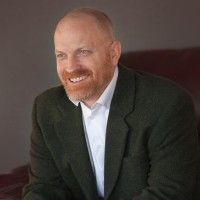
About Nathan Shields