Most physical therapists know something’s broken. Reimbursements are declining. Administrative burden is rising. And despite delivering massive value, the profession is still treated like an afterthought.
In this episode of the Private Practice Owners Podcast, Nathan Shields sits down with
Scott Gardner—clinic owner and leader of the
United Physical Therapy Association—to unpack the real reason behind the industry’s struggles.
From the “ancillary provider” label to Medicare policy, Scott breaks down why physical therapists are stuck at the bottom of the healthcare hierarchy—and what it will actually take to change that.
This isn't theory. This is a behind-the-scenes look at the legislative, financial, and systemic forces shaping your clinic’s future.
In this episode, you’ll learn:
- Why physical therapists are still classified as “ancillary” providers—and why it matters
- The real reason reimbursements keep declining
- How Medicare policy directly impacts your clinic revenue
- What MPPPR is (and why it’s quietly costing you thousands)
- The truth about “opting out” of Medicare
- Why most therapists complain—but don’t take action
- How advocacy and legislation shape the future of private practice
- What needs to happen for PTs to gain autonomy and higher pay
- Why unity across clinics may be the only way forward
This episode is not about quick wins. It’s about understanding the system—and how to actually change it.
🎯 If you’re tired of shrinking margins, policy confusion, and feeling stuck, this conversation will give you clarity on what’s really going on.
👉 Join the upcoming workshop:
https://ppoclubevents.com/04-17-26-workshop
👉 Learn more about Private Practice Owners Club:
https://ptoclub.com/
---
Listen to the Podcast here
Reversing The Reimbursement Decline - Scott Gardner, PT, DPT Of The United Physical Therapy Association
Welcome to the show. I have got Scott Gardner of the
United Physical Therapy Association and owner of multiple clinics under the name of
Gardner Physical Therapy in Maryland. Scott, it has been about a year, and it is good to hear from you again.
Thanks for having me back on. Good to see you.
It was great to have you at the conference this past October, and all the information that you shared and the capabilities that grassroots campaigns like yours can have to effect change. It was good to hear about that. It is also really good to hear about your ideas on how we can become more valuable. Frankly, how can we make more money? How can we reverse this decline in reimbursement through your presentation at the conference? I saw many great ideas that I saw you put forth. I am excited about that. Not that all of them will come to fruition, of course, but I love what you were able to present on.
Physical Therapy Must Become The Primary Entry Point And Shed The Ancillary Tag
Thank you. As our profession moves forward, we need to position ourselves as the primary care for musculoskeletal issues. I shall say neuromuscular skeletal issues. We need to be the primary entry point for that. We have a lot of work to get there. In the Medicare system, we are considered suppliers, and we are ancillary, and the ancillary tag really holds us back. Even though our profession has moved forward with a doctorate degree, the ancillary designation by Medicare is the reason we have MPPR.
It makes us basically stay underneath the physician-driven model. For our profession to move forward, we really need to work on being able to not be called ancillary anymore and be independent practitioners of medicine within the Medicare system. Now we have direct access in many states, but that is for commercial payers. We really need to get out from underneath that ancillary service provider tag
That is one of the reasons why we have the litigation that we are doing. Hopefully, the opt-out will help us to elevate ourselves slightly in the profession. That is just a stepping stone. I cannot do all this myself. A small group of members cannot do this by themselves. This is going to take a united front, hence the name United Physical Therapy. All of us in all settings need to work together. Why are we doctorate-level providers if we are not going to act like that?
If we want to be underneath the physician model all the time, then we should have just stuck with a bachelor's degree. We got the doctoral level, but we never got rid of the regulations that keep us grounded and at the bottom. We can discuss all these issues and try to tie them all together so people understand better why things happen. It took me a long time to really study all this to understand the nuances of the healthcare system and where we sit. We do not sit at the top.
We are at the very bottom, but all therapists and their patients know how much value we bring to the system. We all know how much money we save. We can discuss that a little bit if you want to, but I do not want to bore everybody with details. I do find it really interesting as to how we got to where we are and how we can try to move forward from that.
You bring up some great points right off the bat. I want to eventually come back around to what you have noticed or what you have learned in the past year, and what some of your efforts have entailed. Since you brought it up, what would it take for us to no longer be considered ancillary? Is there a group that would push back heavily on that? Are we just not willing to stand up for ourselves? What is keeping us from moving out from under that ancillary tag?
Physicians are going to want to prevent us from becoming more autonomous, for one.
Why would they want that? They just want to control the gatekeepers.
A hundred percent. We need to carve out where we help. We are not going to be the primary access point for everything. We are going to say, “Look, I did a small conference that was put on here locally by the orthos, and they brought in the primary care.” It was basically how to for the primary care to tease out the patients that need to go to the orthos and which ones do not.
The lecture was very well done. As a physical therapist looking at it, this is stuff we know at the back of our hands, but they are educating the primary care providers on what to look for. I am thinking this is exactly what we talked about. These people should be coming to us first. Basically, they said if they have X, Y, and Z, send them to PT first. If that does not help them in six weeks, then send them to us, and we will do the imaging and find out what interventions they need.
That sounds pretty basic.
Those PCPs have got a ton of stuff to deal with every day.
They have plenty of diseases coming through that they could focus on.
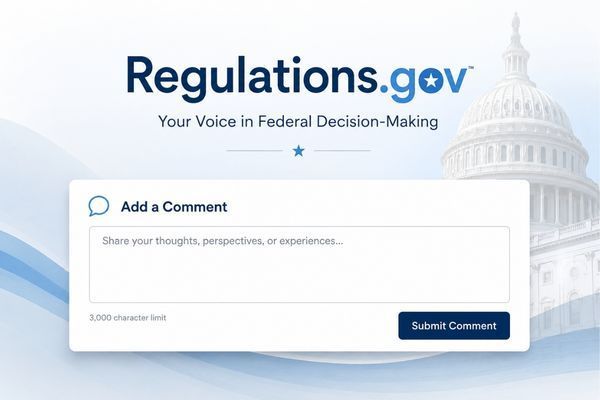
We need to position ourselves at that front point. How do we do that? Look, there are like 300,000 of us in this country. Everybody seems to like to type on Reddit and complain. I go on Facebook, Instagram, and what have you, but we need those voices to come together, especially when the Medicare physician fee schedule proposed rules come out. When there are opportunities, if we push something forward, we need to go to
Regulations.gov and push our voices out, speak with our Congress people locally, and just be more vocal.
That is the only way we are going to get this changed. A lot of this issue has to be changed legislatively to get us to be that position where we are not ancillary. The opt-out litigation that we are doing could be a first step because in the motion to dismiss from the government, they really spoke highly of what we do. Basically, we are so important to the Medicare system that they cannot allow us to get out of it.
That is what they were basically saying. We are so important to Medicare that they do not want to lose people having access to our care. They call us healthcare professionals in that motion to dismiss as well, even though from a loan standpoint, we are just considered graduate students. I found that to be interesting because a different section of the government called us healthcare professionals. I think we have leveraged some of the things we have.
You find in pushing the opt-out legislation or the opportunity to opt out as leverage to force their hands. Would it be a win if they said, "We do not want you to opt out, but we will take off the ancillary tag?"
I do not think that will happen. In the end, the opt-out just helps position us a little higher. We cannot lead any of these CMMI models. If you are familiar with that, that is the Center for Medicare and Medicaid Innovations. Those are the ones that create these value-based models like the HEAD model, the ACCESS model, and the total cost of care. We are downstream on those models. We cannot really lead them.
We did put a proposal in to CMMI about doing a value-based model with us for things like low back pain and fall risk, where we show the costs for us to do a treatment, plus the outcome. You have the other pathways they might go, whether surgical or injections, to demonstrate our value. What Medicare looks at, from my understanding, is they look at what their data says, and they are looking for their data in terms of where the cost containment is. We need to work directly with them to try to get us to have access to some of these models and move forward.
Are you telling me that APTA has never put that forth?
I do not believe they have. I looked all over the place, and I could not find where they submitted a model. I am not aware of them doing that. I do not know why.
That hurts.
We do not know unless we try, right? We should be leading some of these models, especially in the care that we provide for back pain, for sure, and all this prevention. Those are big things for physical therapy.
Even knee pain, you name it.
All the osteoarthritis problems they have in the older population. We need to do that. It will be very important if we can get some type of proposal. We could lead a study, even if it is a small sample of 50 outpatient clinics across the country in different areas, just to demonstrate our value for a year or two. They can compare that data as we move forward. A bunch of different organizations that work directly with CMS all say that it is fee-for-value that we are shifting toward. You and I practice in the fee-for-service model, where volume equals money. Our healthcare is shifting to outcome-based.
How do you see that model playing out in the next 5 to 10 years? How are they going to reimburse us for value when there is nothing that incentivizes us to create value? It only incentivizes us to generate more CPT codes.
What we will eventually see is a shift away from the fee schedule. If there is, they might just give you a set amount. “Here is a knee replacement. We give you two thousand dollars, manage it.” You might get paid based on the fee schedule, but after a certain amount of time, if you can get that person better and have good outcomes, and it is only $1,400, then they are going to give you the bonus. I think that is how these models work. Do not quote me on that, but I think that is how it works, where they give you money, and you manage it.
In Maryland, we are a total cost of care state, which is the only state in the country that has it. Basically, they give hospitals a large sum of money and say take care of the patients in that area. They have to manage outcomes. That is where we would come in handy. We could reduce costs because we could do X, Y, and Z in the home setting and then transition to them. They do not go back for a readmission within the first 30 days after discharge because that is where the costs go up when they are not taken care of and managed well outside. We fit so well in every aspect of healthcare. It is just that we are an afterthought.
It sounds like the ancillary tag being taken off of us is pie in the sky, a decade or more down the road.
Think of ancillary as like a physician can have a physical therapy office because it is an ancillary office product. What are the other ancillary things? It is labs, diagnostic testing, and imaging. MPPR is only applied to things that are ancillary. It is not applied to anything else. It is only applied to imaging and diagnostic testing done in a physician's office and, of course, physical therapy. If we can get rid of that tag, that would be good for us. In theory, would we still be ancillary in terms of whether the physician can have a physical therapy practice?
I do not know. There is nothing wrong with working for a physician practice. I am not saying that is a bad thing, but why can't we partner with them? If you want to join a physician, you should be able to partner with them so you can both benefit from treating the patient and not just be an employee of the physician. That is just my personal opinion. I really do think we need to get rid of the ancillary tag at some point to really elevate our profession.
Update On The Opt-Out Litigation Against HHS
I know you put forward the opt-out proposal this past year. Tell us the effects of that. That is something that has happened since our conference, if I remember.
We filed a suit against the HHS basically to allow us equal rights as physical therapists to be able to see patients in the Medicare system. It took a while for the government to respond. They responded in February with a motion to dismiss, which is normal. Basically, the rationale was multiple things. Let us go through and see. Reduced access to care, we would be more fraudulent in the system, continuity of care might be disrupted, and it could destabilize Medicare.
We responded in kind to those issues and said the opt-out already exists for physicians, and it has not destabilized Medicare. Honestly, I think a large percentage of physical therapists would not opt out. That being said, what if you live in an area where there is one pelvic floor therapist right down the street, and they decide that they are just doing cash-based therapy, and the next pelvic floor therapist is two hours away in a hospital?
If the patient has the means to be able to afford that physical therapist, you are really reducing their access to care by making them drive two hours to a hospital instead of being able to negotiate a private contract with a person. That is really the gist of it. Most of us are not going to opt out. It is all about equality in the system. The dietitians can opt out, but we cannot. I do not know why. These are all just written into law by Congress and the Balanced Budget Act of 1997.
If a patient has the means to afford a physical therapist, forcing them to drive two hours to a hospital can actually reduce access to care—when they could instead directly contract with a provider.
Why did you start there at the opt-out option versus other things, and what are some of the other things that you are looking forward to here over the next year or two?
Our attorney reached out to us with Pacific Legal. They are nonprofit, and they reached out to us and said they would be interested in entertaining this opt-out litigation. We read through it, and I thought, “We should be able to opt out.” Right now, HR 4204 is in Congress, and it is basically a Medicare patient access bill, which is the ability for us to opt out. We have it going through the APTA through the legislative side, and then us trying on the litigation side. Maybe the pressure of both may be enough to push it over the edge to get us to be able to opt out. That was our first focus. When they reached out to us, we discussed it as a board and decided to do this for the profession.
It sounds like you are doing that in coordination with the APTA from the legislative side.
They are doing it from the legislation side. They do not want to participate in the litigation side.
They are not necessarily collaborating on this.
Not at all. I am thinking both things are coming together. They could see there is a legislative aspect over here and litigation over here. Maybe it triggers Congresspeople to say let us just get this figured out. That is the hope. MPPR is something I looked at for about six or seven months. I flew down and met with the Attorney General of Louisiana. She gave us the idea of a petition. I asked what a petition is, and she said anybody can petition CMS for a rules change.
I spent another three or four months really diving into the MPPR when it started in 2012, and how it was originally written. It is written in the statute. CMS decided to apply it as they thought it would be appropriate under their eyes. It was just a 50% process expense reduction. CMS decided to apply it to all these therapy codes. We are basically petitioning CMS to re-examine how they do it. We are asking them to reapply it such that if I bill 97110 twice in a session and I do 97530 once in a session, the MPPR is only applied to the second duplicate unit. 530 is paid in full.
Strategy To Fight MPPR By Flooding CMS With Comments
The first 110 is paid in full. Right now, all the second two units would be wiped out. That is what we are asking them to do. In theory, a petition means they have to look at it, and they have to respond in kind as to why they decided to do what they did. My ask is going to be when we get to the proposed rule to really flood CMS with questions and comments about MPPR. We did it last year through our association.
CMS did comment in their final rule that MPPR was brought up a lot in this proposed rule, but it really had nothing to do with this proposed rule. It was a little blurb in there that they saw it. Voices do matter. When I met with the APTA last week, I discussed with them that a great thing for our profession would be that there are like 25 to 30,000 students in any given year. If we had an advocacy day in September, in the first week of school back in the fall semester, we could flood CMS with a lot of comments from students as well as professionals.
That would probably push it to 20 to 25,000 comments just from our profession. I think last year we had about 2000. They have to read every comment. That is the best part about it. Our schools have a great opportunity to be advocates for our profession, and the schools really need to be a part of that. I am hoping that we can make that work. We need the students to be more involved because they are what is coming out into this field. I just want to leave it better than when I got here. Right now, it is struggling.
You are doing great work so far. I hope you do not get discouraged. You are doing awesome stuff. I am curious, what did the APTA have to say about maybe recruiting some of these students for some support?
They did not really say much about it. It was like a 35 to 40-minute meeting last week, just going over different policies that they are working on, what we are doing, and answering some questions back and forth. We left on great terms, and I would like to be able to work with them moving forward on topics that we can agree upon. I said I am more than willing to help get the voice out there to help assist in getting some of these legislative issues to the public. We all as a profession need to work together.
Everything that happened in the past is in the past. Let us move forward. We will keep growing our association, and they can hopefully keep growing theirs. The more voices we have that can come together and unite, the better we will be. We will keep doing things our way, and we will reach out to them when we have something that we are doing and see if they want to be a part of it. If they do, great. If they do not, we will keep plugging forward and moving ahead. I really want to try to work together as much as we can going forward, so that we can help the profession out. They really are trying to help the profession. They take a legislative approach, and that just takes forever.
Their focus is not on the private practice owner. That is where we can cast a lot of complaints. It is not focused on reality, but mostly on what reimbursements look like on the ground. If the APTA came to you and said, "We want your help on this, Scott," what is the one thing they could come to you about that you would be over the moon excited about because the combination of your two efforts could really make a difference?
Payment, administrative burden, and student loan debt are all three things that I would definitely help with in terms of reaching out. Payment is the biggest issue for most of us who are owners in private practice.
Is it something outside of MPPR or opting out legislation? Is there something else that, if we really got together on this, we could make a huge impact?
I think MPPR. They are going to try to push forward a bill for that. We all realize it is a flawed policy. If we can really push together for MPPR, CMS can make some changes. They are allowed to move money around, but we have to be heard. If we can get it to stop doing it to all the codes after the first one and just do the duplicate ones, every clinic will probably make an extra $10 to $15 at least.
That will put everybody into the green again or the black or whatever you want to call it. It will help clinics out immensely. The thing is with Medicare, when they come up with something, all the commercials just follow suit, like Blue Cross. They think that is a great idea, and they will apply it to their patients, too. They all start applying it, so what comes from Medicare always trickles down to federal policy. It is very important.
If we can get behind that, and I think we really need to push the proposed rule, we really need to get our voices heard. There is so much apathy out there. If people would stop just punching it on the Facebook comments and actually do something constructive with it for five minutes, it would be much better than arguing with somebody on Facebook. That is what gets me frustrated when people say, "Come on, you can do more." What do you mean, I can do more? How am I supposed to do more?
We need to push the proposed rule and make our voices heard. There’s so much apathy—if people spent five minutes doing something constructive instead of arguing in Facebook comments, it would make a real difference.
What more do you want me to do?
You guys need to do this. Who are you guys? Even when I say that to the APTA, work harder, it is a volunteer organization. It is like Little League. There is only a handful of people who put the effort in. You all need to join. If you are not happy with it, join or join us and do what we are doing, but just do not stand behind the keyboard and complain.
That is why I love getting in front of your audience of a hundred people last year, just to tell everybody what we are doing. People said, "I have never heard of you guys. This is great." I am just trying to bring hope. There is a future for this profession, but we are not going to have it if we do not all stand up and start doing something about it.
I remember saying something about this last time we spoke, but what Adam and I are doing with private practice owners and trying to help them run their businesses better, become more profitable, gain more freedom, and expand more feels like we are just playing with the cards that are dealt. You are dealing from the place of working on the house and dealing with the dealers. Maybe the rules can change.
Maybe the odds can change if we change the cards up a little bit. You are dealing at a different level, and both are valuable, but if there is going to be lasting change, it really needs to come from a legislative federal place, versus what we are doing on the ground. The combination of the two can do amazing things, but significant change has to be made.
I really do think we can do something with MPPR if we keep pushing, because in Medicare, CMS can move the money around. Arbitrary and capricious are the two words that describe how they applied it. They just applied it, and nobody knows why. Why did you decide to do it to every code that comes down after one? Now, if I have an OTC in the patient after me, all their pills are cut too. It does not really make sense. I do not think that was the intent of Congress.
We just let it slide for five or six or seven or eight years because the conversion factor went up every year. We were still getting a bump. When the conversion factor started going down in 2020 or 2021, we are now getting a double hit. We got a 20% cut there and a 15% cut for PTAs. Now we have got MPPR. How much more can you take? Sequestration, do not forget that 35-cent sequestration. It is just nonstop. I do think that our petition has an executive summary on the front, so people can actually read what we are trying to do when they get it.
That is about thirteen pages in depth. We had an attorney read through it to make sure all the legal aspects were correct. We are eager to see what comes of it, but I am going to ask people to start writing in the CMS and ask them to really look at this petition. They can make some changes. They can move money around. They just have to realize they can move the money around.
People do not realize that they cannot make the budget bigger, but they can move it around. We have to show them why, and we have to show them the value. That is why we want to have a proposal. It demonstrates our value in the healthcare system. None of us is looking to get a lot of money per visit. How about an extra five to $8?
Can we get maybe on the other side of inflation?
Make-up factor. That is three percent every year. I did the economic index.
That would be great. What about indifference to the place of service? What do you think the possibilities are of eventually moving things such that we get more like what the hospitals get, or vice-versa, where they become more like this and their reimbursements for similar care?
I do not know. Site-neutral payments would be a solution, but I do not know if that is ever going to happen. I think one of the biggest issues we have in healthcare is that we have gone from about 75% independent physicians to about 15% independent physicians in the last twenty years. It would be hard for us to get site-neutral payments.
Hospitals have lobbying groups out there to fight against them.
There are a lot of lobbyists pushing to keep it the status quo. The biggest thing is educating the public that there is a cost differential between where you go. If you have a high deductible, you are going to pay about half as much if you go to John Doe across the street, who is independent rather than in a system. There are just so many issues and so many things that are out there that are creating the system we are in right now. It is really big. How do you eat an elephant? One bite at a time.
Pick your battle. Let us choose MPPR. We know if we can win that, we will get an extra $8 to $10 per visit. That will be a huge thing. That will give us the flexibility for outpatients to compete, maybe with the systems as you try to hire people, offer more benefits for your employees, and things like that. We all have to band together. I know advocacy work can seem really boring, but honestly, it is not. It is kind of fun. You have to understand the systems that we live in and why things are the way they are to really understand where you need to go.
Where would you go next after MPPR? Does Scott Gardner have a vision board of where he goes next after maybe the opt-out legislation or the MPPR stuff?
Future Vision Of An Independent Practice Association Network
I am going to retire. Honestly, I do not know. I have not really thought that far ahead because we have got this. I do actually know, I take that back. One of our goals is to create an independent practice association, which is a network of independents, maybe a clinically integrated network or an MSO. There are about three different concepts you can do. I do believe that, for the future of independence, we will all have to unite at some point under one of these networks to remain viable.
You mean state-led or regional?
Mostly it is state by state, but I think you can cross into other states and move forward. That would allow us to have more leverage in terms of how we buy things, our compliance, and our purchasing power for insurance in terms of malpractice and general liability. Everybody stays independent underneath the umbrella, but now compliance is run under one main organization. Credentialing is run under one main organization, like the MSO.
The HR is under the MSO. All these costs can be combined. Instead of having one person as your HR manager for five clinics, now you have 50 clinics with five HR managers, so the cost is spread out. If you are a clinically integrated network, work on value-based care and outcomes. You can start negotiating with payer contracts via an IPA. All three of these can work together to make your own little system within your state.
If you have a hundred clinics in one state under one umbrella, and you go to Blue Cross and say you would like to work with them, and they see one contract, it is going to be a lot easier to work with these insurance companies. That is where we are. We are too fragmented. The funny thing about PTs is that we do not really work together very well. The person down the street is my competition. No, that is my colleague. I am older, and that is how I think of it. They are my colleagues down the street, and I interact with them, but other people think that is the competition. There is enough business to go around.
We are too fragmented. The funny thing about physical therapists is that we don’t really work together very well. The person down the street is seen as competition, when in reality, they should be seen as a colleague.
There is. It took some actual numbers to help me understand that. It is something like ten percent of the people with musculoskeletal issues who are actually getting to physical therapy. A slightly greater percentage of those people are going to a physician, but they are usually getting treated with medications and sent over to the ortho. Nowadays, maybe they are just talking to their AI doctor and getting the care that they want. There is a small portion of people with musculoskeletal issues who are actually getting to therapy. There is a lot there. When you say there is a lot of work out there, there is.
That is why companies like Hinge Health are taking off. They are doing direct-to-employee contracts and saying they will take care of the employees as part of their package for their healthcare benefit. These are all things that we have to look out for in the future. These people have come up with ways to leverage AI and digital platforms to move forward.
The demand is there.
There are so many things to work on. If I did not have this private practice to run all the time, I would have a lot more time to focus on everything. We have so many things we can work on, AI aspects of digital care, fixing the front desk issues in terms of how you automate that, as you guys work on all the time in your clinic. It just takes time.
When you brought up the IPA slash MSO model, we have seen that work in Arkansas. Are they not using it for several independent practice owners?
I believe there was a huge one in Arkansas.
They are doing it very successfully in terms of their reimbursement rates and dealing with insurance companies.
That is the future. We need to band together, but you just have to make sure they all understand they can still be independent and still make their own decisions. We are going to share our outcomes, our protocols, and our data so we can demonstrate that we can get a low back pain case better in 7.95 visits at a cost of X amount of dollars. The insurance company can appreciate that. That is what it boils down to.
If we can actually show that in practice or in some of those CMMI models, the data is the biggest thing.
If we can get into a proposal, we can actually demonstrate our value. We know we are great at what we do, and our patients who come to see us love us, but we have to demonstrate that nationally. Our identity nationally is all over the place.
There has got to be something more to it because I know we have been pushing that a lot. Even when I hear from someone at the APTA at PPS, he said he was talking to a high-level executive at one of the insurance companies, and he asked why they keep decreasing reimbursement rates. What is the logic behind it? What can we do differently?
The executive said, "You want to know why we pay you less?" He said, "Yes." The executive said, "It’s because we can." Sometimes it is just that simple. We might be looking for the secret sauce and what levers we can pull, but sometimes it is a matter of putting our foot forward, banding together, and changing legislation. We have to work at higher levels to actually make an impact.
Rick Gawenda always puts posts out saying it will be a network of physicians or hospitals opting out. Why are PTs not opting out? It is true. It comes from why we all got into this profession. We got into the profession to care for people, so the money was never really an issue for us. We just want to make a decent living and take care of Mrs. Smith. When Mrs. Smith cannot afford the co-pay, I will stay late and take care of her for free.
It is hard for us to ask for cost-sharing on the patient side. I cannot believe that we are going to charge them $90 for today. You want to make $100,000, and that is $50 an hour without all the other stuff. There is a disconnect. We are so altruistic. We care so much about people, and I think sometimes that hurts us because we have a hard time saying no. When the insurance company says they will give you $45 a visit, where are those patients going to go if I do not take that?
This is true.
“I do not want them to be able to have care. I will see them, but I need to have a one-on-one for an hour.” The math does not add up, and I think that hurts us. I opted out of a couple of insurances, and it really has not hurt us that much this year. For most of them, it was not so much the dollar amount. It was the administrative burden. We were spending 50% of our time on 10% of our practice. This is ridiculous. You are paying us peanuts as it is, and you want me to ask for authorization every three visits? No, we are done.
Let us be truthful about it. The insurance companies that are paying you some of the worst reimbursement rates are the ones that have the greatest administrative burden.
It is crazy. You need to get away from them. If it is a bad relationship, do not stay in it.
It is like staying in an abusive relationship.
I would say when the patients start to realize they cannot get care anywhere, they will shift to another plan next year. We are just altruistic. We just care too much, and I think some of the time that is one of our problems.
It is one of our downfalls. We are a collective industry of people who like to be liked, and we will be submissive to whomever we need to be submissive to in order to be liked and play nice.
Joining And Supporting The United Physical Therapy Association
It took me a long time to get over that feeling. When I started this association, I knew I was not going to have everybody liking what I was doing. It took a lot for me to get used to the idea that not everybody is going to like what I am doing, but that is okay.
You are doing great stuff. If people wanted to join the bandwagon and learn more about your association, where can they find it?
UnitedPTA.org. We will be updating our website within the next week or so to put all of our initiatives on there and to show what we are working on right now. The website still has mostly initial launch stuff on it. We have really found our footing over the last few months and found our place and what we are good at.
People can donate to the cause there as well for the administrative support. Especially if they are not APTA members, I would highly encourage taking whatever you were going to spend on your APTA membership and throwing it somewhere good.
All the money for our association goes to whatever we are working on. I started this association with my own money. I have not taken a dime back yet, and it does not really matter to me. Everything that goes in will go out toward the small bills that we have each month for the website and things like that. Other than that, it is all advocacy-based.
You have to pay lawyers and lobbyists.
We have to pay for our MPPR attorney, who is not cheap. We need to pay for all those different things. Flying to Louisiana to meet with the Attorney General, staying in a hotel a couple of nights, and paying for my flight. Those things are important, but we use them all for advocacy. As we get more and more members, the savings account builds, and it will allow us to do more with it. If I can get around to it, I would like to form a PAC so we can start doing things like that.
There are different types of PACs, and I am still trying to figure out which one we want to do. The APTA PAC is connected, which means you have to be a member to donate. We can do a non-connected PAC where your patients, your mom and dad, or your brothers and sisters could donate to a physical therapy PAC. We might do something like that in the future so we can donate and support candidates who are pro-physical therapy.
That is great. If people wanted to find you on social media, where do they go?
Facebook is where I post most of the time because I am older and I understand that best. I am trying to start a TikTok page, but I have to get my kids to help me with that. I am not a TikTok guy. You can go to the
Facebook United Physical Therapy Association and just find us there. We have a fair amount of followers already. That is where I do most of my posting.
As we grow, we can find more people to help with some of the social media aspects. I would love to leverage that. I have so many hours in a day to do things. We leave it open for people to post stuff. We do not have to approve everything, but if somebody has a good comment, and we can get a discussion going, we will post comments from other people to get the discussion going.
Thank you again for taking the time. Scott, it is good to catch up and see all the good work that you are doing on behalf of the industry.
I appreciate it. Do not take my word for everything I say about the value proposition stuff. That is how it goes. In terms of the CMMI value-based care, I am learning as I go, and it has been a great journey. I appreciate your time here.
Thanks for your work.
Thanks, Nathan. Bye.
Important Links
About Scott Gardner, PT, DPT