Most healthcare business owners are incredible clinicians…
But completely overwhelmed when it comes to actually running a business.
In this episode of the AI Doctor Podcast,
Dr. Mark Allen sits down with Nathan Shields, founder of Private Practice Owners Club, to unpack the hard lessons, mindset shifts, and business systems that transformed Nathan from a burned-out clinic owner into a successful entrepreneur who sold his practice for 3x the national average.
Nathan shares the painful reality of early ownership:
4AM charting sessions, endless patient care, burnout, leadership struggles, and the moment he realized clinical excellence alone would never create freedom.
This conversation dives deep into:
✔ Why most healthcare professionals struggle with business
✔ The mindset shifts required to become a true owner
✔ How coaching and systems transformed Nathan’s clinic
✔ The biggest mistakes owners make when trying to grow
✔ Why implementation—not information—is the real separator
✔ How AI is beginning to reshape healthcare operations
✔ What successful practice owners do differently
Whether you’re a PT, OT, speech therapist, mental health provider, or healthcare entrepreneur, this episode is packed with practical insights on leadership, systems, profitability, delegation, and scaling without burning out.
💡 In This Episode, You’ll Learn:
• Why being great clinically is not enough to run a successful practice
• The hidden cost of avoiding leadership and business systems
• How Nathan scaled and sold his clinic successfully
• Why most owners stay stuck despite having access to information
• The role mindset plays in growth and decision-making
• How AI is changing documentation, billing, operations, and analytics in healthcare
• What separates thriving owners from overwhelmed ones
🚀 Resources & Links
👉 Private Practice Owners Club:
https://ppoclub.com/
👉 Facebook Group: Private Practice Owners Club
👉 Podcast: Private Practice Owners Club Podcast
💬 Love the episode?
Subscribe, rate, review, and share with another healthcare owner who needs this conversation.
---
Listen to the podcast here
The E-Myth For Clinicians: Moving From Technician To CEO - Nathan Shields' Appearance On The AI Doctor Podcast
Overcoming Private Practice Burnout: An Owner's Journey
Welcome to the AI Doctor Podcast. I'm your host, Dr. Mark Allen. I am here with our guest, Nathan Shields. Nathan has built a 4-clinic practice in Arizona, which he sold for 3 times the national average. He has now taken that experience, the leverage and his created a private practice owner group podcast to share that wisdom with others. He's also created a coaching practice and a mastermind for allied health professionals to increase their profits, become better leaders, and find more freedom in their ownership. Welcome to the podcast, Nathan.
Thanks for having me, Mark.
I’m really interested in hearing more about the first moment that you realized that this was a problem for yourself, really understanding your business. Can you take us back to that?
I started my first clinic in 2002 and, I'm a physical therapist by trade. Physical therapists in general, if you've met them, they are high-achieving individuals like any medical professional who's decided to hang their shingle. The mentality typically is pulling myself up by the bootstraps, nose to the grindstone, I'm going to figure this out.
Physical therapists in general, if you've met them, they are high-achieving individuals like any medical professional who's decided to hang their shingle.
I was doing the billing and collections by myself, I figured out the billing and collections, how to submit to Medicare, and answering the phones and, I was just going to figure it out. This is this is how it gets done. Eventually I started hiring people, so I smartened up and I started hiring people to do the things that I shouldn't be doing and all that.
I remember even a few years into ownership and things were going pretty well, I had a busy schedule, I had support team and whatnot, and some of my clients that I was relatively close with could open up with, because in the therapy space, I'm going to see these people two and three times a week and so you develop a relationship with these people and they're like, "How's the business doing, how are you doing?”
I had to be frank with a number of them and be like, "I hate the business side of things. If I could just treat patients all the time, that would be a dream.” Getting an office manager, I tried it a couple times, I couldn't trust them, it didn't work out, all that stuff. I recognized finally, it took me 10 years, 12 years before I finally figured out I needed to figure out how to run my business. I let go of any responsibility like, "Just do what I tell you to do and we're all going to be fine."
It didn't work out well. Business was good, but I was burned out. It was like 4:00 AM wake up in the morning, doing patient charts, getting home at 7:30, not seeing my newborns awake for days at a time, just seeing them in the crib as I left and as I came home and that life really sucked. I finally got some consulting. That's a longer story but I finally got some consulting on how to run my business, like how to be a business owner. That totally transformed my life.
Within less than a year, I finally had the freedom to work on my business, I started seeing a change in the culture of my employees, I had more freedom, I could delegate, I was developing leaders within the team. Life just got significantly better and honestly, within about I think about 4 or 5 years, maybe 6, that we eventually got to the point where we could sell our clinics. We had a great offer and sold out.
It was painful to go through that experience and in starting the podcast that I have, I almost feel like I'm talking to my younger owner self, like “These are some of the things that could get you further faster if you implement them.” A podcast wasn't a thing back in 2002 but now that it's there, hopefully my audience is taking it like learn from me, don't do the same things. Learn from my mistakes.
I think I answered your question. I started rambling but that's how I started the podcast and the coaching is because I wanted to teach people, "You don't have to do it my way. You can do it a better way. I know your mindset, I know where you're coming from and you want to be the best provider and you want to be the most compassionate but these are the things you need to do in order to run a successful business, otherwise you're going to go under and that's not going to be not going to be fun for anyone."
Transitioning From Clinician To Business Coach
You started the show first and then, when did you start doing coaching and your mastermind? How did that evolve?
It was a couple of years later that I started coaching. Seriously, I didn't see myself as a coach, as the coach type. I'm a little bit more of a numbers guy, a little bit more analytical. I invite guests, it's a guest focused show so, one of my guests was like, "Are you coaching?” I said, "No, I'm just doing this podcast.” He's like, "You should be doing coaching." I'm like, "Why would I coach?" He's like, "Let's see, you've got the experience, you have the knowledge, why wouldn't you do it?” I was like, "Okay, someone believes in me so I guess I'll try it.”
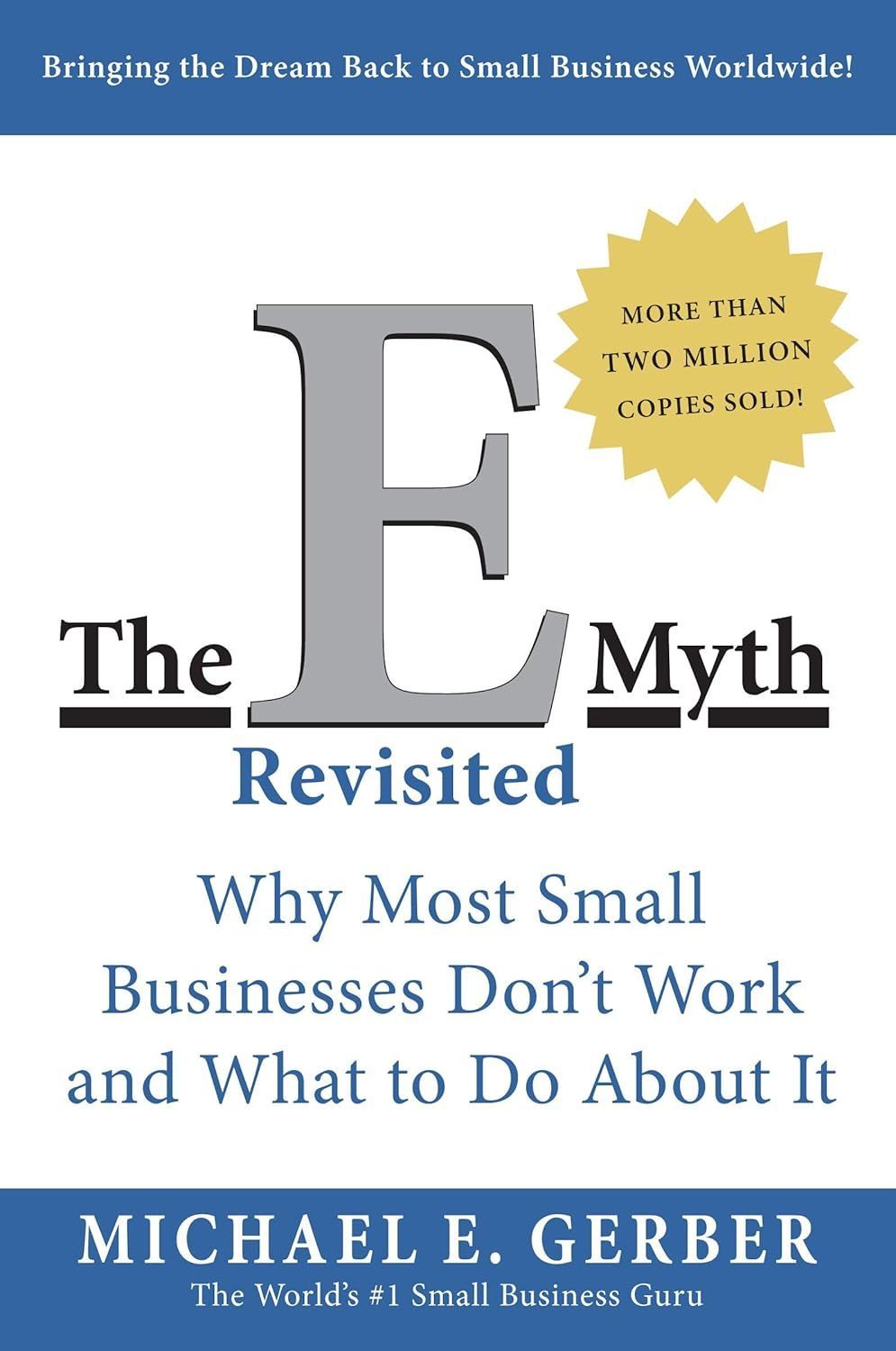
I threw my hat in the ring and started doing it. Eventually, I brought on a partner, he was much better at the marketing and sales of it and so it's grown since then but you can find it at Private Practice Owners Club or PPOClub.com is the website, but the show is Private Practice Owners Club and we talk all about how to run your business better. It's all small business, stuff that you learn from The E-Myth Revisited and Good to Great and Traction and all those great books, just talking about how to run our businesses better.
You’re bringing all those best practices of running a business to a healthcare professional that probably wasn't taught that in their education.
They definitely were not taught that. It was not talked about. Interestingly, I had a nurse practitioner that I saw in Alaska at one time and I told her I was doing this podcast and on subsequent visits she's like, "I love your podcast. I'm taking notes all the time.” Interestingly, that just taught me that what we're talking about are small business principles that translate no matter what industry you're in. I come from the physical therapy background, we coach PT, OT, speech therapists, mental health therapists, and a lot of the same business principles applid just applied to our space but they are all the same principles.
Scaling Private Practices: The Coaching Roadmap
Now talk me through the coaching program and your mastermind program. Who comes into that and where do they typically start and what's your process to walk them through increasing the value, getting gaining all these benefits?
Driving Practice Growth: The Role Of Mindset And Accountability
Can you share what are some of the results that you're most proud of?
Yeah, we so we had an in-person conference in Destin and we invited one of our clients that had done really well in the program and he presented all the things that he'd done and he'd grown from zero patient visits to over 200 visits a week, which is really good for physical therapy practice, within 6 months. Just ground zero to full blown going whole hog. Super impressive.
What you see in those types of clients, understand, there are clients that haven't had that success. What I'm trying to say the difference between the two is it's the same program, they got the same support. Yet one had significantly different results than the other. For me, it goes back to how willing are they to implement and integrate what they're learning quickly? How quickly are they willing to have the uncomfortable conversations that need to be had? How quickly are they making decisions? The ones who don't do as well are dragging their feet on the decisions or not making the decisions and being at effect of their environment instead of being at cause.
The ones who don't do as well are dragging their feet on the decisions or not making the decisions and being at effect of their environment instead of being at cause.
They are maybe stuck in the, "If I'm not seeing the patient, then the patient's not getting the best care," even though they have other team members that could provide that care. Maybe they're not taking the time to work on systems within the organization so they can delegate those processes over to someone else, and then maybe not following up by having the uncomfortable accountability conversation. The people that do well are doing those things and moving forward in spite of their fears, in spite of their self-doubts. Implementing and integrating and doing the hard work.
A key question seems is how do you move more people into the category of the winners? How do you shift them to take action, not just listen?
I wish there was a secret sauce. All we can do is encourage, all we can do is try to inspire, try to give them examples. That's why I really like the mastermind group, I like the group calls, because they can get on there and see, "These other people had the same problem but they got through it because they actually did what they're supposed to do.”
It's coming from me, it's almost like when they listen to me or a coach, it's almost like they're listening to their parents and they're like, "I don't know, maybe that's a good idea but or maybe that works for everyone else but it doesn't work for me. I'm different," kind of attitude. When they hear it from their peers, it's taken completely differently and now they start thinking "Maybe I need to change now."
“If they can do it, I can do it."
For sure. "I can do it. They did it, I can do it. It's not that hard."
The Future Of Therapy: AI Adoption In Healthcare
Tell me how you see AI playing a role in what you're doing. You're already you have some implementations of AI, how do you see it in the future impacting your clients and your business?
What we see in the therapy space is AI really helped with documentation. That has been a big one. Let me tell you this about the therapy world. They are really slow adopters to technology. They are really hesitant. Honestly, they're usually a little bit more of the granola hippie type of personality that would rather do things naturally than take on technology. Seriously, we're usually about ten years behind what you might see in dental and whatnot.
Documentation is making headway now, thankfully. I'd love to see it adopted more. Compliance and documentation as well would be really helpful. We're starting to see inroads on AI's helping with billing and collections and improving that end of it and that could continue to improve but still, people are slow adopters. Even the emrs themselves are are just trying to figure out how to leverage AI more.
Not to take away the interpersonal interactions, but it seems like there's a lot that could be done on that maybe a front desk person or someone that's doing verifications and authorizations where AI could take over that and get the information that they need. I think it's going to take some longer time but we might be forced on us at some point depending on how the insurance wants to play the game. At some point, you'd imagine the insurance companies are going to compare our plans of care against what the AI generated best practices are.
We're going to have to justify our plans of care up against what the insurances say they are and we might have to leverage AI on how we treat patients and what we're doing. I think that's further down the road but a lot of the operations and the financials and that stuff the analytics and best practices for how to run the business, you could use AI in almost all that stuff. It's just a matter of time and how we're going to do it and what softwares are going to be optimal.
You're helping all these now different OT, PT, you said mental health. What's the thing that all these clients have in common when they come to you?
Unlocking Success: Common Traits Of High-Performing Owners
You said it before. They don't have a business education. They're usually great technicians, they're great therapists, they can get good results with their patients but they don't know how to run the business optimally. Number one, they don't know what metrics to be aware of, they don't know how to generate systems to create a standard operating procedure, an SOP.
They’re like, "What does that look like and what are the what are the products that I should expect out of my front desk person, what are the products out of a therapist, what are the products out of billing and collections?" They don't know how to manage a billing and collections team. Usually, they just get the reports but they don't know how to read them and they'll just believe whatever the billing and collections team tells them.
Teaching them how to understand the business principles, understand best business practices, how to manage these teams, how to coach the other team members to be better leaders and find the solutions themselves instead of relying upon me as the answer man all the time. Coaching them up so they can become coaches within their organization and develop a leadership team. That runs off of systems and is not system-dependent, not people-dependent, and then tracking the metrics to make sure things are going the right direction.
Of all those things, when you're talking to a new client, what's the biggest promise that you give to them that they're going to get by joining your program?
If they really invest themselves and do the work, our purpose is to transform lives. When I'm sitting on like I had a call with a client, she was at the end of being with us for one year and I had a one-year follow-up call and she's like, "My life is totally different. Looking at last year, I was overwhelmed, I didn't know where to start with running my business, it was just me and someone else. Now i've got three providers and a front desk team.”
“i've got time to work on my business and I'm looking at opportunities for growth, I'm looking for a larger space and all these things. I could have never imagined that I'd be in this space this time last year.” Some people are seeing that within 3 or 4 months, some people are seeing that within 6 to 10 months, 12 months. They're getting to the space where like, "I'm feeling confident as an owner.” It transforms your life when you do that.
Now where can our listeners go to learn more about you?
We have a Facebook group called the Private Practice Owners Club Facebook Group. That's where you can go in and ask questions about how to run your business better, how to handle people, what to deal with how to deal with insurance contracts, that stuff. We also have the podcast, the Private Practice Owners Club Podcast. You can find it on iTunes and whatnot.
If you want to see our website, it's PPOClub.com. That also has some of the episodes and the events that we're having coming up, the in-person workshops, the in-person conferences, the webinars that we're doing. That's different ways to find all about us, Private Practice Owners Club, but if you want to find me, I'm on LinkedIn at Nathan Shields PT.
Nathan thank you so much for joining me and everyone, I really appreciate you tuning in. I'll see you in the next episode.
Important Links
About Dr. Mark Allen