If you’ve ever felt like hiring is a shotgun approach and retention is just luck, this session will change how you build teams. In this Total Talent Masterclass, Brian Weidner (Career Tree Network) sits down with Nathan Shields to unpack a strategic, repeatable approach to building a game-winning culture of recognition and retention that actually moves the needle.
Nathan walks through how intentional values, recognition systems, and leadership by metrics turned his clinics into high-performing, sticky organizations — the same factors that helped him build and sell a business at a valuation well above industry averages. Together, they cover how to stop reacting to churn and start engineering a workplace people want to join and never want to leave.
You’ll learn:
· How to hire and fire by values so culture becomes a competitive advantage (and not just a buzzword)
· Practical recognition systems that scale: from peer-to-peer shoutouts to quarterly town halls and value awards
· Why embedding values into every stage of the employee lifecycle (ads → interview → onboarding → reviews → offboarding) prevents culture drift
· Ways to measure recognition success (NPS for employees, retention & productivity KPIs, and qualitative pulse checks)
· How to balance production AND values — and why sacrificing one for the other destroys morale fast
· Leadership playbook: lead like an owner, coach by metrics, and create career conversations that reduce surprise exits
· If you’re a hiring manager, clinic owner, or HR lead who wants predictable staffing, lower turnover, and a culture that amplifies productivity, this masterclass gives you the framework and tactical next steps.
🎯 Takeaway: Culture isn’t fluff — it’s a scalable business lever. Do the value work, measure it, reward it, and watch retention become a strength instead of a headache.
👉 Want to go deeper with Nathan? Book a call with Nathan —
https://calendly.com/ptoclub/discoverycall
❤️ Love the session? Subscribe, rate, review, and share!
https://ptoclub.com
💬 Join the conversation: If you haven’t already, find the Private Practice Owners Club Facebook Group to connect with therapy owners and leaders who are building great teams.
---
Listen to the Podcast here
Creating A Game-Winning Culture That Attracts And Retains The People You Want With Brian Weidner
Welcome to the Private Practice Owners Club. I'm your host, Nathan Shields. In this episode, we have another opportunity to share an interview that I did with Brian Weidner of the
Career Tree Network and his Total Talent Masterclass webinar. I was a guest on his webinar. We talked about culture, recognition, and appreciation. I was able to share my experience with the culture that we created in our past organization, how it significantly influenced our productivity, retention, attraction, etc., and altogether, the importance of having an outstanding culture in your organization. Hopefully, you take a lot of notes and get a lot of value from it. I'm excited to share this with you.
---
We had the bio from Nathan, but I thought I would go out to the podcast on Apple. If you have a chance, the
Private Practice Owners Club Podcast
is available. It's a great resource on a variety of different topics. That's how you and I first connected back in January of 2019. I found you through your podcast. I had listened to a few of them. I was like, “This is a cool resource.” I had reached out to you from there. Since then, you have had 328 podcast episodes.
It's crazy. I've been doing the podcast since 2018. To do over 300 episodes, I never thought I would get this far. It has been a labor of love because I've enjoyed doing it and always wished that there was a resource like this when I owned my clinics back in the day. I started in 2002. Podcasts weren't a thing. Business coaches, I had never heard of such a thing before. To provide a podcast where I could introduce successful private practice owners to other private practice owners, share successful actions and tips, and talk to industry influencers has been exciting to do. It has been cool. I've gotten some great feedback. That encourages me to keep doing it.
For someone who has never listened to the podcast before, is there one or two episodes that you're most proud of, or you think they should check out, aside from the ones that I was in?
Thanks for putting that caveat on there because those would be the top three. Adam is my partner in this
Private Practice Owners Club. You'll hear him be the host many times on these episodes. At the end of 2024, for anyone who is a private practice owner, we did a series. It was an eight or nine-episode series of the Private Practice Manual Series. We broke down the business into nine different parts and talked specifically about those parts of your organization.
I truly believe that if anyone wanted to improve their business, if they were at the beginning stages of their business or honestly at any stage after that, and wanted to improve particular sections of their business, they would get a wealth of knowledge from those particular episodes. If you look back into 2024 towards the end, and it's in the September 2024 range, there were some great episodes there that he and I went back and forth, sharing our experience and successful actions that would help any owner in any situation.
How Brian Sold His PT Practice Above The National Average
Thank you. You built and sold your physical therapy practice for three times the national average. That seems pretty impressive. You're well above average in terms of what you sold it for. I'm curious, thinking back on that, why do you think it sold above average? Were there things especially related to human resources and maybe even our topic? Was there a certain reason or multiple reasons that you think led to your practice being one that was especially valued?
There were definitely a few reasons. The major reason is that we did what's called a roll-up. In the industry, when you do roll-ups, you aggregate many businesses together to be put on the market at the same time. Thus, your valuation does go up. That was one portion of it. The other portion of it is, of those aggregate therapy clinics that came together, we had the most profitable clinics, which definitely added to our value.
We also came with a culture. They knew us as the Risers because we were Rise Rehabilitation Specialists. We brought not only our culture, which was better than anyone else's that was in the group, as well as leadership team members. We had management team members who were key components of the ongoing entity after the sale, which was super valuable. All of these came together to allow us to even get to that multiple that we did.
Building A Culture Of Recognition And Appreciation
We're talking about building a culture of recognition and appreciation. When we first set up this topic, I had given you a few different options. You had selected this one for us to talk about. I'm curious. It's important when you look at staff retention and being able to have people thrive in their roles. Is there something about this topic that you thought was important for us to talk about, or one that you felt like you wanted to talk about versus the other options that we had discussed?
The first thing that comes to mind is that I don't recall what the other options were, so I probably didn't have as much experience in those.
A lot has happened since then.
I mentioned that when we sold, we had an amazing management team and we had an amazing culture. I can speak to that with a little experience as to why. I saw how we intentionally drove that. Intentionally is not from the perspective of, “We want a better culture.” We did it from our intention of wanting to be more productive, work with people that we wanted to work with, become better leaders ourselves, and have a company that we were proud of. We had all these underlying intentions that, if I were to put it together, we wanted a significantly better culture. I felt like I could come from a place of experience to speak about that.
When you think about the culture at your clinics, what are two or three words that come to mind about what that culture was like? Give us a feel. If we walked in and met some of the people on the team, how would we know that they were part of the culture? What characteristics would they all share?
I always wondered if these would carry through, and they did. We had our core professional values. We also had some cultural values. Our core professional values were professionalism, accountability, growth, and empathy. We lived those fairly well, or at least we held each other accountable to those growths. We also had some cultural values that explained the people in the culture a little bit better. That was fun, family, and freedom. We wanted to work with people who we felt like family. We wanted to have a fun time doing it. It was all about freedom to help us be more, do more, influence more, and help each other grow and progress.
Those cultural values that we expressed got lived out. I can see that now, in the fact that we sold back in 2018. The people who bought into our company, I still see pictures of them getting together on Facebook. This is seven years later. They celebrate each other's birthdays. We see each other at the conferences. I saw some of them at the Private Practice Section conference, where you were. Huge hugs, caught up, and never skipped a beat. I know exactly who they are. They know who I am, and it's not uncomfortable. Those truly got lived out.
The Right Approach To Hiring And Firing People
When you think about this topic of recognition and appreciation, would you be able to walk into a clinic where the people are recognized and appreciated? Could you tell that that's happening? What would that look like if you walked into a clinic and you saw that culture in action? Would there be smiles on the faces of the clinicians, motivational quotes on the wall, or stars next to names for recognition programs? What does that look like in a clinic setting?
Let me back it up a little bit before we get into recognition and appreciation. I have a pretty good idea when people are living out the values of their owner when I walk into a clinic that doesn't have a good culture, because I've lived that. That sucks. You've done it, too, or at least I would assume that most people have if you're reading. You walk into it, and it's cold, not temperature-wise. The front desk person hates their job, or at least they don't treat you like they care. They might have systems in place, but people are more robotic. It's not warm. It's not inviting. There aren't many smiles.
That tells me that the owner's values are not being lived out. That's because either he hasn't expressed them or he doesn't care. He or she doesn't express them or care, and doesn't hire and fire according to those values, and hold people accountable to those values. When someone comes in, and there is a great culture, I can tell because it's warm. It's inviting. The people are nice. They're still following systems. They're trying to do as much as possible to make you comfortable and be professional. They make sure things are all going in the right direction.
When someone comes in and finds a great work culture, they will do as much as possible to make things go in the right direction.
Typically, if they've been part of that culture for a while, they're trying to do things that are above and beyond what you would expect. They're trying to get that five-star experience and, if possible, a six-star experience on a five-star scale. They're trying to do a little bit more. That's what I see when I go into those places that are truly living out their culture. They are living out the values that have been intentionally pursued and held people accountable to over the course of a long time.
In that situation, to start bringing it back around to recognition and appreciation, I'm not there yet. We would hire and fire according to our values. That was our thing. It meant that our values, professionalism, accountability, growth, and empathy are pretty much laid out in our job classified ads. Back in the day, it was Craigslist. Now, it's Indeed. Maybe Craigslist still happens. It wasn't just like, “We need somebody who can fill this job description. Here's the job description.” It was, “This is who we are. If you're looking for a place that's X, Y, and Z, you agree with these values, professionalism, accountability, growth, and empathy, and some descriptors behind that, and any of that rings true to you, then please reach out because we want to talk to you.”
During the course of our interviews, we would talk about professionalism, accountability, growth, and empathy. How did you show that out? How do you think that is seen in the workplace? On our annual reviews, we would talk about professionalism, accountability, growth, and empathy, and measure you according to those. It is how you can be better, more professional, and more accountable. In our weekly team meetings, we would take five minutes at the very beginning of our meeting and have a little value discussion time where we would pick one of the values.
Usually, one of the team members would lead it up and talk about accountability. “This is what accountability means to me. This is how I've seen it in the workplace. This is why it's important. Does anyone else have any other thoughts?” We would talk about it. We would assess people according to those. When someone has done something that has led us to decide to let them go, I find it helpful to tie that to a value that's not being lived out. “When you're not showing up on time, that lacks professionalism. We've given you plenty of chances to step up. It's still becoming an issue because that impacts everyone else. We need to hold people accountable to the values, or the values don't mean anything, so we're going to let you go.”
We did a lot of that in the background. Coming back around to recognition and appreciation, during some of those team meetings, we encourage the team members to call out other team members who have shown that value to them in the past. Someone mentioned somebody was working with this patient. They were having a rough day. Instead of blowing them off or maybe getting a little bit snide with them, so-and-so lived out our value of empathy, talked nicely to the person, took them to a separate room, and decided to finish up their treatment there and maybe talk it out or maybe allow them to vent a little bit.
They showed empathy during that situation. That's a great example of how we can be more empathetic. That was an opportunity for people to get called out, recognized, and appreciated. On top of that, we would always do end-of-the-year banquets. Inevitably, we would give out prizes for those who lived out those values, such as professionalism, accountability, growth, empathy, family, fun, and freedom. They would get a certificate or a gift card. They would be brought up to the front, handshake, get pictures taken, and that kind of stuff for living out those values. That was a way for us to recognize and appreciate people who not only live those values but were great examples of them, and that other people could look up to for those values.
I love the congruency there between how values come in at all stages of the employment experience, from the job ad, the first impression, to the interview process, all the way through termination. If you look at the full life cycle of employment, it sounds like your values were embedded in each of the stages of that.
How To Know When You Have To Let People Go
When we were letting people go, yes, they could do something wrong, and maybe that loses you money or something. You did something wrong against another employee, or you were late, as I mentioned. Those can all typically be tied back to your core values. You have to say at some point, “That won't work with our team and our values. It could work with someone else. It's nothing against you. There's no shame. It's that it doesn't work here.”
When we started holding those values in place and keeping them sacred, then what happened is we started attracting more people like that. People who were attracted to the ad with those values started applying. They bought in. We're talking about culture. We're not just talking about recognition and appreciation. We're talking about developing a culture. This took 18 to 24 months at least before we saw the fruits of it.
You have to let some people go who aren't part of that, and you have to bring on people who are engaged at that and willing to buy into it. Once we got into doing that, the ball started to get rolling. When you start talking about productivity at that point, we had a culture of production. One of our mottos was, “Production is the basis of morale.” That was one of the first things that we all said together at the beginning of any of our team meetings, like a leadership team meeting and a clinical team meeting.
That was also a cultural piece. We bonused according to their increased production, which is a form of recognition and appreciation. That was a way to build the culture. To tie it back to my initial story, I believe it's those things, getting the right people, team members in place, and showing them how to be productive led us to have greater profit margins than the rest of the people in our group that eventually sold, and developed team leaders that were superstars compared to other management team leader and team members from the other organizations that came on through into the next organization.
I like how your values were not loose and attractive to everyone. When you say empathy, for example, some people are fine and are not that empathetic. They would not be attracted to a value that has empathy as part of it.
If you're not these people, that's fine. We tend to work well with those types of people. You're going to be pretty uncomfortable in our organization, frankly.
It's good that you're setting that up because you want the right type of person on the team. That helps the overall culture to get stronger as you have the right alignment on values and vision.
Benefits Of Holding Quarterly Town Halls
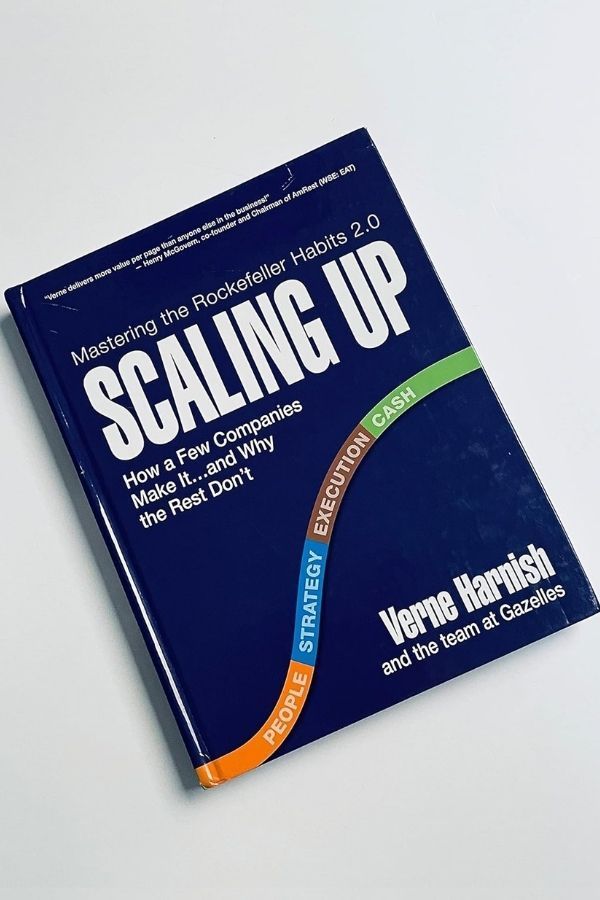
Can I tell you one of the proudest things that came from all of this as we developed this culture, recognizing, appreciating, etc.? We would have what are called quarterly town halls. This was based on some recommendations in the book,
Scaling Up by Verne Harnish. We would have these quarterly town halls where we would shut everyone down for an afternoon on a Friday and get together. You would hear it occasionally, but we would hear it. People would say, “I know I can get paid more at other places. That's not where I want to be. This is my family. This is where I want to be.”
Recognizing People Working Beyond Their Job Descriptions
You mentioned your town hall meetings and the trophies that would be given out for identifying with the values. Did you have any other recognition systems, or have you seen any other recognition systems that you think are effective in terms of driving appreciation at a clinic, things like incentive programs, Google reviews, or a celebration that takes place?
A couple of things come to mind as you're talking about that. These weren't like, “This person lived out this value, so they get this.” It was more like giving them opportunities to lead out. It is recognizing that maybe they have more talents than the borders of their job description. I loved it when my business coach would be like, “Do you feel like you have to do that? Don't you think that people on your team could do X, Y, Z?” This was stuff like putting together the birthday recognitions for people's birthdays.
I would ask the team. The team meeting was like, “Guys, I'm not good at getting the card, getting the cake, getting everyone to sign, and maybe getting some balloons or flowers. Does anyone want to take that over?” That's in no one's job description, but the person who loves that stuff shoots their hand up into the sky. He says, “I would love to do that.” That's what comes to mind. That's a way of showing recognition.
You have gifts and skills outside of your job description. Let's use them for the betterment of the organization. One therapist loved CrossFit. She's like, “Do you mind if I take an hour here off of my schedule and go set up a free consult room at my CrossFit box?” I'm like, “Yes, that would be awesome.” Again, let's recognize and appreciate that she has skills and talents outside of physical therapy, but maybe there's a way that the two can meld together.
You have gifts and skills outside your job description. Use them for the betterment of your organization.
“What are we going to do for National Physical Therapy Month? Who wants to head the committee for what we're going to do to show appreciation for our patients? What are the decorations that we're going to do? What are the dress-up days going to look like?” Recognize that they want to be a part of something, and it doesn't always have to be related to patient care. They'll love it. They'll do it for free. They'll own it. I don't have to do it, which makes it even better. They'll do it better than I. I appreciate them. “I thank you so much.” They're not doing it for my appreciation and recognition. They're doing it because they love it.
They're able to bring their whole self to work as well and share their passion.
If they love it, they're probably going to do it well. When they do it well, everyone else is going to recognize them. Their peers are going to be like, “That was awesome. Thank you so much.” It goes further than a boss saying that.
We all want to feel valued and appreciated. If we can do things that we're good at and have that be part of our responsibilities, that's an interesting way to accomplish that. Putting someone in charge of something that they would enjoy doing that builds that culture is a great idea.
We would also play games. This all goes back to one of our cultural values of fun. We would have pumpkin carving contests between the clinics. We can have the best pumpkin carving display, not just the pumpkin, but they're at the Halloween display. We would recognize birthdays. If someone was with us for a number of years, they were going to get recognized for their loyalty. Those are some pretty standard things. Recognition and appreciation come along the way.
We're going a few years back, so the memory is a little bit muddy. I can imagine myself having given someone else, like my marketing person, the responsibility of recognizing birthdays, recognizing anniversaries, and giving her a budget for each one of them. “Do whatever you want within this budget. I don't care. Let's show some appreciation.” It was on the calendar. They knew when it was coming up. They prepared all for it. They also weren't afraid to do it after hours. It was fun. It wasn't work. It was fun for them. That benefits all the team members now that they're getting recognized and appreciated.
Advantages Of Doing Daily Vs. Quarterly Appreciation
What are your thoughts on balancing a structured recognition program, like the quarterly example that you gave, as opposed to the everyday appreciation that feels more genuine? Do you look at balancing?
There's room for both. You can recognize and appreciate, and maybe hold people accountable in a timely manner. There's still room for opportunities that need to be taken advantage of, whether that's quarterly assistance or semi-annual or annual assessments. You're looking bigger perspective to say, “This is where I see you in the organization as a whole. This is where I see holes in your performance. This is where I see you can improve in terms of living out the values that we have.” That's also a time to talk about, “Where do you want to go in the future? Are we helping you get there?” It is recognizing that they have dreams beyond us. If you use the word recognition, we can take that in many different ways.
In this way that I'm talking about is recognizing that we've come to a point where we understand that we were typically a stepping stone to something else for most people. They weren't going to die with us. They're usually going to go someplace else for any myriad number of reasons. It is recognizing that they might have goals, dreams, and aspirations. If there's an opportunity for us to provide them a situation where they can live those out, 1) We should know them. 2) Figure out a way, if it's possible, to incorporate that into their employment with us. It is recognizing that they are people outside of the work they're performing.
That's a great point. A lot of our clients hope for that never-ending employment. When we hire someone, we want them to stay for the rest of their life. In reality, you're right. People do have dreams beyond their current role and things that they're working towards, or who knows what life has in store. If you can be a manager or a leader who recognizes that and wants to support the person globally and holistically, you're going to be in a lot better shape, as well as in terms of getting information that might be helpful to you.
If you have an employee who has an aspiration to move to China, that's something that you want to try and stay on top of. You can get a timeline for that versus them keeping it secret and not sharing that with you, and then you're surprised. I had a client who had a person who was supposed to retire in 2027. The person decided to retire in two weeks. They're scrambling to replace that. Every case is different. Certainly, if you can support the dreams of your people beyond what you can offer them currently, you're in a lot better spot.
That's where you take advantage of those quarterly and semi-annual assessments. Yes, you're assessing, but at the same time, “Are we on the same page? What are you looking forward to doing in the next 3 to 6 months that we can help you with?” Sometimes, we would have this conversation even during the interview process. We could open the door to a potential awkward conversation. That conversation went along the lines of, “Down the road, we'll bring you on. You've been working with us for a few years. What does this scenario look like when we're going to break up?” They're going to leave. What would be the potential reasons why? How would you handle that?
You see how we're opening the door to what some of their future dreams and aspirations could be. “I want to live in Alaska sometime.” “I need to know that.” Also, the second half of the question is, “How would you bring that up to me? Are you going to handle this according to our values? Are you going to be professional and accountable about them, but also share your growth aspirations, which is another value?” We would talk about that sometimes and be like, “Are we on the same page?” Start there at the interviews, but then sometimes, that would open up other times. “Are we cool on the same page? What's happening with your life and the family? Are there any issues coming up that you can foresee that we need to address now?” It is that kind of stuff.
Staying True To Your Non-Negotiable Core Values
That's so important, the transparency piece. We think about transparency during the job interview process as being important, but it's also important after they're on your team. It's probably even more important that they were able to share with you what's going on and what's happening in their lives that impacts who they are and how they present in the workplace. We're doing well on time. We're going to have time available for questions. I wanted to switch back to culture building. It's something that I know within the Private Practice Owners Club, you do a lot of work helping practices build their culture. What do you think is most important from a cultural perspective? You've mentioned values before. How would you help a client in terms of setting up their culture and living that out?
I would double down on values. When you reached out about topics to speak on, and culture being one of them, the first thing that came to mind was having values. Those values are understanding that there are non-negotiables when it comes to those things. You hear this from other professionals. Gary Vaynerchuk is one of them. He's a popular small business person on LinkedIn. He's like, “As soon as you sacrifice your values for production, you're going to lose your culture.”
As soon as you sacrifice your values for production, you will lose your culture.
What I mean by that is many times, we will turn a blind eye to someone who is super productive that rubs us the wrong way, or is a pain in the butt, but they can crush it. Their numbers are good. They make me a lot of money. That's a good way to crush culture, because what are the other people thinking? They're like, “You say those values, but you don't care about those values as long as I'm producing a lot.”
That was a hard one to swallow because we did that. We turned a blind eye to an entire clinic that was super productive, but poisonous and misaligned because of one super productive individual. Once he left, that whole clinic was in a tailspin and took us at least a year or two to get profitable. If we had done what we espoused to do and lived our values, we would have held him accountable sooner. We were naive. It wasn't like we were doing something.
This isn't how we ended up working towards the end of our ownership. It was one of the first times we started understanding values, but we were naive. We were willing to sacrifice our values for the production that they created. Not that they did anything unethical. It was one of those situations where I would walk into that clinic. It was my clinic. I'm like, “I'm a co-owner. I don't have a huge ego, but you should at least say hi with a smile when I walk in the door.” I would rarely get some of that presence, walking past us, like we're ghosts.
It is holding firm to them and telling people, “There were values in production. If you can't meet our values, you can't stay here. If you can't meet our values and you can't meet our expectations on production, you cannot stay here.” You've got to balance both. That's why I said production is the basis of morale, and here are our core values. We had highly aligned people who were highly productive. It was amazing. It was cool. Our morale was high, and so were our profit margins. We had a bunch of aligned people who loved each other.
How PT Leaders Should Lead Their Practices
My last question here, and then we'll get to the Q&A. Thinking globally at your work and all the different clinics that you work with, in the next five years, what do you think will differentiate the clinics that thrive from those that struggle?
It has been the same story for a long time. It's still the case, especially now. Reimbursements are getting to a pinch point where it's going to be hard for owners to survive if they don't know their KPIs, key performance indicators, their statistics, and their metrics. They don't know how to get the metrics. They don't know which metrics they need to track. They don't know what to do when those metrics are down. Managing and leading by numbers, your KPIs, and learning how to be a better leader are things that we didn't learn in therapy school. That's why I highly advocate for coaching.
One of the first steps is to know your key performance indicators, the key stats. Track them on a regular basis, daily or monthly. Most of them are weekly. Lead your organization like an owner who happens to have a license, versus a physical therapist who happens to own a business. They need to put on their business ownership hat much more often and think less about business ownership as a side hustle.
Monitoring Your Net Promoter Score
That's a great point. Thank you. That's interesting. Let's jump over to the Q&A here. We had a question around evaluating a recognition effort. How would you go about evaluating whether or not you're doing a decent job in terms of recognizing your people? Would you look at surveying on morale, retention rates, or performance in terms of productivity?
That was one of our KPIs in our annual meetings. We wanted people to love their job. We used NPS, net promoter score. Do you know that?
Yes.
It's simply one question. You can check it out. It's based on a Harvard Business Review study from a long time ago. The one question is, how likely are you to refer Rise Rehabilitation Specialists to family and friends to work there? Not just to become a patient, but to work there. We wanted to have a high NPS score. We would ask our employees that once or twice a year. There would be an email that went out. We would ask them. We would grade ourselves that way to see how well we're doing.
It’s hard to say how we would assess ourselves in terms of recognition and appreciation, other than that we have had a number of them. Could we have done more? Yes, maybe. We gave financial bonuses for production. We gave $20 gas cards for every referral that anyone on our team generated to get a new patient in the door. If they saw someone at the grocery store with their arm in a sling and got them to come to our clinic, or were talking to a mother or a wife whose husband had some back pain and got that referral to come in, they get a $20 gas card. There were these monetary recognitions on top of the value recognitions that we did on a regular basis. We did have a pretty good network of them. I don't know exactly how I would assess those unless I was comparing them to other companies.
Why Peer-To-Peer Recognition And Appreciation Is Worth Your Time
That's fair. Our last question in the Q&A is thinking about peer-to-peer recognition or peer-to-peer appreciation as opposed to leadership and things flowing from the leader down. Do you have any ideas on how you might encourage communication, relationship building, and appreciation among coworkers?
Not that I've thought about it before, but based on that question, we had almost 50 people in the organization. Maybe there would be a way that people could vote on who should get that value recognition at the end of the year. It's a voting process, or on a more regular basis, as I said, we would ask some of our team members to lead that value conversation at the beginning of our team meetings. It would be helpful if you highlighted someone in the organization who showed that value in the recent past that you can exemplify to share as an example. Sharing those stories can be powerful. You're creating some stories in your organization that can flow on and on as examples of our values. That would take a life of its own.
Thanks so much for your time. It’s great to do this. Nice seeing you as well in Florida. Thanks for coming to my session that I did at the PPS conference. I was in the middle of my session. All of a sudden, I looked in the back of the room, and there was Nathan back there. It was great to see a friendly face in there.
I wanted to support you.
I appreciate that.
Important Links
About Brian Weidner