If hiring feels impossible and retention feels fragile, you’re not alone — and you’re not crazy. In this episode of the Private Practice Owners Podcast, Nathan Shields and Adam Robin break down why recruiting is harder than ever right now, and why the real solution isn’t “more applicants” — it’s building a retention machine that compounds.
Drawing directly from real-world clinic experience, Nathan shares how shifting focus from reactive hiring to intentional retention, leadership development, and new-grad pipelines allowed his organization to stabilize staffing, protect culture, and sleep better at night — even in one of the most competitive labor markets physical therapy has ever seen.
Together, they unpack what practice owners must do as we head into 2026 to stop bleeding talent, stop overpaying for lateral hires, and start developing leaders from within.
You’ll learn:
● Why “hiring is impossible” is a signal to fix retention first — not panic recruit
● How to identify and lock in your true A-players before competitors do
● The exact conversations owners should be having with key team members to secure 12-month commitments
● Why new grads are the most overlooked (and highest-upside) recruiting strategy right now
● How to turn student placements into long-term leaders inside your organization
● What a real leadership development pathway looks like — from new grad → leader → clinic director
● How delegation, ownership, and development directly impact retention and recruiting outcomes
● The mindset shifts owners must make to stop being the bottleneck and start building a scalable team
If you’re a clinic owner, hiring manager, or leader who feels stuck between burnout, turnover, and constant recruiting pressure, this episode will help you rethink how you build teams — and show you how to create a system where great people want to stay, grow, and recruit others for you.
🎯 Takeaway: Hiring isn’t broken — retention, development, and leadership pipelines are. Fix those, and recruiting becomes easier, cheaper, and more predictable.
👉 Want to go deeper with Nathan? Book a call —
https://calendly.com/ptoclub/discoverycall
❤️ Love the show? Subscribe, rate, review, and share!
https://ptoclub.com
💬 Join the conversation: If you haven’t already, find the Private Practice Owners Club Facebook Group and connect with owners who are building resilient, high-performing teams.
Annual Strategic Planning ensures your next year stays focused, aligned, and profitable. Visit ppoclub.com to talk with Adam about building clarity and momentum for 2026.
99.5% of successful owners interviewed on this podcast have leveraged a business coach at some point. Private Practice Owners Club is the coach you need —
ppoclub.com
Blog Post URL:
https://www.ppoclub.com/is-hiring-impossible-build-a-retention-machine-of-a-players-new-grads-and-leadership-development
---
Listen to the Podcast here
Is Hiring Impossible? Build A Retention Machine Of A-Players, New Grads, And Leadership Development With Adam Robin
Welcome to the show. I’m your host, Nathan Shields. I got my good friend,
Adam Robin, with me. How are you doing?
Busy. I’m learning a lot. A lot of good things are happening in my world right now. How about you?
Things are good. You don’t have to sugarcoat it. I know you just got your tax bill, and you’re not so happy.
It’s incredible, though. I would have never thought that I would ever make that kind of money. Planning for taxes is tough.
Leveraging The Facebook Poll: The #1 Hiring Hurdle For Practice Owners
It is never fun. Coming into this episode, we were talking about what we wanted to talk about. We had some plans and ideas, but I wanted to leverage the poll that you put in the Facebook group. In the early part of December, you would put out a poll in the Facebook group. If you haven’t joined the Facebook group, make sure you do. It’s
@PrivatePracticeOwnersClub. You said, “What is the one thing?” Didn’t you list it out? Something like that. “What’s the one thing that is a major hurdle for you right now?” Is that how it was worded?
I don’t remember exactly how it was worded, but I can tell you where it came from. Me and my partner, ChatGPT, my life partner, my business partner, and my financial advisor. We were having a conversation. I was studying about practice owners. I’m like, “How can we help more? How can we serve more? How can we understand more?” It was something like, “What do practice owners need right now? What are their biggest challenges? Give me the top five biggest challenges.” It gave me the top five. I didn’t alter it. I copied it. I was like, “I’m wondering how accurate this is. Of these top five, I wonder which one’s the most important.” I copied it, pasted it inside Facebook, and pressed go. We had a pretty good response.
A good response, but overwhelmingly in one area. There were a couple of people in a different category, but it’s overwhelmingly in one area, and zero votes in three areas.
Three of the five.
Maybe a little bit in one of the areas. What were the results?
If I can remember correctly, number one was not treating enough patients or not finding enough of the right patients. That was an option. Number two was that my schedule is chaotic. I have a lot of cancellations on the schedule. I can’t figure out how to keep patients on schedule. No votes there. The third option was that recruiting is impossible, and I can’t find anybody to hire. That was the clear winner. I think 90% of people voted for that one. The next one was that my team would not take ownership of the thing. They won’t do the hard thing. Maybe we had a few votes there, but I don’t think it was very many that surprised me a lot. The last one is, I’m overwhelmed with admin and bogged down with busy work. We had about 15% or 20% of the votes on that one as well.
I’m looking at it now.
It surprised me. Everybody knows that recruiting is tough, especially right now. I knew it was going to be a top contender, but I didn’t think it was going to be that much of a top contender. I figured admin would be way more. I figured we would have at least a few people vote for, “My team won’t take ownership. I’m having a hard time building leaders,” but that’s not what anybody is thinking about right now, apparently, in our Facebook group.
I’m looking at the poll now, 45 votes, 66%. It is exactly 2/3. Hiring is impossible. Can’t find good people. The second one was at 17%. I’m overwhelmed with admin work that I don’t have time for, which is exactly why you need coaching. You need to reach out to Adam or me about getting some coaching on how to figure that out.
There are ways.
The third one is at 7%, not enough patients or not enough of the right patients. The other two were at 5%, maybe a couple of votes on each one. Their schedule is unpredictable and full of cancellations, or their team won’t take ownership.
I love those polls. Thank you, guys, for participating in those polls because it’s eye-opening for me as an owner. As somebody who serves the industry and who wants to understand the needs of the profession, it’s so nice to have that group. We can just get that feedback. Thank you, guys, for that. That’s very helpful.
The Reality Of Recruiting: Adam's Hypothesis On $100K+ Therapist Salaries
Tell me about your experience. You are one of the best recruiters that I know in our space. Tell me what your experience has been with recruiting people in 2025.
It has been tough, man.
Has it?
2024 was an incredible year for us. We hired eighteen people, eighteen therapists.
That’s crazy.
That’s a mixture of part-time PRM. We had eighteen. We made eighteen offers that were accepted. It’s like I got this thing figured out. Was it the case this year? We interviewed three or four PTs total, but all of them were tough to get an interview with. It took a lot of work. I had to meet them on their terms. I needed them more than they needed me, and they knew it. They all wanted over $100,000 a year. I told them, “I can’t get you that. I am not in South Mississippi. My reimbursement was $84 a visit. I can’t afford it.” That never panned out. I interviewed several speech therapists. I had a speech therapist to whom we extended an offer. She wants $80 an hour in Louisiana.
It doesn’t compute.
I’ve heard a lot of owners complain enough about these therapists wanting too much money and all that. I used to not subscribe to that as much, but in 2025, I’m fully subscribed to it. I understand what’s happening. This is Adam’s hypothesis. What’s happening is it’s not necessarily new grads. It’s more seasoned therapists. When I say seasoned, maybe 3 to 5 years out of school. They are younger therapists, but they’re coming out of school. They started their careers years ago when Medicare was paying about 20% higher, and they were getting offers that were nicer. Now, they’re making, and this is in my area, $80,000 to $85,000, maybe even $90,000, closer to $100,000. That wasn’t unreasonable when reimbursements were for over $100 a visit.
It was on the high end.
It wasn’t unreasonable if you had a busy clinic and you saw enough volume. You could get somebody there, and now they’re trying to upscale. They’re stuck in their home. Remember when the housing market crashed, and everybody was stuck in their home? Now, they’re stuck in their job. We can’t match the salary. That’s what it felt like to me. It felt like a bad market.
If they’re going to move on from that first location, this isn’t going to be a lateral move.
I can’t take a pay cut. I definitely can’t take a lateral move.
It’s got to be significantly more if I’m going to move off where I am.
They’ve developed a lifestyle around their salary. They might’ve got married and had a few kids. I got bills. They can’t move. That’s at least how it has been for me. The name of the game is you've got to get the new grads. You've got to get them while they’re out of school right now. It’s going to be hard to hire a staff therapist and compete with whatever they’re getting paid right now.
It’s not that you’re necessarily changing your focus from recruiting at all. You’re still recruiting. You still have energy in that, but it sounds like from what you shared with me, maybe you’re just taking some attention off of recruiting at 100% all the time to focus more on your team. Would you say that’s right?
The Recruiting Pivot: Shifting To Retention And Focusing On Your Team
Yes. Everybody recruits in a different way. Anybody who knows anything about me knows that I’m a very aggressive, outbound type of guy. If you’re tuning into this, you probably got an email or a DM from me at some point trying to get you on a call. Recruiting is no different. What I’m finding is that that strategy isn’t as lucrative as it used to be. The market is a lot more crowded. There are a lot more people doing the outreach. In the world of AI and ChatGPT, people are throwing content everywhere. People are distracted. It’s harder to get people to listen and have an actual conversation with you. That’s been more of a challenge. As I’m thinking about 2026, what are we going to do? How are we going to solve this problem?
In the world of AI and ChatGPT, it's harder to get people to listen and have an actual conversation with you.
For us, it’s more about two primary levers. Number one, we’ve got to focus on retaining the people that matter the most in our company, defining who those people are. Essentially, you have to get clear on what they want and what’s going to solidify their commitment to your organization for at least the next twelve months. Make the deal. If you don’t feel like there needs to be a deal made, they’re making a deal with someone else. Make the deal. Think about this over the holidays and the first week of January. Define who those top key people are who are critical to the longevity of your clinic. Sit down with them. Ask them what they want. Make that deal every year with your key people. That’s number one.
What do they want financially? That could be part of the conversation, but what do they need? What is their ideal scene? What does it look like if we’re sitting here? This is a Dan Sullivan tactic. We’re sitting here at the end of 2026. What has to be true for you to say that this has been an incredible year and you’ve achieved all your goals? How do we help you get there? It’s that kind of conversation.
Pick up the phone, send a voice memo or a video to your clinic director at your clinic, and say, “We’re going to schedule a lunch in two weeks. We’re going to schedule off an hour. I want you to think about your one-year and five-year goals, what’s most important to you, and what would excite you in your career. I want to have a conversation with you about that.” Sit down. Most of the time, it’s not unreasonable if you give them permission to dream a little bit. If you ask people that question, you’re already going to be somebody that people want to work for more than most.
You’re doing a favor in their eyes.
Correct because you care about what they want. Most people are not thinking about that. They’re thinking about putting more patients in front of them.
Identifying Your A-Players: Who Would You "Enthusiastically Rehire"?
I can see where you’re coming from with this tactic. We can continue to recruit, recruit, recruit, but we can’t exchange one viable provider for a new recruit. You have to be building your team on top of what you’ve already established. You can’t just be swapping pieces in and out and going one for one because eventually, you’re going to get stuck. Someone is going to leave, and you’re not able to fill that recruiting hole. You want to build this foundation of solid people who are committed to you for the upcoming twelve months. As you recruit, you can build on top of that and build other future leaders.
You’ve got to be your foundation. Let me tell you how I came up with this list. I don’t know the size of the practices that are tuning in. We have three clinics. My journal prompt was like, “If I were to sell my clinics, who would I sell them to? Make that list of people.” That’s your nucleus. It’s your leadership team.
Who within your organization would you sell it to? It is not external to the organization.
Who would be critical to carrying this boat without you if you had to pick that squad? Those are probably the people you want to sit down and have a conversation with.
We had a similar question that we would ask. Who would we enthusiastically rehire again if we had the opportunity? Enthusiastically is the bolded underlined word, not just “Who would we hire again?” We’d rehire all of them because we need them all. No. Who would you enthusiastically rehire again? Those are your A-players. Those are the people you want to get commitments from.
That’s where it starts. People who tune in to this show, I think it’s the last episode. We talked about all the hard things that we did in 2025. Our team is solid. We’ve got a squad on our team. I’ll put them up against anyone. We’re not as big as we were earlier in the year, but I’m sleeping better at night.
It means a lot.
I’ll pay almost anything for that. I feel good. I don’t know if we’ll hire eighteen again in 2026, but if we can hire three or four new grads and build off of the people that we have, I feel excited about what the future looks like for 2026.
I cut you off. You said number one. It sounded like you had some follow-up to the number two or number three. Number one was making sure you get those foundational people set in place for the next twelve months.
Lock them in.
What was your follow-up to that?
New Grad Strategy: Using Student Programs And Free Housing To Hire Top Talent
Number two is that I would be focusing on new grads. May is coming. Depending on when they graduate, if you were trying to hire the ones in December who graduate in the fall, you probably missed them. You’re going to have to go for May.
Get tight with your colleges.
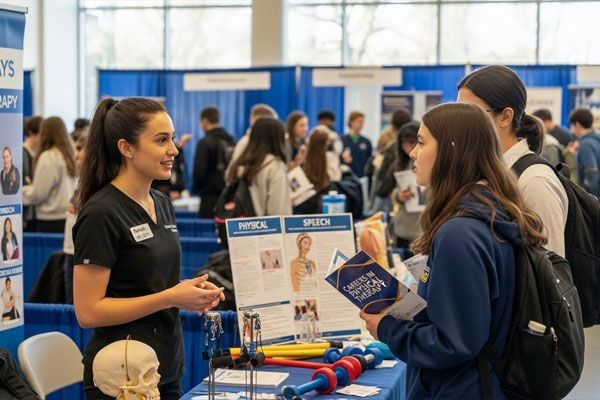
You need to be at all the career day events. You need to get the lists. Teach your team how to sell and recruit at those events. Have a policy and procedure on what success looks like at those events and how to separate yourself at those events. Do the guest lectures. Get the new grad names. It’s critical.
Getting mock interviews at those, I know, is not something that you’ve done, but it’s something we would do. It’s like, “If you guys want to practice your interview skills, I’m going to be at the office on a Saturday. Come on by. Every 30 minutes, I’ll do a mock interview with you and give you my feedback on how you came out. How did you look? How did you present yourself? I’ll give you some feedback. People took them up on that.
Get in with the new grads. A lot of the new grads want free housing during their clinical rotations. For those of you who have a little bit of money, if you could afford a home, a small apartment, or something like that, it’s a great recruiting tool. You can get a small apartment for $600 or $800 a month. I don’t know about Alaska, but in the South, you can have a one-bedroom, something small. It’s worth it. That’s what we’re doing. The two best PTs that I hired were both students. They did their last clinical rotation on site with us. One of them is now my clinic director. One of them is now my director of recruiting. They’re killers. It’s such a good strategy. That’s the best people you can hire.
There are pros and cons there. You’re taking someone who might be, or is green, in terms of how to treat patients and get real results, but they’re also malleable because you say, “This is the way we do things.” They have no preconceived ideas of how things ‘should be.’ You can train them right up into your systems.
There is a performing student placement program. Student placement programs shouldn’t be “I’ll just take anybody with a license.” No. In order to qualify for our student placement, you must be interviewed. That person must be interested in working in the area in which you treat.
Also, where you have clinics.
They must be open to the idea of accepting a position with you. You must ask that during the interview. That’s part of the process. They have to be interviewed around your values, your culture, their work ethic, and all of those things. Interview your people and only accept those people into your clinic.
I’ve never thought about that. We took whoever came.
No, never do that.
I’m sharing that. We would take whoever came because we didn’t get that many. We’re just happy to get them. I can see looking back, and I’m like, “I wish we didn’t have that person. That was an additional waste of time.”
If you do that, get a home that you can put some money in, and market your free housing to the university, you might get a few. Go to a couple of career day events. You might get two or three students every year.
Get the real estate tax write-offs and all good things.
I would say focus on the students because it’s going to be harder to afford the other guys right now.
I see it. As you’re looking at pouring into them, what are some of the things that you’re doing in terms of development? How did you develop these new grads? I’m assuming you’ve given them opportunities to do things that they probably didn’t get other places. You’re building loyalty. You’re committing to them, but they are, in return, committing to you and stepping up into leadership positions. What are some of those things? I know you have a leadership development program. How soon are you looking to put some of these new grads into a development program?
Structuring Your New Grad Mentorship Program For Loyalty
We have a three-stage process. The first program that we have is the new grad mentorship program. That’s a one-year program that’s documented. It’s got checkpoints. That’s phase one.
Can you give us maybe two or three bullet points that make up your new grad mentorship program?
It’s going to be regular recurring meetings with a mentor.
It is a designated mentor.
They’ll have a booklet with homework that has to be completed. Leave an open blank. You have to forgive me because I didn't even make the program. Catherine did.
I’m pretty sure Catherine did all that.
Brushed it. It’s got our logo on the top of it and everything. We learn about light leadership. It’s more of a beefed-up onboarding process. We talk about our purpose, our values, our vision, our KPIs, how to set goals, how to juggle a busy schedule, and how to choose your priorities with time management. It’s light leadership and professional development.
A little bit is focused on the job description and building them into a full-fledged team therapist that knows their metrics, how to get their documentation done on time, how to get good results from the patients, how to bill appropriately, and that kind of stuff. I’m sure they're meeting on a routine basis to discuss difficult patients. Maybe you talk a little bit about anatomy, treatment techniques, and that kind of stuff as well.
Hold some space for them to bring what they’re interested in and what they’re struggling with. They just want to be great clinicians. I don’t know if you remember when you graduated from school because it was so long ago, ages and ages.
It was in a different century.
Back then, you wanted to be a good PT.
Every eval was like, “They’re going to figure me out.”
“I’m going to crush this.”
No, that’s exactly not how I was. I was like, “Someone is going to figure out that I’m a fraud.”
“I don’t know what I’m doing.”
It’s total imposter syndrome. I had that for years. Having some kind of mentorship would have been amazing. That can make up for someone paying me $100,000 and someone offering $94,000. As a mentorship program, that’s pretty valuable.
It is very valuable, especially when you’re making the offer. It’s like, “By the way, here’s a copy of our mentorship program that you can look at before you start,” a nice little hook to hook them in.
Not everybody is focused on the money. It’s nice. Some people are, but some people are like, “I want to get the letters after my name. I want to have continued education opportunities. I want to learn how to become a great therapist and treat patients super well.” If you can provide that opportunity and a pathway for that, that’s when you’re going to rope them in.
It still takes a lot of work because everybody’s desperate. We’ve been going to the career day events, all of them. The number of practices that are at these events in 2025 is unreal. All of them are there. They’re all desperate. They’re all hurting for therapists right now. It’s competitive out there.
I get it. Let’s look at it after that year. People who have been in your program for two or three years are starting to become much better therapists in and of themselves. They don’t need mentorship as much, maybe occasionally. “I’ve got this tough case.” Outside of that, what is your path for them? You talked a little bit about having the one-on-one and seeing what they need from you over the next twelve months. Is there more to it than that? What else are you doing for them?
We’ll do a leadership development program. Not everybody gets invited to that or is a good fit for that.
Is that something that they opt into or something you invite them to?
It’s a little bit of both.
You’re talking to them. If they are a candidate, you’re going to probably invite, but also, if they are a candidate and you ask them what they want, then some of them are going to say, “I want a leadership path or a progression.” You’re like, “We align. Let’s get you into that program then.” Right?
Building Your Leadership Pipeline: Theory Vs. Application Tracks
Correct. We invite and get them into the club. We’ll do monthly mentorship calls where we go through an agenda. We touch on all the leadership principles within our company that have helped us become who we are, the beliefs, the mindsets, and the identity that we’ve adopted together. We introduce them to that and help them put language to that and adopt it into their life, the way that makes sense for them.
Is there another workbook on this one?
Yes. We got a whole workbook.
Thanks to Catherine again.
No, I did this one.
Watch out. Adam is stepping up.
Getting them involved in that is important. That usually takes about six months. That’s fun. We have a full clinic director training, which is probably another six months.
It sounds like the leadership development program is more generalized, with some books to read. This is how we do things. This is how we hold people accountable. This is our purpose, vision, and all that kind of stuff. That could be for anyone in the organization. That could be a front desk person. That could be a practitioner. It could be a biller or anyone who wants to go into leadership, but then you have tracked specific leadership development for clinic director, office manager, and that kind of stuff.
The way that I like to think about it is that our leadership development program is a lot of theory. The specific tracks are more applicable to that theory. We talked about stats. We talked about clinics. Here’s the problem. Here’s the blueprint on how to solve that. Let’s go do it. It’s a little bit more application.
It’s a little bit more specific to the job description again.
Correct. It’s applied to the job description.
I get it. Interesting. As you’re talking to owners out there, what are you seeing? Do many of the owners have paths like this? I know you’re talking to dozens and dozens, hundreds of owners by now. What is their typical pathway for developing their teams?
The Stephen Covey Principle: Prioritizing The Non-Urgent (Sharpening The Saw)
They usually don’t have one. If they do have one, it’s not well-documented. I’m not saying that the way we do it is the perfect way to do it. I’m just saying this is what we see. It’s not well-documented and not prioritized. It’s like, “We do that at lunch.” We meet every now and then and talk, but it’s not like, “No, we’re going to remove the patient from the schedule and put the mentorship meeting there, and it’s there.”
Every second Wednesday at 1:00 PM.
We’re not going to answer the phone. They don't want to prioritize it because other urgent things come up. Funny that we talk about that. I don’t remember exactly where it was, but google it. One of the success habits of companies is that they prioritize the nonurgent but important things as a company. When people block off the urgent thing and do the important thing, that’s a good success habit. Sometimes it’s not a great ROI and immediate ROI, but it’s more of a long-term stability and long-term play, building the base of that pyramid.
One of the success habits of companies is literally those who prioritize the non-urgent, but important things as a company.
In the book,
Scaling Up by Verne Harnish, I want to say it’s chapter 10. It was all about meetings and the benefits of them. They gave the example of a large construction company that decided they were going to do quarterly management meetings. The initial kick pushback was, “You can’t pull us off the job sites. We’re not going to get stuff done. You’re going to pull us off for a half day, a day, or whatever it was, quarterly to get stuff done.” They’re like, “We don't see why either, but we feel like we should. We need to.”
What happened? Everyone got an alignment. The management team knew exactly what they needed to work on. Subtracting that day ended up making them more productive throughout the entire quarter. All the other days were spent in alignment, doing what they know they’re supposed to be doing, focused on the most productive things and not the distractions. We initially went overboard and hyper calendared our meetings. We wrote it out or calculated it out. We had a ton of hours. I want to say upwards of 60 hours a month for our multiple clinics in meetings.
We’re like, “We need to scale this back. Dialed it in a little bit.” We got to an efficient schedule of meetings. That led to our company being one of the more profitable in terms of percentages, one of the more profitable clinics that sold when we sold, because we sold a few other groups. I attribute it to the focus that we put on those meetings and the training that we gave to these people, so that we were all in alignment. These leadership team members were reading the same books that Will and I read. We were giving them opportunities to come up with solutions to problems in the organization.
We were figuring your stuff out together. As a leadership team and as an organization, we had clear-cut goals that we were working towards. It wasn’t a question for anybody what we were focused on. Taking the time to develop your team into those situations is huge and does turn out to be a greater ROI, even though it’s not the immediate ROI that we can put to treating a patient. I know if I treat a patient, I’m going to get $90 back. It’s not that kind of thing. It’s investing in your team so that they can be more productive and aligned with your goals. When you do that, then the ROI multiplies.
Stephen Covey says, “Give me six hours to chop down a tree, and I’ll spend four hours sharpening the saw.” Most owners spend their time chopping the tree with a dull blade. Stepping off the hamster wheel occasionally is sharpening the saw because you’re working on the thing on the saw and becoming more efficient with it. It’s one of those things. It’s a life principle. He even talks about the idea of principles in
The 7 Habits book. It’s true, so do it. That principle is a lot older and wiser than you are. Just follow.
Employee Retention Is Recruiting: The Power Of Giving Team Members Ownership
Retention is recruiting because you’re recruiting them to stay. It’s still a piece. It’s sometimes the thing that we neglect until we get the resignation letter. That’s why it’s so important to be clear on what they want and work on aligning your goals to theirs. What I found that has worked for me is that you have to give them something to do.
A responsibility?
Yes. Give them something to do.
Roll them into the organization.
Give your team something to do. Ideally, the thing that they do is the thing that will either help you make more money or help you get your time back. It’s also usually a thing that either you or somebody else on your team needs to learn how to let go of and delegate. For me, the big thing has been recruiting. Adam, the recruiter, had to learn how to let go of recruiting. That was freaking hard. It’s still hard. It’s still something I’m working on. What is the thing that used to be the big thing that’s now the medium thing that I can get rid of? That’s a little scary to get rid of. It’s a little uncomfortable. It’s a little bit of a risk, but it’s no longer the most important thing in the world. Maybe it’s not the thing that I love doing anymore.
You’re still clinging onto it.
You’re still clinging onto it from a place of I need to, I have to, or I should. It’s a limiting belief. It’s the same trash that’s in all of our ways. Give your team something to do. Maybe it’s a promotion to clinic director. Maybe it’s a promotion to managing the team. Let them lead out on a team meeting, market, recruit, help you help them rebuild the website, build the mentorship program, or build the leadership.
Take over the birthday acknowledgements.
What can they own? How many times have you talked to great people, now great entrepreneurs, maybe, who say, “I was working with a company. I built that department from scratch. That was my baby.” How many times have you heard people say that? They still talk about it today. They didn’t even own it. Give them something to do. Their attention will be occupied because they will build the thing. They will be interested in a thing. They will invest in the thing.
They will more than likely do it better than you. That’s what I've noticed. It was like, “I don’t want to do this thing anymore. Who else wants to do it?” You get people who raise their hands. You’re like, “There are people out there that want to do this stuff?” “Yes, I want to do that stuff.” Give them the opportunity to do it. Let them live into their genius.
Overcoming Delegation: Defeating The "I Can Do It Better" Owner's Ego
I love talking about this stuff. Why don’t people do it? Why don’t people delegate? Why don’t people give away the big thing?
I have my answer. Do you want to hear it?
What’s your answer?
In my family, it’s a common belief. It’s not vocalized all the time. I can do it better than anyone else can. It will take less time for me to get it done myself than to train somebody else to do it. I’ll get it done better because I care more.
You’re way more talented.
I’m so caring and talented. No one else could do that.
There’s only a handful of common stories like that. I don’t have them all written down. “I can do it better myself” is one, or “It’s easier to do it better myself.” One is going to be “It’s too expensive.”
“I don’t have the money.”
“It’s too risky.”
“I couldn’t ask them to do it outside of work hours.”
“I don’t want to burden them. I don’t want to push.” There are all these limiting beliefs around why we don’t let the thing go, which impacts employee retention, their growth, and all the things. What’s the new story that you have to learn to become the person who lets the thing go? You have to learn how not to have an ego and stop overvaluing your hard work. You’re massively overvaluing your hard work. Your hard work and your care aren’t as valuable as you think. You’ve got a little bit of an ego around it. I’m not talking to you, Nathan. I’m talking to all of us who have that story.
You have to learn how to not have an ego and stop overvaluing your hard work.
That doesn’t pertain to me. My work is super valuable.
Me, too. It is for everybody tuning in, except for us.
This pertains to everyone else.
Delegation As A Growth Strategy: Learn New Skills To Make More Money
We’re the good guys here. They’re the bad guys. 1) You can’t afford not to. 2) Go learn a new skill and make some more money. It is one of the best things. If you’ve listened to this for this long, you’ve heard about the unexpected tax bill that I got. I made a lot of money in 2025 because I started more companies, learned more skills, and delegated the recruiting. I found other things to do and make more money. It’s not all about making money, but if money is the pain point, know that you can learn new skills and make more money.
All you have to do is reach out and start talking to people. Learn some new skills. Hire a coach. Learn how to market. Learn how to sell. Learn how to recruit. Learn how to build an EMR. There are so many things you could do. Write a book. You’re undervaluing your time, and you’re overvaluing the money that you have in your pocket, because with time, you can create endless amounts of money.
Story number three is you think that challenging people is mean when actually challenging people is love. You have to learn those stories. You have to adopt those beliefs. Become that person. When you do that, you’re going to retain a team. You’re going to step into the next chapter for you. You’re going to grow. Those are the reasons why I see people having a hard time letting go of the big thing.
Regarding number three, we often talk about the challenge support matrix. Support is on the X axis, and challenge is on the Y axis. We want to be a place that is high challenge, high support. We’re going to push you to do more than you’ve ever done before. We’re also going to support you along the way to become a better person, personally, professionally, you name it. When we keep that matrix in mind, there are great opportunities for us and for them to grow and develop.
I have to share a story. I had a client once. She had a very successful clinic. I’m like, “Why aren’t you pulling out a patient care? You can’t keep using that as an excuse for not getting things done in your organization. You’re very successful. You’re profitable.” She’s like, “No one treats the patients better than I do.” I said, “How would your team feel if you said that to them as to why you’re still treating? How do you think they would take that? You would never say that. Do you think any of your actions are saying that but not vocally? Do you think some of your attitude is coming across that way? Is it true? Could you be better served by teaching your magic skills to other people instead of keeping it to yourself?” She was a little bit surprised that I challenged her on that one.
We think that way. Honestly, I came from that. I can understand why I thought that is because my household was depending on me to be an awesome therapist with an awesome organization to financially survive. I am going to care quite a bit more. I’m going to figure out ways to retain patients better, to bill optimally, to collect every penny that’s owed, and to collect at the front desk.
We’re going to establish efficient productivity standards, optimal productivity standards, and hold people accountable to them. I’m going to do all those things, but we have to recognize that we’re stunting the growth of other people if we have that mindset. If we can be okay with them at a minimum doing 80% of what we could do production-wise, then we ought to be satisfied. As you said, we’re getting our time back so we can focus our efforts on moneymaking projects.
There’s part of that that’s probably true. You are going to be the most productive person in the building. If you’re the only owner, for sure. The problem with that is that there’s only an ROI in that up to a certain point.
It’s because you’re limited.
When you’re the only therapist, yes, big ROI there because you’re the only person treating. When you have two, your ROI goes down a little bit. When you get three, it goes down a little bit more. When you have this skillset, where you can go make more money over here in real estate or something else, your ROI is even less. Eventually, the priority of your energy shifts over time based on who you are, the opportunities that you have around you, and the size of your organization.
You focus on them becoming the best therapists. How powerful does that become? I noticed a little bit of a shift in my conversations when I had sent off enough of my foundational people to continuing education, did enough training with them, and knew they were aligned. It was so nice when people came to see me as the therapist. I said, “You’ve got a condition that Stacy is an expert in and is much better at than I am. I’m going to put you on her schedule because I know she can treat you the best.”
They were like, “Yes, if you’re not as good as she is, then I want to be on her schedule.” To be able to get to that point was a pretty awesome feeling that I could have confidence enough in my team to say, “You’re going to get better care with other people. Not me. I need to focus on the business. I’m distracted.” That was a cool feeling.
There’s a powerful thing that happens when the owner starts to finally believe in their business, when they start to trust it, which is a choice. You have to choose to trust. It’s never going to feel not risky. It’s always going to feel risky, but you have to choose not to let your amygdala, or whatever it is, lie to you and tell you that the whole world’s going to fall apart if one patient gets upset.
Avoid the fight or flight.
You have to choose to be present through that.
The Final Mindset: How To Define Your Secret Sauce & Build Loyalty
What do you tell people who don’t have a lot of these development things in place? Where do they start?
It depends on the size of your company because not everybody needs to focus on that. If you just opened your doors, I would be out there marketing. I wouldn’t be worried about leadership development right now. I would be worried about developing yourself as the owner. Invest in yourself. Listen to this show. Buy books. Go off the grid for twelve months. Read every business book that you can. Listen to every episode that we have. Hire a business coach.
That’s what I would do for the first year. You’re going to come out as a new person. You’re going to be evolved into the next version of yourself. You’re going to do some cool stuff. That’s what I would do then. You have to live that story first to share that story with others. You have to build the business. You have to do the hard thing, read all the books, and adopt all the things. You become the person. You’re version 2.0. Now, you can write about version 1.0.
You can write about the books that you’ve read. You can write about the lessons that you learned, the stories that you had, the fears that you overcame, the challenges, and all. That’s what you give to your team. You go to 3.0, and then you tell them about 2.0. You’re always learning, and then you’re teaching. That’s the big zoomed-out visionary version of it. It starts with recognizing that you can’t offer anybody anything until you’ve done some stuff for yourself.
You can't really offer anybody anything until you've done some stuff for yourself.
Once you’ve done some things, you have to then recognize that you do have some valuable information that you can share. Recognize that you can actually offer something. Start writing that stuff down. What is your secret sauce to success? Nathan, you’ve got your secret sauce. You’re more analytical than I am. You’re more calculated with your approach. That’s served you well. You’ve got a skillset. That’s cool. I learned that from you. You’ve probably taught a lot of people that.
When they hang out with me, they probably learn a little bit more about recruiting, sales, marketing, leadership, and more of the visionary style of things. That’s my secret sauce. I like VAs, time management, and execution. Those are what I like. We talk a lot about time management, systems, and KPIs in our leadership development program. Once you define that secret sauce, you can start writing it down and start giving your team that.
Let them read some of the books. Let them listen to some of the podcasts. For whatever reason, offering that to your team will push away the people who aren’t with you, not in a bad way, but it’ll create a little bit of “I’m not willing to go there with you” wall. “We’re still friends, but we’re not that good of friends.” The people who crave that next level of growth will draw in super tight. I had the best compliment in the world. I have goosebumps thinking about this.
I asked my team, Joe and Catherine, one time. I said, “What do you guys want to do when you grow up?” They both said, “I want to do exactly what you do.” How freaking awesome is that? What an honor. That’s how much we love each other. They want to do what I do. I’m like, “Done, you can have it. How can I help you get there?” Investing in myself has allowed me to build that with Joe, Catherine, and other members of my team. That is so awesome. It’s what it’s all about for me. The money is great and all that. I’d rather go broke than lose that. Hopefully, that answers your question.
The Align Leader Program: Investing In External Coaching & Development
You have the program, but for those people who are tuning in to starting from scratch, we gave you some ideas for sure about what to do to develop your team, either as a team therapist or as a future leader in the organization. We can always help you with coaching as well, if that’s something that you need. We also have a newer program called the Aligned Leader Program. You can sign up for our program and send your leaders and to-be leaders with the program.
We will do a monthly call with them and coach them. We will give them access to resources to do their jobs better and give them opportunities to come with questions. Also, we’ll do some training with them. That’s a very reasonable program to invest in your team. If you don’t know where to start or what to do next with them, you can let us do it. Let us and some of our coaches do some of that.
It’s awesome. When I get on a call with these owners, the CEO, and the three key leaders who are thinking about joining the program, I’m like, “What do you think?” Their team, the director, and everyone are like, “I am fired up, ready to go. Tell me when the next meeting is.” They crave it. They’re so excited about that. It’s fun to see people get that excited about getting better and improving their leadership.
I was this type. I underestimate the desire that the owners have, especially the ones that are aligned, to learn more of what you know. They’re like, as you said, “I want to know what you know.”
I want to do what you do.
We had the same situation. Will and I had a business coach who would meet with us as a team and also individually. We opened her up to our leadership team to get one-on-one coaching with her. They absolutely loved it. Their commitment and their loyalty after those one-on-one meetings were worlds different. Also, your investment in your team cannot be understated or overstated. It cannot be overstated. We undervalue the opportunities that we have to give our team leadership training to build them. They want it.
This was the hesitation for me. You know how, when you become a PT, you talk about rotator cuffs every day? As we talk about rotator cuffs over and over, we start to devalue our knowledge because it's so normal. It’s habituated. I remember there have been several times when I would not thoroughly educate the patient because it was like, “You know what I’m talking about, the rotator cuff.” I would assume they knew what they taught. They’ve got YouTube.
Even though they were calling it a rotor cup.
They were calling it a rotary cup, which is a mistake on my part. Leadership development was the same experience for me. We talk about billing, finance, accounting, payroll, and all the things so much. We assume that everybody knows that stuff, but your team doesn’t. They don’t know that stuff. They don’t tune in to these shows. All that to say, don’t undervalue what you have. You have something so special to offer your team. They’ll stick with you if you build them up.
Don't undervalue what you have; you have something so special to offer your team. They'll stick with you, if you build them up.
You get a few people like that on your team. Back to the recruiting point that we had in the beginning section of the show, they start promoting on your behalf. “I love where I work. You guys need to come work with me.” They have networks. They have an alumni group. They’re like, “We’ve got an opening. This place is awesome. You should join us.” That’s different coming from them than it is coming from you, the owner. That land is totally different. That’s huge. That’s when you start building a strong culture.
At the end of the day, if all of my B-players and C-players quit tomorrow, I know I still have my A-players. I still got it. We can still make it work. There’s a sense of security there that is nice to have.
Good talk. We spent a long time on this one.
It was good. If you’re tuning in, Annual Strategic Planning, January 9th and 10th, in New Orleans at the Riverfront Hotel. Food is covered. It’s in New Orleans. Have you ever been to New Orleans and had some Creole and some Cajun seafood? It’s delicious. We have a lot of butter and spices in that food.
Hopefully, people catch it in time to sign up and come on January 9th and 10th.
Annual Strategic Planning & The Align Leader Program
If you don’t make it, call Nathan. He’ll come to your place. He’ll do a full annual strategic planning session with you and your team. If you made it this far, you care about your team. You care about your company. You’re our type of people. We love you. We’re giving you a platform. We would love to connect with you in New Orleans. If you don’t decide to work with us, we still love you. You'd better be doing an annual strategic planning session in your company, or next time I see you, we’re going to box one-on-one.
Bring it. If you have questions about the Aligned Leader Program, reach out to us at
Adam@PPOClub.com or
Nathan@PPOClub.com. We can give you details regarding the Aligned Leader Program for your team members to give them the support and development that they need and that you want for them. Check it out. Thanks, man. Good talk.
Important Links