Private practice owners often struggle to negotiate better reimbursement rates on their own. But what if joining forces with other practices could give them a stronger voice with insurance companies?
In this episode of the Private Practice Owners Club, Nathan Shields sits down with Stephen Cohen, co-founder and CEO of Sarah Health, to explore how Independent Practice Associations (IPAs) and Clinically Integrated Networks (CINs) can help private practices work together to improve reimbursement, share knowledge, and demonstrate their value to payers.
They discuss the differences between IPAs and CINs, how clinical integration through Remote Therapeutic Monitoring (RTM) can support payer negotiations, and what practice owners should understand about potential RTM changes in 2027.
In this episode, you'll learn:
● What an Independent Practice Association (IPA) is and how it represents independent practices
● How joining an IPA can give practice owners a stronger voice with insurance companies
● How collaboration between practice owners can lead to better business strategies and revenue opportunities
● How one IPA helped negotiate RTM coverage at 100% of Medicare for a managed Medicaid plan
● Why collective bargaining can create opportunities that individual practices may struggle to access
● How IPAs help owners share resources, knowledge, and employee benefit strategies
● The key differences between an IPA, a Managed Services Organization (MSO), and a Clinically Integrated Network (CIN)
● Why some payers want stronger participation requirements and more consistent clinical data
● How RTM can serve as the clinical integration component of a CIN
● Why practices may not need to change their EMR or billing systems to participate in this CIN model
● How RTM data can help demonstrate better outcomes and lower total costs of care
● Why network adequacy, especially in rural and underserved areas, can create negotiation opportunities
● How group contracting can benefit payers while improving reimbursement opportunities for practices
● How clinically integrated networks can support different specialties, including PT, OT, and speech therapy
● What potential RTM reimbursement changes in 2027 could mean for private practice owners
● Why having an RTM champion on your team can improve implementation and accountability
● How RTM can potentially improve practice margins and net revenue per visit
Private practices don't have to navigate reimbursement challenges alone. By working together, sharing data, and demonstrating their value, owners may be able to build stronger relationships with payers and create better opportunities for their businesses.
If you're a private practice owner looking to improve reimbursement, understand collective contracting models, or explore how RTM can support your practice, this episode is for you.
---
Listen to the Podcast here
What Group Negotiations Can Do To Reimbursements - IPAs And CIN's With Steven Coen Of Sara Health
A quick heads up for all the private practice owners who are reading. If you've been tuning in to the show for a while, you know that it took me at least ten years of grinding in my own clinics before I finally figured out how to scale and sell my 4 practices for 7 figures, and about 3 times the national average. The biggest shift wasn't some secret marketing hack. It was how I thought about profit, systems and my role as the owner. That's exactly what we're going to be working on together with you at the High-Performance Practice Conference in San Antonio, Texas from October 15th-17th.
Adam Robin and I are hosting a three-day hands-on event for PT, OT, speech, mental health, peds, pelvic floor, and medical practice owners who want to build clinics that are profitable, scalable, and best of all, don't depend on them 24/7. We’ll dig into simple profit and KPI frameworks, real leadership and culture work and practical systems you can take home and plug in with your team.
If you're doing roughly 6 to 7 low figures a year and you want your client to feel more like a real business and less like a job/cage, I'd love to see you there. Frankly, I'd love to see you bring your leadership teams as well because we will have breakout sessions for them, too. You can get all the details and grab your seat at the link. Let's get into our episode.
---
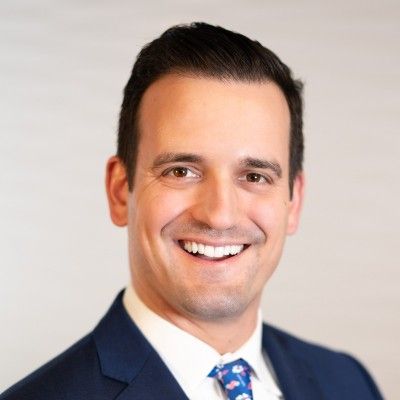
I have a returning guest, Steven Coen, the Co-founder and CEO of SaRa Health, an RTM platform. Hopefully, you guys are all taking advantage of RTM out there. If you're not, talk to Steven over at SaRa Health immediately. He is one of our sponsors at the conference. It's exciting to have him on the show again. Thanks for joining me, Steven.
Thank you for having me. I appreciate it.
It's always good to see you around, man, especially in your bright neon-colored jumpsuit. Here in a couple weeks, we're going to be at PPS. I'm sure you'll be sporting that again.
At this point, I feel like it has a life of its own and people get visibly upset if I don't have it on at least one day.
That's what I was going to say. If you're not wearing that, then people are going to be like, “Dude, come on. Where is the jumpsuit?” It's awesome. Even better. At the San Antonio conference, we got to see a Lamborghini that's almost the exact same color. That was so cool.
I did get a picture in front of that. That was pretty priceless.
Joining an IPA gives private practice owners real leverage at the negotiating table with commercial payers instead of accepting low rates.
At the conference, you and I were talking about some of the things that you're doing because I know in the past you set up an IPA in New York. You have to share with everyone the acronym so I don't get it wrong. Now, you're focused on building up a CIN or a clinically integrated network in Maryland and Florida. With all the focus that I personally have been putting on and I know the APTA as a national organization is focused on increasing provider payment and payer reimbursement.
It's appropriate to hear about some of these models that can help us as a group. Not as individual owners, but collectively start pursuing strength in numbers to get greater reimbursement rates. It's appropriate to bring you on. We'll share a little bit about RTM towards the end here, and what's happening come 2027.
The focus of the conversation I want to spend with you regarding IPAs, CINs, what those mean, how they relate to other organizations in the country, and how they differentiate themselves, but ultimately what they could mean for us in general if it's okay. If you have a different path you want to take, what I was thinking is maybe I'd have you talk a little bit about your experience with a New York IPA and then maybe transition into why you're doing not an IPA, but CINs in Maryland and Florida. That can maybe also help us differentiate the two a little bit and move along. Is that okay for you?
Gaining Leverage With Insurance Payers
It's perfect. Private Practice Network IPA, which if you own a New York private practice and PTOT speech, they're not a part of that. You need to go to PrivatePracticeNetwork.org and take a look. We've been able to deliver value in a couple of key ways. One is getting a better seat, even at a different table with payers. I'll talk about what that means and deliver results there. As well as the community aspect of it. I know there's two of the board members. They estimate that they increase their revenue per visit by about $7 over the course of 2025, just from talking with other practice owners.
I'm like, “You're doing this? That's cool. That's how you do the outward network billing for this group.” Those pieces, which you know because you're talking to owners every day, all day. You get to see all that and to be able to provide that community aspect in itself. That has shown to be beneficial. Not only do you have a better seat at a different table. Not with payers, but also the community aspect. That's what we've seen in the little less than two years. We've been able to negotiate.
Doubling Revenue Per Visit
We're up to 9 or 10 contracts, either offers that we are currently reviewing or contracts that groups are actively billing or in the process of getting credentialing. We've seen some pretty major wins. I know for the one seminal contract for me is a managed Medicaid plan, which a lot of our membership was around $45 a day. The New York Medicaid fee schedule does not cover RTM. This managed Medicaid plan. Also, it didn't cover RTM for any of the member practices.
We were able to get $85 a day and RTM coverage at 100% of Medicare. For some of these groups that are at that 45 per diem and doing RTM with their other patients and payers, they're going to see an over doubling of their revenue per visit. Pretty massive. I'll just tease it for now, but it was that coverage decision of, “Now that I know the value to me for RTM, I'll cover it. I just didn't know what it was.” I'm on the payer side.
That was the light bulb moment for me as SaRa Health CEO, because we would always be limited by the contractual relationships of our customers. When that managed Medicaid plan flipped, we estimated we would increase our enrollment by about 400 to 500 patients a month like that. I was like, “I didn't think that was possible. Now, it's happening. How can I be able to now affect the contracts for more than just the groups in New York?” That's what led down the path of ultimately launching the clinically integrated networks in Maryland and Florida and will be in more states in the future. That was it. That's how we got to that point.
Tell me initially, what does IPA stand for?
Independent Physicians Association. Some people call it the Independent Practice Association. It is a relatively malleable term to basically mean private practices that are able to work together.
These independently owned private practices can join together underneath an IPA. They contract with the IPA and the IPA then goes and represents them to these insurance companies so they have a greater voice at the table, as you said, a different seat at the table when they come with that.
Different seats and a lot of times a different door. There is provider relations, but there's also group relations. It can be an entirely separate door manned by separate people with separate processes. That was a big learning experience as well. It seems like you get above that, like 250 to 300 practitioners, that's when it starts to click over into the other door.
A more attentive ear, a more willing ear to listen to?
A more strategic ear is probably the easiest way to describe it. You're having a more strategic conversation around things like, “How can we lower your cost?” It can be very expensive for a plan to operate a contract. Depending upon what estimate you use, it can be anywhere from $10,000 to $50,000 in operational expense per contract per year for a payer. If you're sitting there like the IPA, PPN has around 120 practices there.
If you just cut that down the middle and say, “I'm going to save $20,000 a year.” Now you're looking at $2.4 million in OPEX savings from doing something at a group level, as well as being able to benefit from the training and other membership benefits that we are pushing to our members to be able to elevate every practice that is a part of PPN.
Very cool. You're using that IPA, and it sounds like not only for negotiating with payers, but you're also using it as a community. What are you guys learning? Maybe you have some communicative newsletter every so often. You tell me.
We're typically doing a monthly to every other month meeting and then some different more ad hoc support. I get an email, “Does anyone who has been able to successfully get better health insurance benefits for their employees?” It's like, “One of our board members, Denise, was able to secure and find this awesome broker.” It's got to be at least double digits, and probably less than 25, but somewhere in the 10 to 20 groups have been able to lower their cost as an employer for their health insurance for their employees while delivering a better plan for them.
Are you representing the group as well with these health insurance brokers on behalf of small businesses? Are you steering them to better options for those employees?
The latter. To do the PEO setup, it's the professional employment organization. We don't see the juice being worth the squeeze on that, at least now. I've gone down that rabbit hole. Not to say that in the future, there wouldn't be an opportunity there. Especially because in a private practice, your age probably trends lower. Also, the healthiness level of your employees probably trends higher than the average. I do think there could be something there in the future, but for now, it's not been a focus.
You've been relatively successful with the IPA, it sounds like, in New York State specifically. Tell me the transition then to CINs or Clinically Integrated Networks, and in those other states. What was the strategy and the purpose behind that transition? Before I jump into that, for the people who are reading, other IPAs that you might see around the country that you mentioned before we push record, so people in their region, they might know what an IPA is in their state and what's happening. What were some of the names of them that you shared?
Payers want accountability. Without meaningful clinical integration, traditional IPAs often hit a wall during contract talks.
NWRA in the Pacific Northwest, so the Northwest Rehab Alliance. You've got RehabNet in Arkansas, which has been around for about 30 years.
I know those guys have been crushing it.
What Gabe, Seth Coulter, and the rest of that team have been able to do there is truly fantastic and testament to them for their hard work and determination to get the results that they have. That's a couple of the other examples. In my opinion, the greatest strength can also be the Achilles heel for an IPA. Its greatest strength is the entrance, if you will, can be, easy is not the right word, but we'll call it relatively painless to be able to enter into an IPA. Depending upon what the requirements are.
Why Traditional IPAs Hit Payer Resistance
Typically, it doesn't require an EMR change. It does not require AA workflow change, and a billing change. It doesn't require a lot of those pieces. There is some level of a data reporting element into it, but you're doing that in some way, shape or form anyway. It's another place to put that. That's a strength from a membership standpoint. Now, in some of your more difficult to negotiate with payers, that can be less beneficial.
When they pull like, “I want to see your participation agreement,” and they don't see things with teeth in it, or things that they interpret as valuable, then it can be tougher to have those conversations. They’re like, “What's in it for me?” Depending upon how strong that case is, they're looking at a participation agreement. They want to know, “What did they sign up for?” That's what they're looking at. That's where we've seen it can be difficult to advance the conversation in some payers.
When you say participation agreement, it's easy for clinics and owners to join the IPA, but it's then also easy for them to drop out. There's no uniformity between any of their systems, any of their EMRs, and any of their data. It's easy to bring them all together, but it's also easy for them to leave. There's this dispersion of data that's not uniform. Thus, it sounds like players aren't necessarily too excited about that. They'd like to see a little bit of uniformity or at least success.
In some cases. Not all by any means, but yes. That's what led me down the path of like, what else is out there? You can go jump all the way to MSO or a managed service organization, of which there are plenty out there to look at. Whether looking at therapy partners group or TPI or confluent and some of those others would consider themselves more of an MSO type rise therapy in New York. That typically does require an alignment of EMR, especially EMR, a billing alignment, and payroll alignment as well. It’s pretty dramatic changes and can include some level of ownership interest.
Using Remote Therapeutic Monitoring For Clinical Integration
Depending upon the specific setup of each and every MSO. They all get to define their own rules. You have private practice, then you have IPA then you can make a big jump to MSO. In the middle is what we consider like a Goldilocks zone of a clinically integrated network where it doesn't necessarily require an EMR billing ownership NPI ten changes, but you do need to have some level of clinical integration. The clinical integration that we've built and gotten blessed by our council, Pulsinelli, which has made like a hundred of these clinical integrated networks in other specialties, not in rehab, as far as we know. We're the first one in rehab that you do RTM well.
That is the clinical integration, and because of all the data that's out there from whether it's internal data or non-published data that we have and that other RTM vendors have or published data, or RPM published data. There's a lot of good data supporting that RTM and patients on RTM do have a lower total cost of care for payers. It takes costs out of the system. There's a clinical and economic reason for it. That's the clinical integration for, what we're calling them CARE, so Connected Accountable Rehab Ecosystems.
That's the clinical integration of CARE that you do RTM well. To go ahead and get ahead of this question, you do not have to use SaRa. You can use any RTM platform or whatsoever. It is platform agnostic. That's the clinical integration. It’s like, “Payer, we are going to be able to show, prove, and educate, remediate our practices so that your members are getting the best care as possible in and outside the clinic to optimize their chance to complete their conservative plan of care and reduce follow on surgery, opioid reorders, and others.”
The only thing that integrates them, is they don't have to change EMRs. They don't have to change billing platforms or anything like that. They don't have to get uniform systems across the board. They simply have to integrate into RTM no matter the platform and agree to continue using it. I'm sure if they fall off, then you're going to discipline them appropriately. The through line for all the owners in a CIN is that RTM.
It's that data that you're able to get through RTM then that you're able to bring to the payers and say, “FYI, this is why you want to negotiate with us as a group.” I'm assuming from there, and I'm making assumptions, you're doing the same thing that you did as an IPA in terms of presenting yourself to the payers. Now you're coming with everyone at least integrated in the RTM aspect with a bunch of data from everybody.
As the calculus that's always going on in my head, mainly because it's part of the Federal Trade Commission rules. We got to be on the right side of that. The pro-competitive benefits to the payers are greater than the anti-competitive benefit to the practice, if you will, of group contracting. How can we be able to analyze, determine, and show, say, “Payer, we ultimately took the cost out of your membership, your medical loss ratio.” We were able to lower your MLR. You may be paying us more for visits and maybe you didn't cover RTM and now you are. Ultimately, your medical loss ratio, so how much you spent on medical care for members that hit our network is lower than those who went outside.
Now, with that information, you have a more willing ear from the pairs than you did comparatively in New York. How long have you been doing this in Florida and Maryland? Is there a critical threshold of owners or practices or providers that you have to get to make meaningful inroads with those pairs? I think you said 200 and 300 in New York. Is it the same then with the CINs?
Leveraging Rural Coverage For Better Contracts
We believe so. We're still pretty fresh. We are still recruiting members at this point. We have already launched initial negotiations in both states and started to get some traction in both. We are still sub-100 clinicians in both states. The goal is to get as many members as possible and think about two levers, if you will. One is provider count, so just sheer provider count. The other is rural integration, if you will. Those multiply past each other. If we only got to 150 clinicians but they were almost all rural and were able to show network adequacy in difficult-to-reach places.
I'd almost take that over 250, but all in major metros. Even then, some of those major metros have pockets of care rehab deserts where even then, only because you're in Orlando or in Baltimore, doesn't necessarily mean your zip code might not be seen as extremely valuable from a network adequacy standpoint.
That was a big point that David O'Hara of Brace Health brought up on the show was the one way for people to negotiate is to understand the network adequacy within your area as you approach payers. The beauty of this, again, is the fact that you're coming at it with a group, especially for those rural owners out there who might feel like they have a small voice. What you're saying is they might have a bigger voice than they think because the insurance companies have to show network adequacy. That's like a federal mandate.
They do. At least one bill that's being reviewed by Congress is around these ghost networks. I know that's been something that we've used in New York, brute force looking through. I'm in Onondaga. I know that group went out of business five years ago and they're still there. I know that group, he moved down to the city and was like, “This isn't real.” There's already been at least some legal cases and implications. There was a case, I believe it was late 2025, and I believe out of Arizona. It was Centene or Molina.
I think it was Centene that got in quite a bit of trouble. It's a terrible story. A patient was searching for some mental health services and contacted the first 5 to 10 providers on the network page. None of them were either accepting new patients or in business anymore. Ultimately, he didn't get the care he needed and committed suicide. His parents found out and sued the payer. It's not just a convenience thing. It can have life altering impacts. We've already seen the legal side of it. Now, it looks like there could be some congressional push to have some level of regular pruning of that list.
It's a great opportunity for owners to join up and strengthen their voices. I've heard for decades the nasty word collusion. Therapists, as an industry, have leaned in that a little bit too much, more than they need to. There's an unrational fear of collusion that's out there. Are there ways to get around that? What do you say to someone who's like, “This is just collusion. You can't do that?”
Rural private practice owners hold massive bargaining power because payers are legally mandated to maintain true network adequacy.
Structuring Networks To Eliminate Antitrust Concerns
I would say that is why I think about the pro-competitive benefit to the anti-competitive, negative, if you will. It's all about the setup of the organization. A clinically integrated network with a clinical integration plan that is either active or in the process of being active. That then allows for the more free sharing of data. Even with that, there is no way for other members to know what another member is making. That will be held within our digital four walls, if you will. We can and will know that as a care entity, CIN entity.
Not sharing that broadly, even though we probably could. The risk is not worth the reward, in our opinion. That's that. The reason why we'll know that is members, as we get contracts launched, will be required to submit their entire revenue report to us on a monthly basis, because from that, I could tell how well you're doing on the RTM side. I could tell what codes you're billing. I could tell in comparison how many evals you had across what payer, what's eligible, and what's not. From that, we've already written an AI model that can spit out basically like a six-page remediation report or not. They're like, “You're all good,” just from that one data source.
We've talked about a lot of people who want to talk to you about being in the New York IPA or about what's happening in Maryland and Florida. How do they get in touch with you?
They can go to Care.SaRaHealth.com or they can email me at
Steven@SaRaHealth.com and we'll get back to them. That's the easiest way. We wrapped up a few information sessions, but if there's enough demand, we will do more. That's for Maryland and Florida. If you email me about New York there, I'll get you to the right place for the New York group as well. If you're sitting in Texas, that's just top of my clinic. I talked to a group out of Texas and they’re like, “We want to come here next.”
If you can get to a group of 200 clinicians and/or 50 practices, especially if there's a rural component to those members. That's going to be highly impactful for our expansion because if we can move somewhere and we already have a good membership base. That's going to make everything go a lot quicker.
If you have a group that says 8, 10, or 15 locations with upwards of 30, 40, or 50 providers, to me, not knowing, still doesn't get them a different seat or a stronger voice. It's still in that gray zone just like any 1 or 2 clinic company. I would assume those companies would do well to join forces and push this forward, especially if they have a rural connection there.
I say that in the New York IPA, we have groups ranging from single location owner-operators to the better part of 35 to 40 with nearly 200 clinicians. For those that are across the different sites of care, great. We've seen a lot of payers ask about home health. Your part B services, mobile part B services, and if we offer that, we do have some members in the IPA that offer that. As well as at least in the Maryland CIN. If you're reading this, and be like, “I don't have an outpatient ortho-based clinic. I do the vestibular at home.” Fantastic. I do pelvic health at home. Let's go. That's amazing.
Maybe, “I have a bunch of PRN folks and we all do pediatrics,” amazing. That's fantastic across PT, OT, and speech. You don't need to be an outpatient ortho clinic that has seen a lot of post-op. The more variation we can get, and stroke in neurological recovery, amazing because I get to make a slide that has a bunch of boxes on it. It’s like, “Your members have varying needs. Here are the needs that we can cover. We can cover diagnostics, post-op, stroke recovery, and pelvic health.”
It helps us provide more pro-competitive benefits to the payer like, “Look at everything we can provide. We can provide you a lot. We care a lot about your patients.” Not to say that doesn't happen in other venues, but I would argue that private practice just cares a ton about their patients. We do that. Now, we have the systems, backing and data enrichment to be sure to be able to prove that you're not just paying for something and wondering.
Also, with some of the member dues, we're going to be buying claims data to be able to then tell the story to the payer like, “We bought a bunch of claims data and I can show you the patients that entered into the network.” You end up paying X, Y, and then Z later on. Those that came into our network, you had 30% fewer opioid refills. You already know what that means. Those pieces are able to show again that the pro-competitive benefits heavily outweigh the anti-competitive activity of group contracting.
That's cool. I'm glad you brought up the other specialties as well, because I'm thinking the pediatrics out there are hammered in with their reimbursement rates. Especially with the change coming to 92507. All those codes are going to be changed into the one code for the session. They don't know what's going to happen there. Is that going to be good or bad? We might find out soon. I think some decisions are being made as of the date of this recording, which is the end of October. I'm glad to hear that you're able to work across all of the aspects that represent more than just PT and whatnot, but it's all the allied health providers.
PT OT, and speech, there could be a world in the future where we add some registered dieticians. Potentially even into the MD world, depending upon where we find need on the payer side.
Mental health, is that an option?
Yes, especially as you think about ABA, as well as some others. If it's not something we do even in 2026, I would imagine it'll be a fast follow in 2027.
Give us an update then on RTM as we know it coming into 2027. Any big changes to expect? A lot can change when the final rulings come out. What is on the docket?
If finalized, the two things that have folks rightfully concerned, one is a potential devaluing of the codes between 10% and 20%, depending upon which code it is. We'll see. There was a strong response and comment and data. One of the things that CMS requested was paid invoices. We submitted invoices. We submitted good data around it. They were trying to target some like RPM devices. It just didn't make any sense at all.
I know there's groups out there like APTQI that are pushing the CMS to reconsider that. The other big piece is the third-party clinical model. If you are doing RTM and are doing or using third-party clinicians, so not your employees, to do the monitoring for you. If it gets finalized as written, that would go away. You would not be able to do that anymore.
You could still use a platform like yourself. What do you mean by third-party employees because I only talked to you about RTMs?
The other groups definitely have that way more integrated into their offering, or they have it integrated in their offering. We do not. We've always been against it. We thought practices should be able to do it independently, and it's a technology barrier or set of barriers. One of the areas that we saw was the most detrimental to adoption was billing. That's why we took billing in house for the RTM code. Clinicians can sign the note within the SaRa platform, then we bill it out.
We find out the denials. We get all the remits and in work, the denials claims, etc. That will not be touched either because that's not clinical in nature. If you're a SaRa customer, nothing changes if you're talking to us and wondering, well, how does this new rule affect us? If it's a third-party piece specifically, it doesn't at all. No impact there.
If people want to talk to you about RTM as well, is the same
Steven@SaRaHealth.com?
Appoint an internal RTM champion in your practice to track patient enrollment, optimize billing, and add fifty dollars in margin per patient.
Yes. You can also go directly to
SaRaHealth.com and book time with me. That's typically the easiest. We ask a couple of questions in that booking form and that allows me to come to that demo or someone on my team to come to that demo with, “Here's what we've seen.” I talked to one of the PPO club attendees because she filled it out. I was like, “Perfect. You're doing 50 evals a month. You're in North Carolina. Your payers are all reimbursing for RTM. We would expect you to do quite well based on these things.”
You go into those consultations and you've talked to everyone across the country by this point. You're able to back it up with data. If you implement RTM in your state with these particular insurance companies, this is the impact that it could have. You not only know the monetary impact that it could have. You also know, based on our experience, which is a lot, setting it up like this. Either setting up a PTA or a virtual assistant or maybe not a virtual assistant.
Assigning An In-House RTM Champion
On that, a couple of the key things we see is you have to have an RTM champion. Now, as a practice owner, that can be you. It doesn't have to be, and it is a good growth opportunity for someone on your team. That person does not need to be clinical. Now they can be, and that can be very successful that way. If I'm going to take two separate groups, I'll look at APTS North Carolina. They do have a clinician that is the RTM champion. She is monitoring the metrics, making sure everyone does what they're supposed to do.
She also has a few hours. Now, she's down to a few hours a week. It used to be her full-time job, like mission control where she was also checking in and monitoring patients. You can go all the way to that end. There's a group, Direct Orthopedic. She is non-clinical, but she's looking at the enrollment reports. She's looking at people's billing codes. It doesn't have to be someone clinical, but that's just based on your practice, but you need to have an RTM champion.
You need to have that, just like there's someone on your team that is looking at your accounts receivable. Your AR and billing. In the same way, making sure everyone has their CEUs right. There's that stuff that you're doing every day, every week anyway. This needs to be one of those metrics that you come to your weekly staff meeting or your weekly staff email. It’s like, “We enrolled 77% of the patients last week. That is fantastic. It looks like, Sam, you crushed it. Can you tell us a little bit about how you did that?” Boom. That's what's going to be gassed to the fire.
I'm glad that you shared that because a lot of owners think, “If this is going to work, I've got to do it. If the team members have that experience, that I know many team members have with entrepreneurial owners is, we'll do this for the next 60 to 90 days,” then he's going to move on to someone else. We're delegating that and offloading that to someone else can be a huge benefit. Not only to the owner, but to the project itself to make sure that it gets done across the finish line.
Especially if they are in some way incentivized, which can help a ton. Giving them an opportunity to like, “Do you want to make a little bit more money? This brings in more revenue. If you champion it and hit these benchmarks, then we can give you a bonus.” That can be a huge to the bottom line. You're not necessarily increasing overhead necessarily, so it's a huge benefit to the profit margin
That's what we see. Something I feel very confident about is groups that they use are typically seeing about a $50 increase in margin per patient, which if you're applying that over ten visits, it's about $5 in net revenue per visit, which could be anywhere from 10% to even 100% increase in margin per visit. It's not a laughable amount. I say that's our bottom, like the 3rd and 4th quartile. There's practices doing way better than that but at least at that number, I feel very confident when I see you in person again, 6 months or 12 months later. You're probably not going to be mad at me.
Thanks for sharing on both fronts. I love hearing about IPAs and CINs and what you're doing for practice owners in general to help move the profession forward and essentially live out what the APTA has already put out as their 2030 statement is to increase reimbursement for owners across the board. Also, to share and give us the update on RTM because you are the expert I know. Thanks for sharing.
I appreciate it. There's a lot of organizations doing great work to help increase what I like to call the thrivability. Not just survivability, but the thrivability of this industry. Now, we've found another way, another tool in the tool belt, if you will, that we think will be highly impactful given what we know from prior success and learnings. Not failures, but learning. Thank you very much for having me. Here's to a more thrivable future.
I’m looking forward to talking to you again, Steven. Thank you.
Thank you, Nathan.
Important Links
About Steven Coen